Keratone is a product marketed online for hair and nails, and some promotions for it have made much bigger claims, including that it can get rid of toenail fungus. Those claims are not supported. This article explains what Keratone is, what is claimed for it, and what you should know before taking any of the marketing at face value.
Table of Contents
What Keratone Is
Keratone is sold as a hair and nail care product. Marketing pages describe it in inconsistent ways, variously as a hair growth supplement, a nail treatment and a circulation product, with ingredient lists that differ from page to page. That inconsistency itself is a reason for caution: a genuine product has one clear purpose and one clear list of ingredients. If you are considering it, check the official label for what is actually in it, and be wary of any seller page that cannot describe the product consistently.
The Toenail Fungus Claim Is Not Proven
No cosmetic product is a proven cure for toenail fungus. Fungal nail infections are stubborn medical infections, and they typically need proper antifungal treatment to clear. A doctor or pharmacist can advise on suitable antifungal options and on whether your nail problem is fungal at all, because not every thickened or discoloured nail is. Relying on a cosmetic product instead of proper treatment can let an infection persist and spread, so do not delay real treatment based on marketing claims.
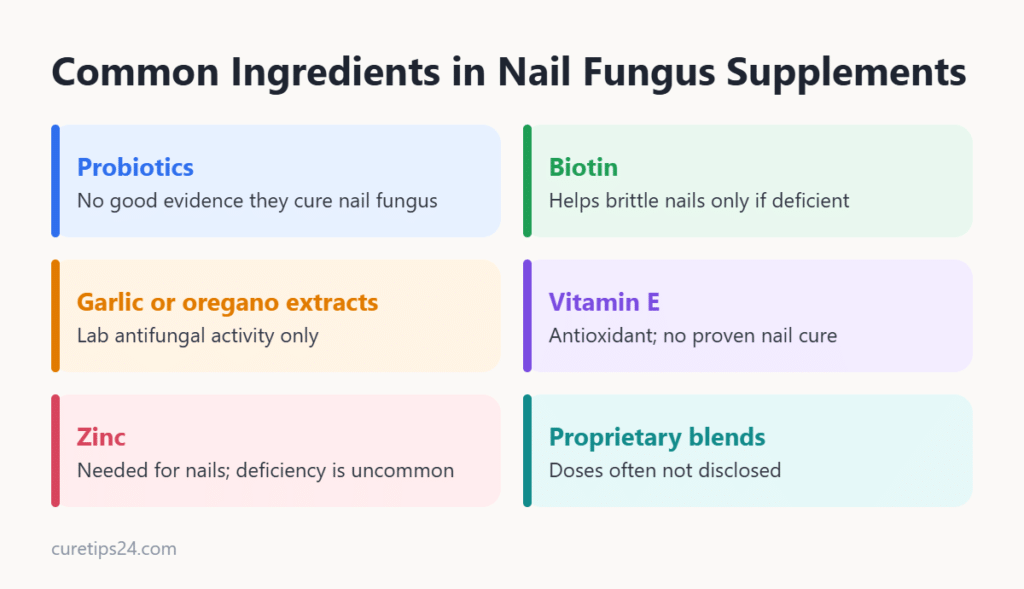
Toenail fungus (onychomycosis) is a stubborn infection of the nail plate. The NHS explains that it is usually treated with antifungal nail paints or prescription tablets and can take months to clear, because the infected nail has to grow out.
Endorsements and User Stories Are Marketing
Reviews of products like this often quote named analysts or experts and collect glowing user stories. Named-analyst endorsements in such reviews are unverifiable marketing: there is no independent record behind them, and the same names and quotes appear in promotional material rather than in any checkable publication. User stories are selected by the seller and are not evidence that a product works. Treat both the way you would treat an advert, because that is what they are.
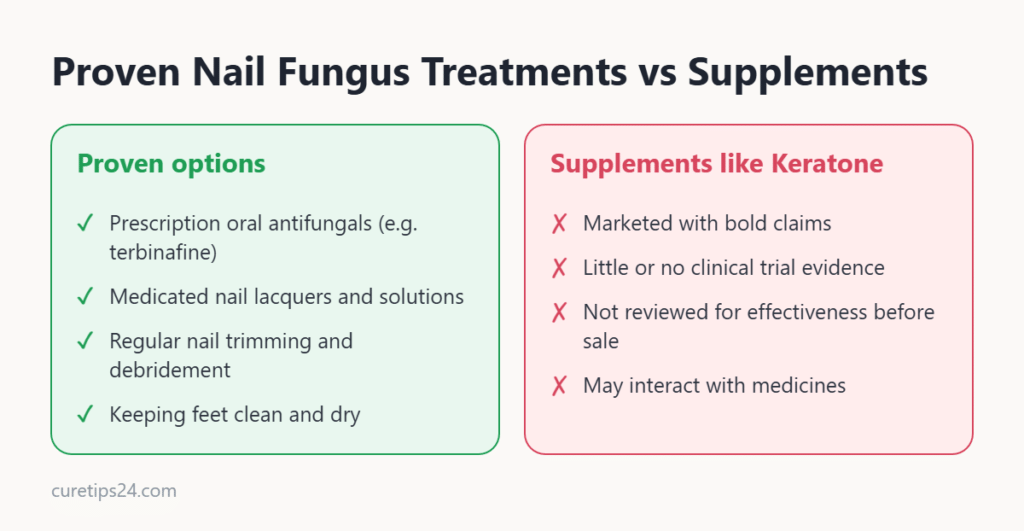
The American Academy of Dermatology notes that nail fungus can look like other conditions such as psoriasis, so a proper diagnosis matters before treatment. The US National Center for Complementary and Integrative Health reminds consumers that supplements are not tested for effectiveness before they are sold and that “natural” does not always mean safe.
What to Check Before Buying Any Hair or Nail Product
- Does the marketing promise to cure a medical condition, such as a fungal infection? Cosmetics are not cures, and claims like that are a warning sign.
- Is the product described consistently, with one clear ingredient list? Contradictory descriptions suggest careless or copied marketing.
- Are endorsements and reviews independently checkable, or do they only appear on pages that sell the product?
- If you have a nail infection, persistent hair loss or a scalp problem, have you spoken to a pharmacist or doctor? These can have medical causes that cosmetics cannot address.
For other honest supplement reviews, see our articles on collagen supplements, astaxanthin and pumpkin seed oil and saw palmetto.
How Toenail Fungus Is Actually Treated
If you are looking at Keratone because of thick, discoloured or crumbly toenails, the most useful step is to find out whether it really is a fungal infection, because psoriasis, injury and other conditions can look similar. A GP or pharmacist can advise, and nail clippings can be tested in a lab. Proven treatment options include antifungal nail paints for mild infections and prescription antifungal tablets for more severe cases. Treatment takes months because the healthy nail has to grow out, and toenails grow slowly. The NHS guide to fungal nail infections explains the options and when to see a doctor.
Red Flags When Buying Health Supplements Online
- “Miracle” or “secret” ingredient claims with no published, independent studies.
- Countdown timers and “only today” discounts designed to rush your decision.
- Celebrity or doctor endorsements that can’t be verified on the person’s own channels.
- Multi-bottle bundles and subscriptions that are hard to cancel.
- Claims to cure a medical condition, which supplements are generally not allowed to make.
- Websites that only sell one product and have no clear company address or contact details.
What to Do If You Have Already Bought It
If you bought Keratone or a similar product and are unhappy, check the refund policy straight away, as many have short time limits and require unopened bottles. Keep your order confirmation and any emails. If you were charged for a subscription you didn’t agree to, contact your bank or card provider. Before taking any supplement, check the ingredient list with a pharmacist, especially if you take other medicines, are pregnant or have a health condition. And if your nails don’t improve, see a doctor rather than buying another product.
Simple Habits That Help Prevent Fungal Nail Infections
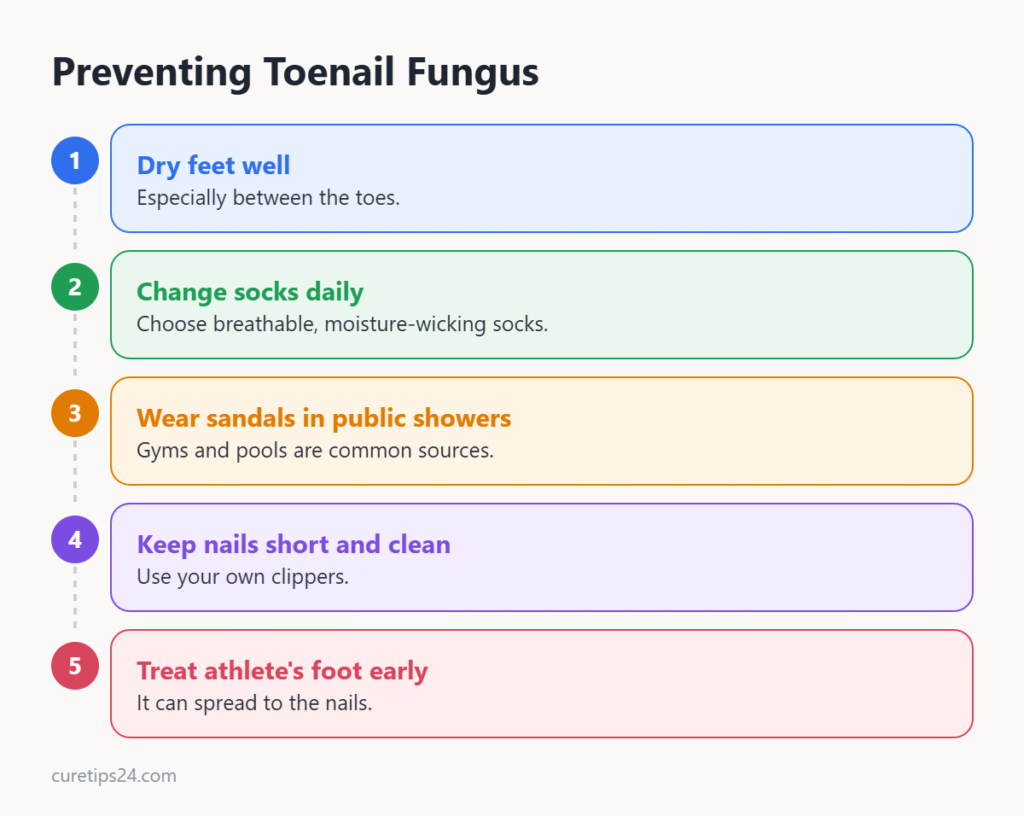
- Dry your feet thoroughly after washing, especially between the toes.
- Wear clean, breathable socks and change them daily, or more often if your feet get sweaty.
- Rotate your shoes so they can dry out completely between wears.
- Wear flip-flops in shared showers, gyms and swimming pool changing rooms.
- Keep toenails short and clean, and don’t share nail clippers or towels.
- Treat athlete’s foot promptly, as the same fungi can spread to the nails.
If you have diabetes or poor circulation, take extra care with any foot or nail problem and speak to a doctor or podiatrist early, because infections can become more serious. Prevention habits cost almost nothing, while supplements like Keratone can cost a lot without proven benefit.
The bottom line on any product like Keratone is simple: check the evidence before the advert, buy from sellers with clear contact details and refund terms, and get a proper diagnosis for nail problems. A short conversation with a pharmacist costs nothing and may save you both money and months of waiting for a treatment that was never likely to work.
Frequently Asked Questions About Keratone
Is Keratone approved to treat toenail fungus?
Supplements are not approved as treatments for medical conditions in the way that medicines are. Any claim that a supplement cures toenail fungus should be treated with caution.
Are there any proven home remedies?
Some over-the-counter antifungal nail paints can help mild infections. Tea tree oil and vinegar soaks are popular, but evidence for them is limited. A pharmacist can recommend a proven option.
How long does proper treatment take?
Months, because the infected part of the nail has to grow out. Toenails can take a year or longer to fully regrow, so patience and consistency are essential.
Bottom Line
Keratone is a marketed hair and nail product, not a proven treatment for anything. It is not a cure for toenail fungus, its endorsements are unverifiable marketing, and fungal nail infections typically need proper antifungal treatment. For hair and nail problems that persist, a pharmacist or doctor is a better first step than a product page.
This article is general information only and is not medical advice. Please consult a healthcare professional for personal advice.