
What is the difference between weight loss and fat loss? Weight loss means a lower number on the scale, which can come from fat, water, muscle or even the contents of your gut. Fat loss means reducing stored body fat specifically, ideally while keeping your muscle. The two often happen together, but not always, and focusing on fat loss rather than just weight gives better results for your health, your shape and your long-term success.
In short
Weight loss = any drop on the scale. Fat loss = losing body fat while protecting muscle. Aim for a moderate calorie deficit, enough protein and regular strength training, and judge progress with more than the scale.

Table of Contents
What Makes Up Your Body Weight?
Your weight is the total of everything in your body: fat, muscle, bones, organs, water and food in your digestive system. Only one of those, fat, is usually what people want to lose. Water and stored carbohydrate (glycogen) can change by a kilogram or more in a few days, which is why the scale jumps around and why the first week of a strict diet often shows a big drop that slows down later.
| What changes | How fast | What it means |
|---|---|---|
| Water and glycogen | Days | Quick drops or gains that don’t reflect fat |
| Gut contents | Hours to days | Normal daily fluctuation |
| Body fat | Weeks to months | The change most people actually want |
| Muscle | Weeks to months | Losing it lowers strength and the calories you burn |
Weight Loss vs Fat Loss at a Glance
| Point | Weight loss | Fat loss |
|---|---|---|
| What is lost | Fat, water, muscle and more | Mainly stored fat |
| How it’s measured | Scale weight | Waist size, body fat estimates, photos, how clothes fit |
| Typical approach | Often crash diets or cutting calories hard | Moderate deficit, protein, strength training |
| Long-term result | Often regained, sometimes with lower muscle | Better shape, strength and maintenance |

Why Fat Loss Matters More Than the Number on the Scale
- Health: excess body fat, especially around the waist, is linked to type 2 diabetes, heart disease and high blood pressure. Losing fat improves these risks even if the scale moves slowly.
- Muscle protects you: muscle supports strength, balance, blood sugar control and healthy ageing. Losing it during a diet is a step backwards.
- Metabolism: muscle burns more energy than fat at rest. Losing muscle can make it easier to regain weight later.
- Appearance: two people can weigh the same but look very different depending on how much muscle and fat they carry.
Why Rapid Weight Loss Often Isn’t Fat Loss
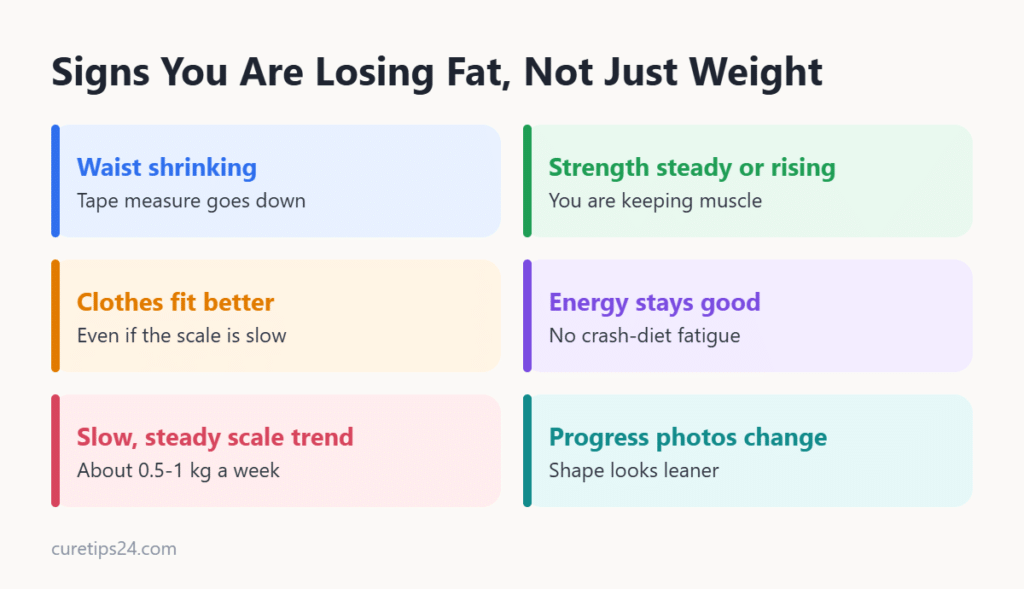
Very low-calorie crash diets can produce fast early losses, but much of that is water and glycogen, and some is muscle. They are also hard to sustain, often leave people hungry and tired, and commonly end with weight regain. A gradual pace of around 0.5 to 1 kg (1 to 2 pounds) a week gives your body the best chance of losing mostly fat. Very low-calorie diets should only be followed with medical supervision.

How to Lose Fat While Keeping Muscle
- Create a moderate calorie deficit: eat a little less than you burn, rather than as little as possible.
- Eat enough protein: include a protein source at every meal, such as eggs, fish, chicken, beans, lentils, tofu or yoghurt. Protein helps preserve muscle and keeps you full.
- Do strength training: health guidelines recommend muscle-strengthening activities on at least two days a week. Bodyweight exercises, resistance bands or weights all count.
- Stay active every day: walking and other everyday movement add up and support fat loss without heavy fatigue.
- Prioritise sleep: poor sleep is linked to increased hunger and cravings.
- Be patient and consistent: fat loss is gradual; the habits you can keep matter more than any short-term plan.
The NHS physical activity guidelines explain how much aerobic and strength activity adults should aim for each week.
How to Measure Fat Loss, Not Just Weight
| Method | How useful |
|---|---|
| Waist measurement | Simple, cheap and strongly linked to health risk; measure monthly at the same point |
| Progress photos | Show changes the scale misses; use the same light, pose and clothing |
| How clothes fit | A practical everyday check |
| Strength in the gym | Stable or rising strength suggests you’re keeping muscle |
| Body fat scales | Convenient but can vary with hydration; watch the trend, not single readings |
| Skinfold calipers | Reasonable when done consistently by the same trained person |
| DEXA scan | Accurate body composition, but costs more and isn’t widely available |
As a general guide, the NHS notes that health risks rise when waist size is 94 cm (37 inches) or more for men and 80 cm (31.5 inches) or more for women, although thresholds can differ by ethnic background. Weigh yourself at the same time of day and look at the weekly average rather than daily numbers.
Common Mistakes That Lead to Weight Loss Without Fat Loss
- Cutting calories too low and skipping meals.
- Doing only cardio and no strength training.
- Eating too little protein.
- Judging progress only by the scale and giving up during normal fluctuations.
- Using “detox” teas, laxatives or sweating to lose water weight, which returns quickly and can be unsafe.
Read more in our guides to what happens if you don’t eat enough, the best time to walk for weight loss and the best diet plans to lose weight.

A Sample Week for Fat Loss
| Day | Activity |
|---|---|
| Monday | Full-body strength session (squats, push-ups, rows, lunges) |
| Tuesday | 30–45 minute brisk walk |
| Wednesday | Rest or gentle stretching |
| Thursday | Full-body strength session |
| Friday | Brisk walk, cycling or swimming |
| Weekend | An active outing, such as a long walk, plus one short strength or mobility session if you feel up to it |
Pair this with balanced meals built around vegetables, a palm-sized portion of protein and some wholegrains, and keep sugary drinks and heavily processed snacks occasional. Increase the weights or repetitions gradually as you get stronger. If you’re new to exercise, have a health condition or take regular medicines, check with a doctor before starting, and consider a few sessions with a qualified trainer to learn good technique.
Frequently Asked Questions
Can I lose fat without losing weight?
Yes. If you lose fat while building muscle, especially when starting strength training, your weight may change little while your waist and shape improve.
Why does the scale go up after a workout?
Exercise can cause temporary water retention as muscles repair. It is not fat gain and usually settles within days.
Can I target fat loss from one area, like the belly?
Spot reduction doesn’t work. Fat is lost from across the body in a pattern influenced by genetics, although overall fat loss usually reduces waist size.
How fast can I realistically lose fat?
For most people, around 0.5 to 1 kg a week is a sustainable pace that favours fat loss over muscle loss.
Conclusion
Weight loss and fat loss are not the same thing. The scale measures everything in your body, while fat loss is what improves health and shape. Focus on a moderate calorie deficit, enough protein, regular strength training, daily movement and good sleep, and track your progress with your waist, photos and strength as well as your weight.
This article is general information only and is not medical advice. Please consult a healthcare professional for personal advice, especially if you have a medical condition.

2 thoughts on “Weight Loss vs Fat Loss: What Is the Difference and Why It Matters”