Table of Contents
Quick Summary / At A Glance
- This article is general healthy-eating information only, and no food is promised to change your skin.
- This guide grouped helpful foods into antioxidants, healthy fats, and foods rich in vitamins and minerals.
- Its named foods included salmon, avocados, tomatoes, walnuts and dark chocolate, plus berries, broccoli and spinach in later sections.
- During puberty, the article highlighted iron, calcium, fibre and water as part of a balanced diet.
- Never skip or restrict food for your skin, and talk to a parent or guardian about meals, allergies and any worries.
There is no one-size-fits-all answer when it comes to food, and the best choices depend on your own situation. The foods below support overall health and provide nutrients the body needs, which makes them good foods for healthier skin.
Read this as information about balanced meals, not as a promise about appearance. You do not need to eat in a special way to deserve healthy habits, and ordinary family meals can include many of these foods.
Food Is General Health Information, Not a Skin Promise
This guide often said foods could help skin stay hydrated or protected. In this guide, those points are kept cautious: foods contain nutrients, but no single food is guaranteed to change how skin looks or feels.
Do not skip meals, cut out whole food groups or follow a short diet plan because of your skin. If a food is one you are allergic to, have been told to avoid, or makes you feel unwell, do not eat it, and tell a parent or guardian.
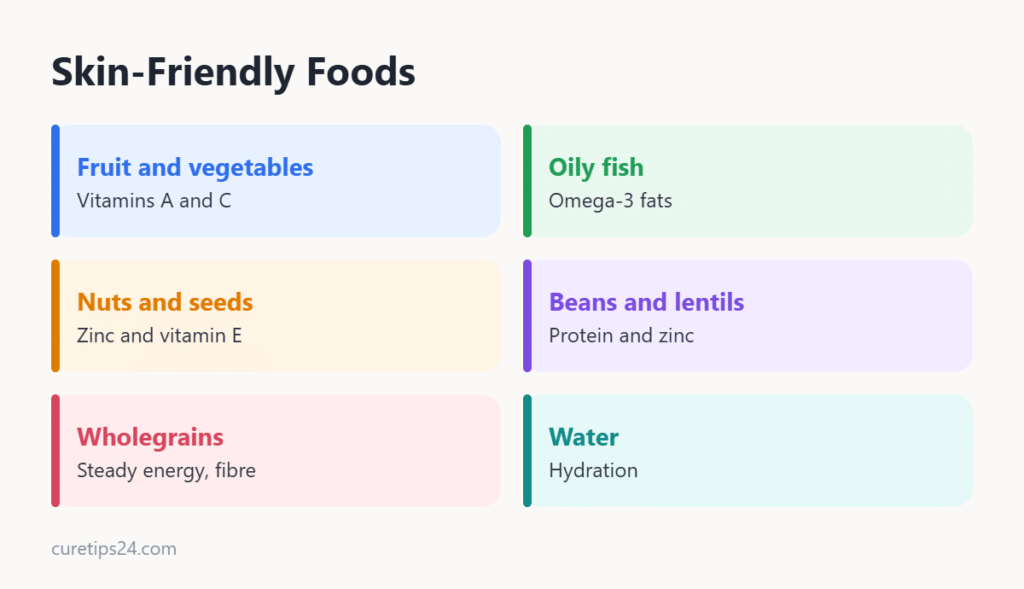
A balanced diet supports healthy skin. The NHS recommends at least 5 portions of fruit and vegetables a day, and the NHS suggests 6 to 8 drinks a day.
Three Groups of Foods for Healthier Skin: Antioxidants, Fats, Vitamins and Minerals
Foods for healthier skin fall into three main groups. The first is foods containing antioxidants, which help protect skin cells from damage caused by molecules called free radicals.
Its antioxidant examples included blueberries, pomegranates, dark chocolate, green tea and acai berries. Tomatoes were also discussed often, because they contain lycopene, an antioxidant that gives them their red colour.
The second group was foods high in healthy fats, described as helping cell membranes and moisture. Examples included avocados, nuts, seeds, olive oil and fish such as salmon.
The third group is foods rich in vitamins and minerals, which help cells work properly and repair damage. Vitamin C is needed to make collagen, and vitamin E is often linked with protection from sun damage.
The Ten Foods at a Glance
| Food from the article | What the article said it contains | Group |
|---|---|---|
| Salmon | Omega-3 fatty acids | Healthy fats |
| Avocados | Healthy fats and antioxidants, plus vitamins E and C in one section | Healthy fats |
| Tomatoes | Lycopene and vitamin C | Antioxidants |
| Walnuts | Alpha linolenic acid, a type of omega-3, and zinc | Healthy fats |
| Dark chocolate | Flavonoids | Antioxidants |
| Blueberries | Antioxidants, including anthocyanins, and vitamins A and C | Antioxidants |
| Broccoli | Vitamins C and E, beta-carotene, selenium, fibre and calcium | Vitamins and minerals |
| Green tea | Antioxidants called catechins | Antioxidants |
| Sweet potatoes | Beta-carotene, which converts to vitamin A | Vitamins and minerals |
| Spinach | Vitamins A, C and E, and magnesium | Vitamins and minerals |
This table summarises the nutrients covered here. It does not rank the foods, and it does not mean a food will produce a particular result for your skin.
Fish, Nuts and Healthy Fats in Everyday Meals
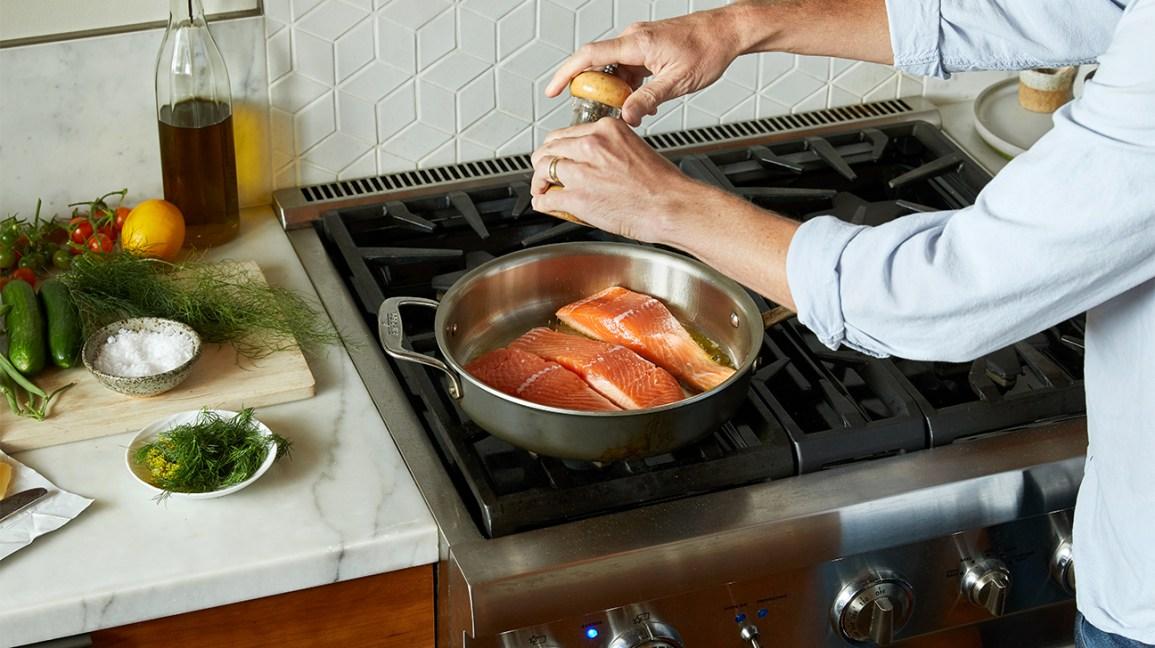
Salmon is one of the most useful foods on this list. It is an oily fish packed with omega-3 fatty acids, which are linked with keeping skin moisturised and preventing dryness.
The conclusion named other omega-3 sources too: mackerel and sardines, as well as flaxseeds and chia seeds. Walnuts were described both as containing alpha linolenic acid and as a good source of zinc, a mineral that plays a role in wound healing.
Avocados were listed for healthy fats and antioxidants. Olive oil, nuts and seeds were also given as sources of healthy fats, as part of ordinary meals rather than as special skin treatments.
Colourful Fruit and Vegetables for Healthy Skin
Tomatoes were the most repeated vegetable, discussed for lycopene and vitamin C. Broccoli was described as nutrient-rich, containing vitamins C and E, beta-carotene, selenium and fibre, and also as a source of calcium and potassium was noted for tomatoes.
Other helpful vegetables include spinach, sweet potatoes, carrots, bell peppers, Brussels sprouts, dark leafy greens and colourful salad vegetables. Citrus fruits, berries and pomegranates are good sources of vitamin C and antioxidants.
The conclusion simply said eating plenty of fruit and vegetables is good for overall health, including the skin. The antioxidants in these foods were described as helping to protect the skin from damage caused by free radicals.
Water, Breakfasts and Simple Meal Ideas
Water was listed first in the conclusion, as essential and as helping to keep skin hydrated and prevent it becoming dry and irritated. Several sections suggested drinking plenty of water each day, and one suggested aiming for eight glasses a day.
Simple meal ideas include oatmeal topped with fresh berries for breakfast, and eggs or Greek yogurt as protein-rich breakfast foods. For lunch, try a salad with colourful vegetables plus grilled chicken or fish.
For dinner, salmon with steamed broccoli and quinoa makes a well-rounded meal. These are examples of balanced plates, not a set menu that any young person must follow.
Green tea and dark chocolate appeared repeatedly in the food lists. Because caffeine and treats are family decisions, talk to a parent or guardian about them rather than adding them daily for your skin.
Eating During Puberty: Iron, Calcium and Fibre
Puberty can be an exciting and confusing time, with physical, emotional and hormonal changes. There is no one perfect diet for all girls going through puberty.
Iron was called one of the most important nutrients for pubertal girls, because it helps build haemoglobin, which carries oxygen in the blood, and helps maintain energy levels. Foods rich in iron include red meat, dark leafy greens, beans, nuts and fortified cereals.
Calcium was described as essential for strong bones and teeth, with milk, cheese, yogurt and leafy green vegetables as good sources. Fibre was also highlighted, from fruits, vegetables, whole grains and legumes, and water was mentioned again at the end of that section.
Probiotics and Fermented Foods in the Conclusion
Probiotics are another idea: beneficial bacteria found in yogurt, kefir, sauerkraut and other fermented foods. They help maintain a healthy balance of gut microbes; some people find they help with skin irritation, though evidence for skin benefits is still limited.
Yogurt also appeared elsewhere as a source of calcium and as a breakfast food with protein. As with every food here, choose foods your family normally eats and that suit you, rather than buying special products for your skin.
What Was Left Out of This Rewrite, and Why
Several sections were about anti-aging foods, looking younger, skin whitening, or getting glowing skin in three days, ten days or a month. Those are adult appearance promises, so they have not been repeated for young readers.
Lists telling readers to stop eating foods, and comments about weight, have also been left out. Young people need regular, enough food for growth, and no article should make you feel anxious about eating or about how you look.
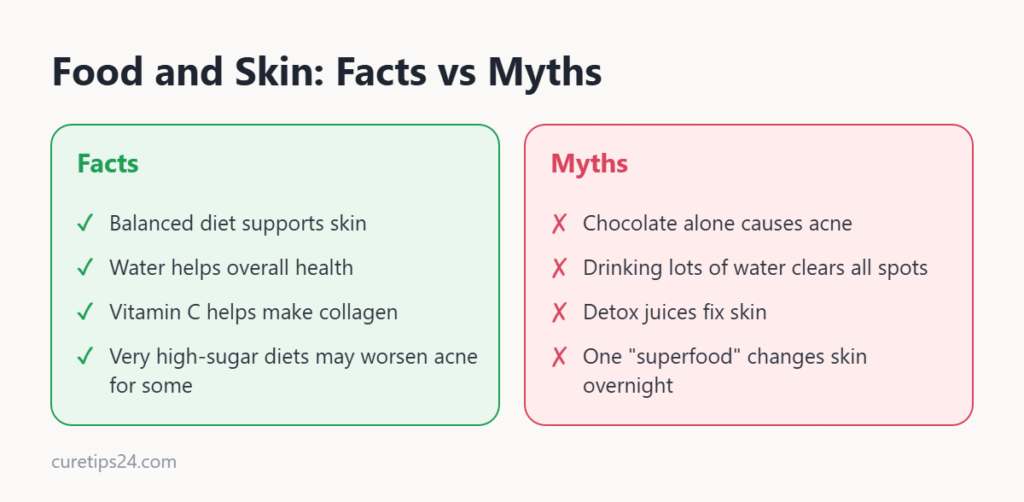
The NHS explains common myths about acne and diet. See teenage skin care, beauty tips for girls and acne myths.
Sleep, and Talking to an Adult About Worries
Food is not the only habit that matters: getting enough sleep each night gives the body time to repair itself. Teenagers generally need around 8 to 10 hours of sleep a night.
If you are worried about your skin, your eating, or your growth, tell a parent or guardian. They can help you ask a healthcare professional or dermatologist for personal advice, rather than you trying diets or treatments on your own.
A Balanced Way to Eat for Healthier Skin
The core idea is simple: drink water, eat a variety of fruits and vegetables, include sources of healthy fats, and eat enough iron, calcium and fibre during puberty. Enjoy those foods as part of normal meals with your family.
This article is general information only and is not medical advice. Please consult a healthcare professional for personal advice.
Other Foods Mentioned Across this guide
A few more foods appeared in single sections and are worth noting as part of a varied diet. Seeds were listed with nuts as sources of healthy fats and omega-3 fatty acids, and olive oil was named in the same group.
Citrus fruits, strawberries and lemons appeared in a vitamin C list, while carrots were included in salads for vitamins A and C. Quinoa was paired with salmon and broccoli in one dinner example, and whole grains were also named as a source of fibre during puberty.