
Vitamin C serum is a popular skincare product. Used well, it can support brighter-looking skin as part of a simple routine. It is not suitable for absolutely everyone, and it will not suit every skin type equally.
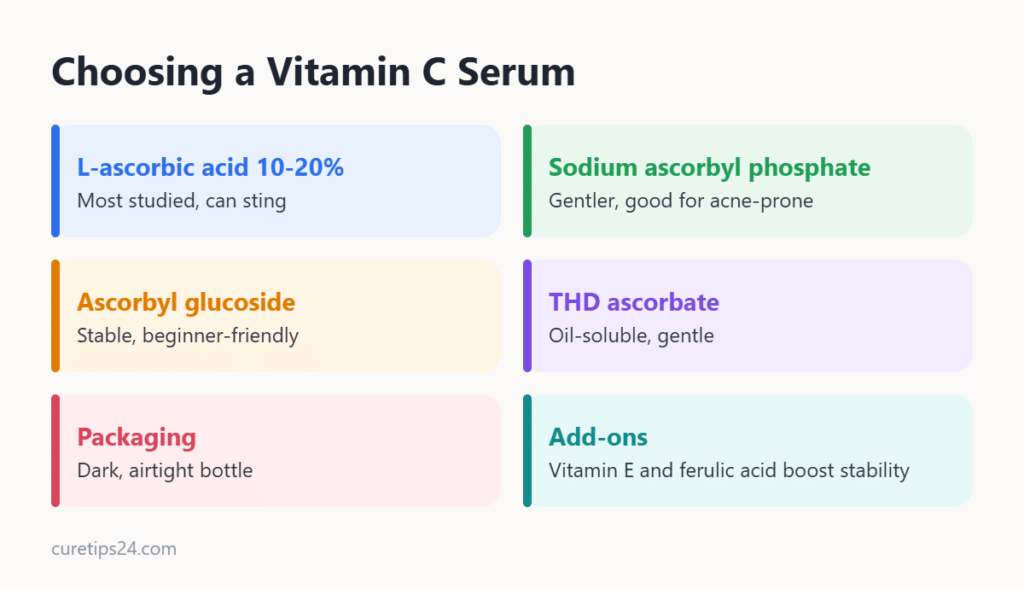
Table of Contents
How to Choose the Right Vitamin C Serum
- Start at 10% if your skin is sensitive; 15-20% for normal skin.
- Choose opaque, airtight packaging to slow oxidation.
- Throw it away if it turns dark orange or brown.
- Pair it with sunscreen every morning.
Benefits of Vitamin C Serum
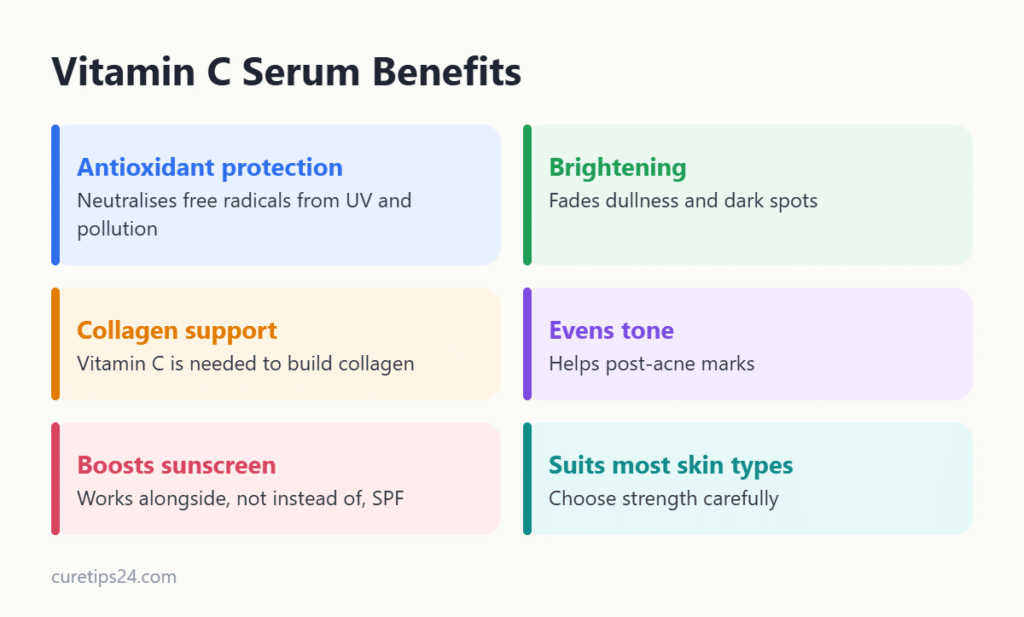
Vitamin C (L-ascorbic acid) is an antioxidant that helps protect skin from UV-related damage and is essential for making collagen; the NIH vitamin C fact sheet explains its role in the body. The Mayo Clinic guide to wrinkle creams lists vitamin C among ingredients that may improve the look of ageing skin.
How to use it
- Apply to clean, dry skin, following the product’s own instructions.
- Start slowly — for example, a few times a week — and build up only if your skin tolerates it.
- Follow with moisturiser, and use sunscreen during the day.
- It can be used on oily skin; choose a light serum texture that does not feel heavy.
Side effects of vitamin C serum
Vitamin C serum is generally well tolerated, but side effects are possible. Mild stinging, redness or irritation can occur, especially at higher strengths or on sensitive skin. No product can be promised to cause no harm for everyone.
- Patch-test first: apply a small amount to a small area and wait to see how your skin reacts before using it on your whole face.
- If stinging or redness persists, use it less often, try a lower strength, or stop using it.
- Stop and seek advice if you develop a rash, swelling or severe irritation.
Storage: watch for oxidation
Vitamin C serum oxidises with air and light. Over time an oxidised serum turns dark yellow or orange and becomes less effective. Store the bottle tightly closed, away from light and heat, and replace it if it changes colour or smell noticeably.
If you have a skin condition, very sensitive skin, or ongoing acne or pigmentation problems, a dermatologist can advise whether a vitamin C serum is right for you.
This article is general information only and is not medical advice. Please consult a healthcare professional for personal advice.
Choosing the Right Form and Strength
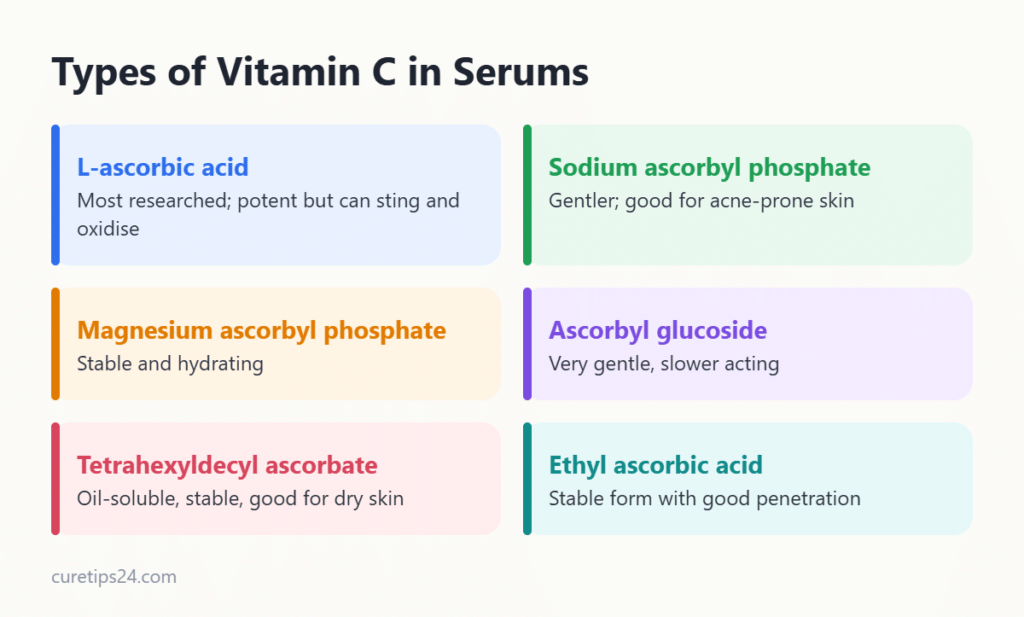
Pure L-ascorbic acid at 10 to 20% has the most research behind it for brightening and supporting collagen, but it is acidic and can sting sensitive skin. Gentler derivatives are a good choice if you are new to vitamin C or have rosacea. Pairing vitamin C with vitamin E and ferulic acid can make it more stable and effective.
Use it in the morning under sunscreen, because its antioxidant effect helps protect against UV damage. Vitamin C works well alongside kojic acid for dark spots and azelaic acid, and for an overall routine see the best face serums for women.
Vitamin C Serum for Different Skin Types
- Oily or acne-prone skin: a lightweight, water-based serum with sodium ascorbyl phosphate.
- Dry skin: an oil-soluble form such as tetrahexyldecyl ascorbate, followed by a rich moisturiser.
- Sensitive skin: start with a lower strength (around 5% to 10%) or a gentle derivative a few times a week.
- Mature skin: L-ascorbic acid with vitamin E and ferulic acid, alongside a night-time retinoid.
Can You Mix Vitamin C With Other Ingredients?
Vitamin C pairs well with sunscreen, vitamin E, ferulic acid and hyaluronic acid. Many people use vitamin C in the morning and retinol at night to reduce irritation. Niacinamide and vitamin C can be used together by most people, despite older advice suggesting otherwise. Strong exfoliating acids are best used on different days from a high-strength vitamin C serum.
How Long Until You See Results?
A brighter, more even look can appear within 3 to 4 weeks, while improvements in dark spots and fine lines usually take 8 to 12 weeks of consistent daily use. Results depend just as much on daily sunscreen, which prevents new pigmentation from forming.
Vitamin C vs Niacinamide vs Retinol
| Ingredient | Main benefits | Best time to use |
|---|---|---|
| Vitamin C | Antioxidant protection, brighter-looking skin, helps fade dark spots over time | Morning, under sunscreen |
| Niacinamide | Supports the skin barrier, may reduce redness and oiliness, helps even tone | Morning or evening |
| Retinol | Improves texture and fine lines, helps with acne and marks | Evening only |
Many people use vitamin C in the morning and retinol at night, which keeps routines simple and reduces irritation. Niacinamide can fit into either. Introduce one new product at a time, two to three weeks apart, so you can tell what suits your skin.
A Simple Morning Routine With Vitamin C
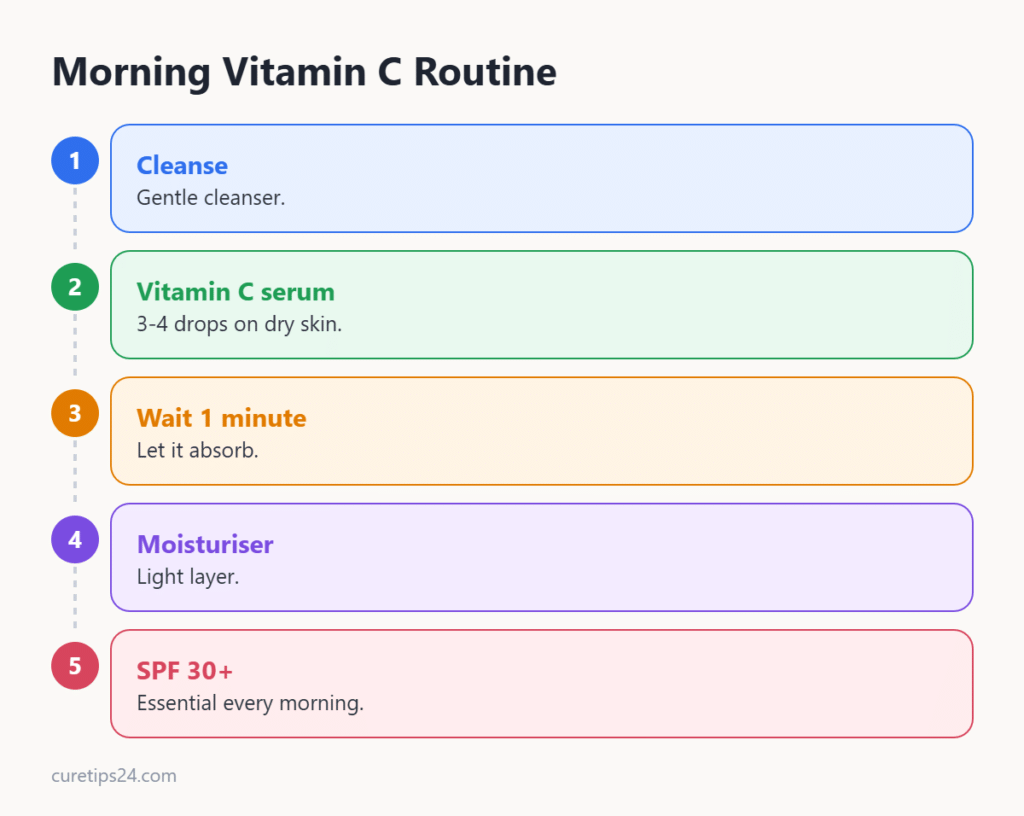
- Cleanse gently with lukewarm water.
- Apply a few drops of vitamin C serum to dry skin and let it absorb for a minute.
- Follow with a light moisturiser if your skin needs it.
- Finish with a broad-spectrum sunscreen of SPF 30 or higher. Vitamin C supports sunscreen but never replaces it.
Common Vitamin C Myths
- “Higher percentages always work better.” Very high strengths can irritate without extra benefit for many people.
- “You can’t use it with niacinamide.” Most people can use both; the old warning came from early lab tests that don’t reflect modern products.
- “Orange juice on the face does the same thing.” Food acids can irritate skin and contain sugars; they are not a substitute for a stable serum.
How to Tell If Your Vitamin C Serum Is Working
Vitamin C works gradually, so take a clear photo in natural light before you start and compare after eight to twelve weeks of daily use. Signs that it is helping include a slightly brighter, more even tone and dark spots that are a little lighter. If you notice stinging that doesn’t settle, redness or new breakouts, try a lower strength, use it every other day or switch to a gentler form such as a vitamin C derivative. If you see no change after three months, the serum may have oxidised, or another ingredient may suit your skin better.
Is Vitamin C Serum Safe During Pregnancy?
Topical vitamin C is generally considered one of the gentler options for brightening skin during pregnancy and breastfeeding, unlike retinoids, which are usually avoided. Even so, check the full ingredient list for other actives and ask your doctor or pharmacist if you are unsure.
Keep your routine simple, protect the serum from light and air, and pair it with sunscreen every morning for the best chance of brighter, more even skin.
Frequently Asked Questions
Why has my vitamin C serum turned orange or brown?
It has oxidised. A darker serum is less effective and may stain skin, so replace it.
Can I use vitamin C at night?
Yes, but morning use gives extra antioxidant protection against daytime UV and pollution.
Putting It All Together
The NHS recommends sunscreen of at least SPF 30 every day, which vitamin C supports but cannot replace. See kojic acid for dark spots, products for dark spots and face serums for women.

2 thoughts on “Vitamin C Serum for Face: Benefits, Side Effects & How to Use on Oily Skin”