Table of Contents
Quick Summary / At A Glance
- Kojic acid is a fermentation-derived ingredient that can help fade the look of dark spots by slowing melanin production.
- It works by inhibiting tyrosinase, an enzyme involved in making melanin pigment in the skin.
- Introduce it slowly in the evening, a few nights a week at first, and always patch test.
- Daily sunscreen is essential — UV keeps triggering the melanin production this ingredient is meant to calm.
- Visible change takes weeks of consistent use; stubborn pigmentation such as melasma needs a dermatologist.
What Is Kojic Acid?
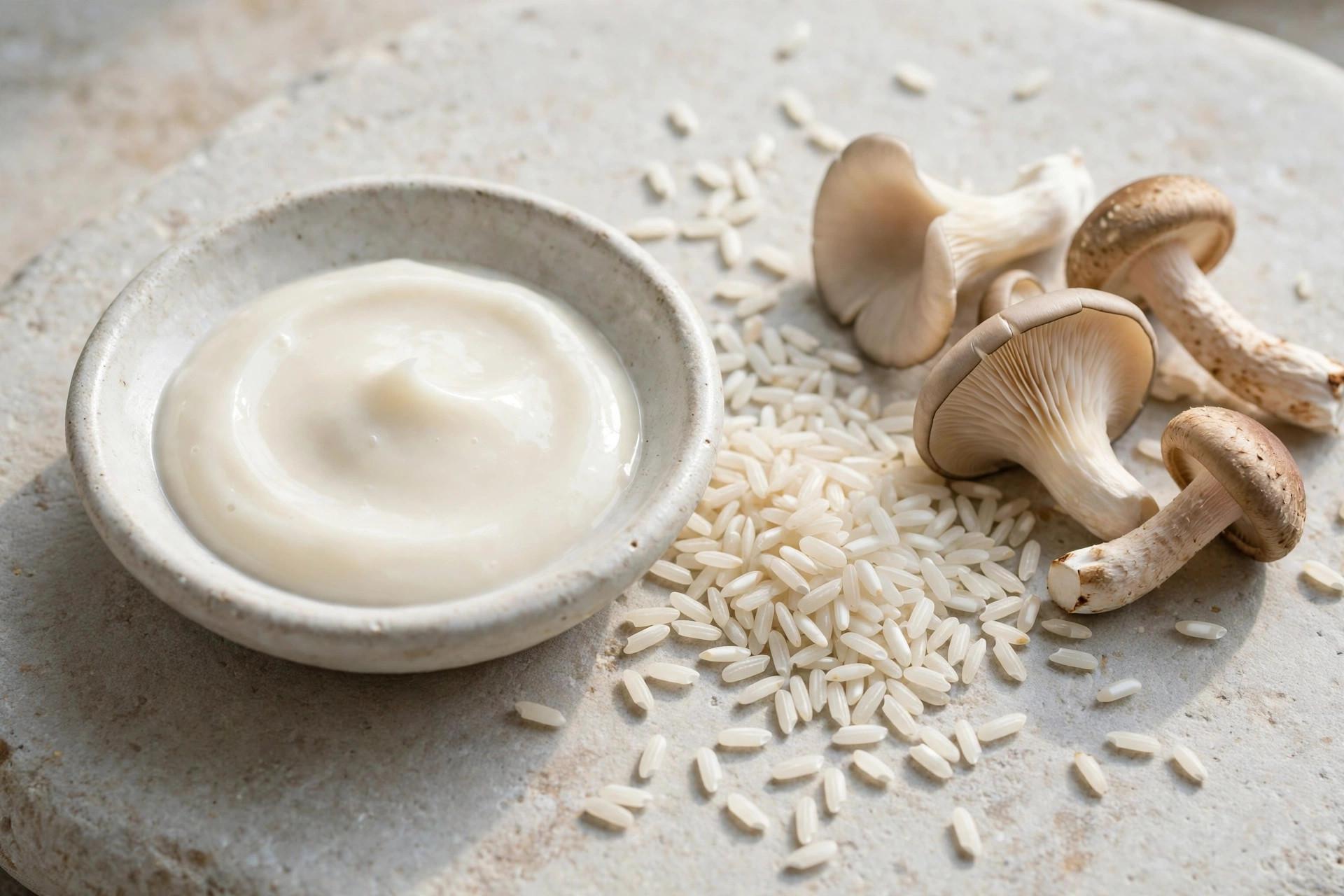
Kojic acid is a compound produced by certain fungi during the fermentation of foods like rice and malt — it was first noticed in the sake-brewing process in Japan. It is a natural by-product, not something cooked up in a lab for marketing purposes.
Today it is a well-known cosmetic skin-brightening ingredient, found in serums, creams and cleansers aimed at uneven skin tone. In cosmetic products it is generally found at around 1–2%, a level considered suitable for home use.
Understand what kind of ingredient this is: a cosmetic brightening agent, not a medicine. It can help fade the look of dark spots over time, but it does not remove them overnight or cure any skin condition.
How Kojic Acid Works on Dark Spots
Dark spots — from sun exposure, old breakouts or inflammation — get their colour from melanin, the pigment that gives skin its tone. When skin is irritated or exposed to UV light, it produces extra melanin in patches, and that is what you see as a spot.
Melanin production depends on an enzyme called tyrosinase. Kojic acid inhibits tyrosinase, slowing the enzyme’s activity and reducing how much new melanin the skin makes. With less new pigment being produced, existing spots can gradually look lighter as the skin renews itself.
This is a gradual process, not a bleaching effect. The ingredient does not strip colour from the skin or change your natural skin tone, which is why consistent, patient use matters more than using a lot at once.
What the Evidence Honestly Supports
Kojic acid is one of the longer-studied brightening ingredients in cosmetics, and its tyrosinase-inhibiting action is well described in dermatology literature. That is why it is commonly used for the appearance of sun spots, age spots and post-inflammatory marks left by breakouts.
What is known is the mechanism: by slowing melanin formation, it can help fade the look of surface-level pigmentation with steady use. What is not proven is any dramatic or fast transformation, because every person’s skin, spot depth and sun habits differ.
Claims that a serum will “erase” dark spots in days are marketing, not science. Treat kojic acid as a modest, well-understood helper for uneven tone — useful as part of a routine, never a miracle.
How to Use Kojic Acid Safely
Start with a patch test. Apply a small amount behind your ear or on your inner forearm and wait a full day to check for redness, itching or stinging before using it on your face.
Introduce it slowly. Begin a few evenings a week rather than every night, and increase frequency only if your skin stays comfortable after two to three weeks. Evening use is best, since many formulations make skin slightly more sun-sensitive.
Use a pea-sized amount for the whole face, or dab a thin layer directly onto the spots you want to target. Follow with a simple moisturiser to support the skin barrier, which keeps irritation down. More product does not mean faster results — it usually just means more irritation.
Keep the rest of your routine gentle while you adjust: a mild cleanser, the kojic acid product, moisturiser, and sunscreen in the morning. Add other actives later, once you know your skin tolerates this one.
Irritation and Side Effects to Watch For
The most common side effects are mild: slight redness, brief tingling on application, or dryness where the product is applied. These often settle as the skin adjusts, especially with gradual introduction.
Contact sensitivity is possible, though. Some people develop persistent stinging, burning or itching — a sign the ingredient does not suit their skin. If irritation lasts beyond the first minute or two, or worsens over days, stop using the product.
Do not apply kojic acid to broken, freshly exfoliated, sunburnt or otherwise irritated skin, or right after strong exfoliating treatments. Sensitive skin types should choose the lowest available concentration and buffer with moisturiser if needed.
At the start, avoid combining it in the same routine with strong acids or retinoids. Layering several potent actives is the fastest route to a damaged skin barrier, which makes pigmentation look worse. Introduce one active at a time.
Why Sunscreen Is Non-Negotiable
Using a tyrosinase inhibitor without daily sunscreen is pointless. UV light is one of the strongest triggers of melanin production, so every unprotected minute in the sun tells your skin to make more of the very pigment you are trying to fade.
Without sunscreen, new melanin keeps forming faster than the kojic acid can help calm it, and spots can even darken despite your routine. Sunscreen protects the progress your brightening product is making.
Use a broad-spectrum sunscreen every morning as the last step of your routine, and reapply if you are outdoors for long stretches. Hats and shade at midday are cheap, effective extras. No brightening routine outperforms sun protection.
What It Pairs With (and What to Avoid at First)
Kojic acid is commonly combined with other brightening ingredients once skin is comfortable. Niacinamide is a popular partner because it is generally well tolerated and supports the skin barrier. Vitamin C is another frequent companion, though each should be introduced separately first.
Another ingredient often discussed alongside it is azelaic acid, also used for the appearance of marks and uneven tone, and sometimes better tolerated by sensitive skin. Comparing alternatives helps you pick the gentlest option rather than stacking everything at once.
A structured routine makes this easier. Approaches like skin cycling — alternating active-ingredient nights with rest nights — give brightening products room to work without overwhelming the skin. Whatever system you follow: one new active at a time.
At the start, keep it away from strong exfoliating acids, high-strength retinoids or benzoyl peroxide on the same nights. These combinations raise the risk of redness and peeling without improving the brightening effect.
Kojic Acid Compared With Other Brightening Options
Kojic acid is not the only ingredient used for the look of dark spots. Here is an honest, qualitative comparison of the most common options.
| Ingredient | How it works | Best for | Main caution |
|---|---|---|---|
| Kojic acid | Inhibits tyrosinase, slowing melanin production | Sun spots and post-breakout marks on tolerant skin | Can sting or irritate, especially sensitive skin |
| Vitamin C | Antioxidant that helps brighten overall tone | Dullness and mild uneven tone | Some formulas oxidise quickly; can irritate at high strength |
| Niacinamide | Supports barrier and helps even out tone | Beginners and sensitive skin types | Rare flushing at higher strengths |
| Azelaic acid | Calms the look of marks and redness | Marks plus redness-prone or sensitive skin | Mild tingling when first introduced |
No single option is “the best” for everyone. Niacinamide is usually the gentlest starting point, while kojic acid suits skin that tolerates mild actives. A dermatologist can help when over-the-counter options are not enough.
When to See a Dermatologist Instead
Cosmetics have limits. Melasma — the larger, symmetrical patches often seen on the cheeks, forehead or upper lip — rarely responds fully to cosmetic brightening products alone. If you suspect melasma, see a dermatologist rather than cycling through serums.
The same applies to pigmentation that is very dark, spreading or changing shape, and to any mole that changes in size, colour, border or sensation. No serum replaces a professional skin examination.
Stubborn pigmentation unchanged after several months of a careful, sunscreen-protected routine is also a sign to get professional advice. A dermatologist can identify the type and depth of the pigmentation and discuss options not available over the counter.
The Bottom Line
Kojic acid is a legitimate, well-understood brightening ingredient that can help fade the look of dark spots by slowing melanin production. Used carefully — patch tested, introduced slowly, paired with moisturiser and daily sunscreen — it is a reasonable part of an uneven-tone routine.
Keep expectations honest: gradual improvement over weeks, not transformation overnight. Respect irritation as a stop signal, and bring in a dermatologist for melasma, stubborn pigmentation or anything unusual.
This article is general information only and is not medical advice. Please consult a healthcare professional for personal advice.