Skin barrier repair means calming irritated skin and giving its outer layer, the stratum corneum, time to rebuild the lipids that hold moisture in. When this barrier is damaged, water escapes faster (called transepidermal water loss, or TEWL), and products that once felt fine start to sting. This guide explains the signs of a damaged barrier, what causes it, and a simple skin barrier repair routine built on gentle cleansing, ceramides and daily sunscreen.
Table of Contents
Quick Summary / At A Glance
- The skin barrier protects against environmental threats and keeps essential moisture trapped inside the skin.
- Damage often presents as tightness, stinging, flaking, and persistent redness.
- Common triggers include over-exfoliation, harsh cleansers, hot water, and overuse of active ingredients.
- A simple recovery routine relies on gentle cleansing, hydrating ingredients like ceramides, and daily sunscreen.
- You should consult a healthcare professional if your skin becomes severe, infected, or fails to improve.
Introduction
Healthy skin relies on a strong outer shield that keeps hydration locked inside. When this natural defence breaks down, your complexion may feel uncomfortably tight, dry, and irritated. Fortunately, simplifying your daily routine may help restore your skin’s natural balance over time.
Understanding the causes of skin damage is the first step towards achieving relief. By adopting gentle care habits, you can support your skin as it works to heal itself. This guide explores how to identify barrier damage and rebuild a soothing skincare routine.
Many people accidentally damage their outer skin layer through overzealous skincare habits. Returning to basic, supportive ingredients gives your face the breath of fresh air it needs. With patience and consistency, your skin barrier can gradually regain its strength.
What the Skin Barrier Does and How It Functions
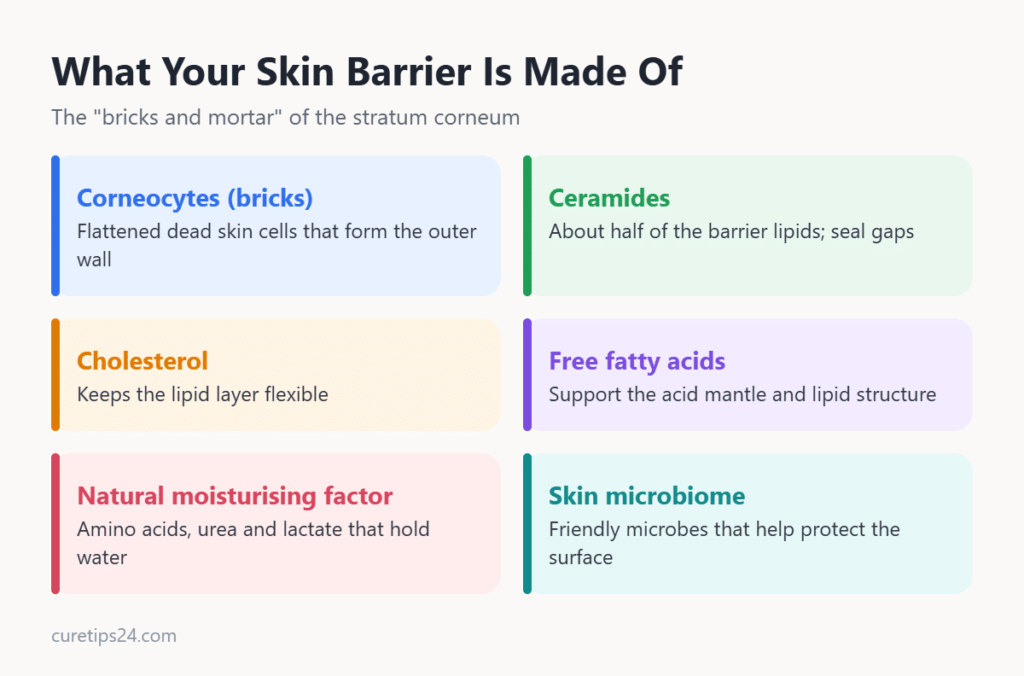
The skin barrier is the outermost layer of your skin, scientifically referred to as the stratum corneum. Dermatologists often compare this protective structure to a sturdy brick wall. In this comparison, tough skin cells called corneocytes act as the bricks, while lipids form the mortar.
Natural fats, including ceramides, cholesterol, and free fatty acids, fill the spaces between cells to create a seal. This lipid matrix keeps moisture trapped inside while blocking bacteria and pollutants. Your skin also maintains an acidic surface layer known as the acid mantle to deter harmful microbes.
The Role of Moisture Retention in Skin Health
Transepidermal water loss occurs when moisture escapes from deeper skin layers into the air. A healthy skin barrier keeps this water loss to a minimum, preserving essential hydration. Without this protection, internal water evaporates rapidly, leaving tissues dehydrated.
Natural moisturising factors inside skin cells work alongside lipids to attract and hold water. This balanced hydration gives the complexion a plump and comfortable feel. When the outer lipid layer is disrupted, applying lightweight liquid serums alone may fail to provide lasting relief.
Scientists often describe the outer layer of skin, the stratum corneum, as a brick wall: skin cells are the bricks, and a lipid “mortar” of ceramides, cholesterol and free fatty acids fills the gaps. When this mortar breaks down, water escapes faster (called transepidermal water loss, or TEWL) and irritants get in more easily. A slightly acidic surface pH, sometimes called the acid mantle, and a balanced skin microbiome also help the barrier work well.
Common Signs Your Skin Barrier Is Damaged
Identifying the signs of a compromised skin barrier helps you respond quickly before irritation worsens. One frequent early indicator is a sensation of tightness after washing your face. This uncomfortable stretched feeling suggests that your cleanser has stripped away natural protective oils.
Persistent dryness that continues even after applying a rich moisturiser is another key sign. When the barrier is damaged, moisture escapes quickly, causing skin to feel dry again shortly afterwards. Sudden stinging or burning when applying everyday products also indicates heightened sensitivity.
Recognising Sensation, Texture, and Visual Changes
Visible redness and blotchiness frequently accompany a weakened outer skin layer. Irritated skin becomes increasingly reactive to subtle changes in temperature, wind, or touch. On darker skin tones, this irritation may present as a greyish, dull, or uneven appearance.
Flakiness often develops because a compromised barrier impacts your skin’s natural exfoliation process. Dead cells accumulate on the surface rather than shedding smoothly, leading to a rough texture. Some individuals also experience unexpected breakouts alongside dry patches as bacteria penetrate unshielded skin.
Primary Causes of Skin Barrier Breakdown
Skin barrier damage rarely stems from a single isolated incident or product. Instead, it usually develops over time due to a combination of aggressive skincare habits. Over-exfoliation is one of the most common triggers, as frequent scrubbing removes skin cells faster than they can renew.
Harsh cleansers and alkaline soaps also strip away vital protective fats from the skin. Traditional soaps cannot distinguish between unwanted surface grime and beneficial natural oils. Consequently, washing with strong cleansers leaves the outer layer depleted and vulnerable.
Environmental Stressors and Daily Habits
Washing your face with very hot water accelerates the removal of natural lipids. Hot water dissolves protective fats much like hot water melts butter on a kitchen utensil. Switching to lukewarm water helps preserve the natural moisture layer on your skin.
Layering multiple strong active ingredients simultaneously can quickly overwhelm your complexion. Combining retinoids, exfoliating acids, and direct vitamin C creates excess irritation. Environmental factors like cold weather, low humidity, sun exposure, and psychological stress also contribute to water loss.
A Simple Skin Barrier Repair Routine to Restore Your Skin
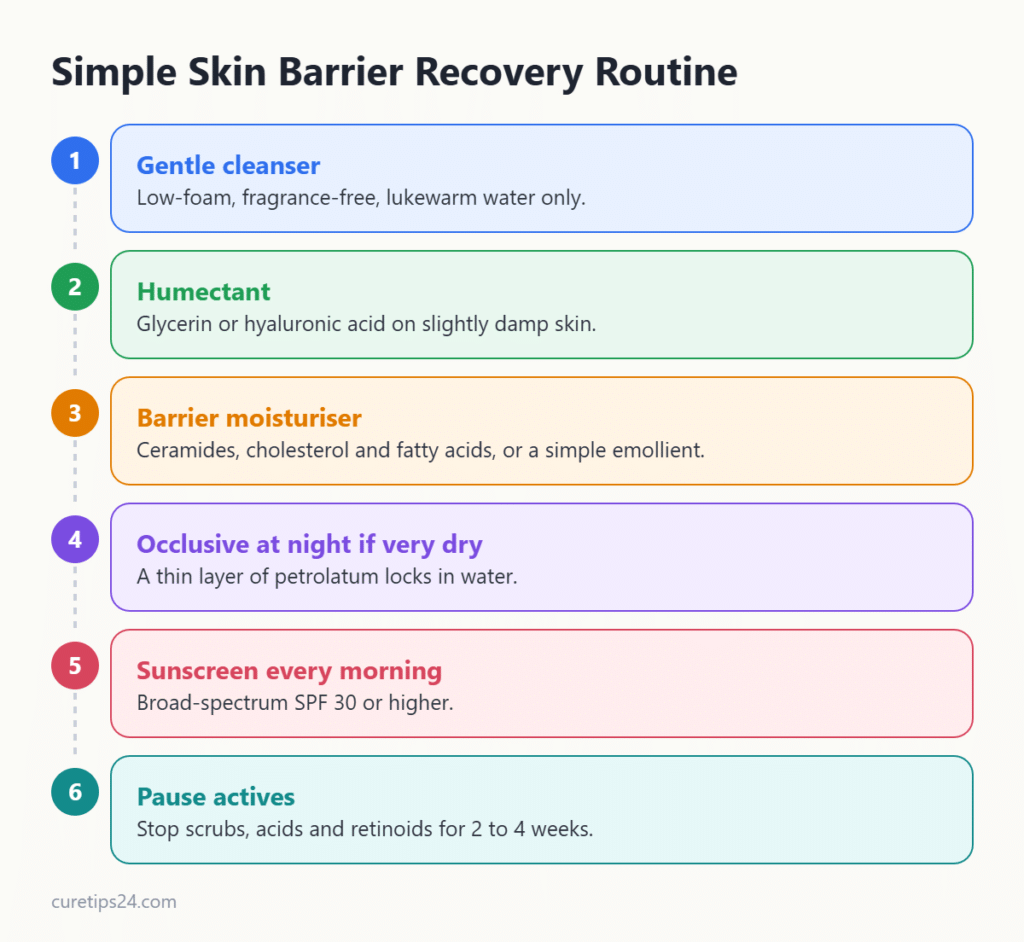
When your skin barrier is compromised, adopting a minimal recovery routine is essential. Pausing non-essential steps allows your skin the necessary time to repair its natural defences. A basic daily regimen should focus strictly on gentle cleansing, moisturising, and sun protection.
The first step in recovery is replacing harsh cleansers with a mild, soap-free formula. In the morning, rinsing your face with plain lukewarm water may be entirely sufficient. Temporarily pause all strong active ingredients, including retinoids and chemical exfoliants, to allow your skin to reset.
Best Ingredients for Skin Barrier Repair
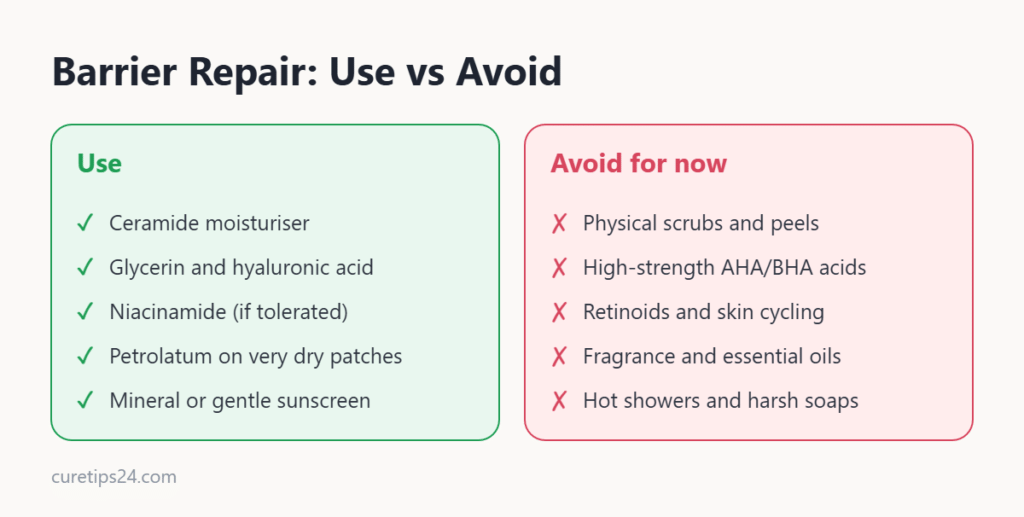
Selecting a moisturiser rich in barrier-supporting lipids is vital for effective recovery. Look for formulas containing ceramides, cholesterol, and free fatty acids to replenish the lipid mortar. Humectants like glycerin and hyaluronic acid draw water into the outer skin to relieve dehydration.
Occlusive ingredients such as petrolatum or dimethicone form a protective film over the surface. This seal dramatically reduces water loss and shields tender skin while it heals. Additionally, applying a gentle, broad-spectrum sunscreen every morning protects vulnerable skin from further UV damage.
If you are curious about another heavy occlusive that some people use on very dry patches, our guide to beef tallow for skin explains its benefits, risks and cautions honestly.
Summary of Key Skincare Components for Barrier Recovery
| Component Type | Key Examples / Ingredients | Primary Function | Barrier Benefit |
|---|---|---|---|
| Gentle Cleanser | Soap-free wash, lukewarm water | Removes surface dirt without stripping oils | Prevents further lipid loss and dryness |
| Humectant | Glycerin, Hyaluronic Acid | Draws water into the outer skin layers | Plumps dehydrated skin and restores suppleness |
| Barrier Lipid | Ceramides, Cholesterol, Fatty Acids | Replaces lost protective lipid mortar | Restores physical structure and seals moisture |
| Occlusive | Petrolatum, Dimethicone | Creates a protective film over skin | Reduces water loss and speeds healing |
| Broad-Spectrum Sunscreen | Mineral SPF, Zinc Oxide | Defends against harmful UVA and UVB rays | Prevents UV-induced damage and inflammation |
Combining these complementary components ensures your skin receives full structural support. While humectants attract hydration, barrier lipids and occlusives prevent that water from evaporating. Consistent daily application of these basic steps creates the ideal environment for skin recovery.
Once your barrier feels settled again, a structured rotation such as our skin cycling routine can help you reintroduce stronger actives gradually, rather than layering everything at once.
Humectants, Emollients and Occlusives Explained
Moisturisers work in three ways. Humectants such as glycerin, hyaluronic acid and urea draw water into the skin. Emollients such as ceramides and squalane smooth and soften. Occlusives such as petrolatum and dimethicone form a seal that reduces water loss. DermNet explains that the best moisturiser is the one you will use regularly, and the American Academy of Dermatology recommends applying it within minutes of washing to trap moisture. If your skin is easily irritated, our guide to fragrance-free skincare shows how to read labels.
What to Avoid While Your Skin Heals
Avoiding common skincare mistakes is just as important as using supportive products. First, avoid the temptation to scrub or physically exfoliate flaky areas of skin. Scrubbing irritated skin creates micro-tears and worsens existing surface inflammation.
Do not introduce multiple new skincare formulas all at the same time. Switching products rapidly makes it impossible to identify which ingredients your skin tolerates. Furthermore, steer clear of products containing synthetic fragrances, denatured alcohol, or harsh preservatives.
Ignore the advice to push through burning or stinging sensations when applying products. Persistent stinging is a clear sign that a formula is actively harming your barrier. If a product causes severe burning, wash it off gently and discontinue use immediately.
Most people notice calmer, less tight skin within one to two weeks, and a fuller recovery often takes about four weeks, which is roughly one skin renewal cycle. Some people find a gentle hypochlorous acid spray soothing, but it is optional. Ongoing redness, cracking or itch may point to a condition such as atopic eczema, which needs proper treatment.
When to Seek Advice from a Dermatologist
While mild barrier disruption often improves with basic care, professional guidance is sometimes necessary. If your skin fails to improve after several weeks of a minimal routine, consult a dermatologist. Persistent dryness, redness, or scaling may indicate an underlying medical skin condition.
Conditions such as atopic eczema, psoriasis, and rosacea share many symptoms with barrier damage. Atopic eczema causes dry, cracked, scaly, and intensely itchy patches on the skin. Psoriasis and rosacea also require tailored medical treatments alongside daily barrier care.
Identifying Severe Symptoms and Infection Signs
You should seek medical attention promptly if your skin shows signs of a severe reaction or infection. Warning signs include open sores, deep cracks that bleed, oozing fluid, or pus-filled blisters. Swelling, throbbing pain, skin that feels unusually warm, or a high fever warrant urgent medical evaluation.
Medical evaluation is also vital if dry skin interferes with your sleep or daily activities. Dermatologists can prescribe short-term topical treatments to calm acute inflammation quickly. Following a professional medical plan ensures your skin receives safe, targeted care.
This article is general information only and is not medical advice. Please consult a healthcare professional for personal advice.
How Long Does Skin Barrier Repair Take?
There is no single timeline, because skin barrier repair depends on how damaged the skin is and whether the trigger has been removed. Mild irritation from one week of over-exfoliating often settles within a few days to two weeks once you stop the harsh products. More serious or long-running damage, such as months of strong acids, scrubs and retinoids layered together, can take several weeks, and full tolerance to active ingredients usually returns last. Because the outer layer of skin renews roughly every month, many dermatologists suggest giving a gentle routine at least four weeks before judging results.
Signs Your Skin Barrier Is Healing
- Moisturiser and sunscreen no longer sting or burn when applied.
- Tightness after cleansing fades and skin feels comfortable through the day.
- Flaking, rough patches and redness gradually reduce.
- Skin looks less shiny-yet-dehydrated and makeup sits more evenly.
- You can use your usual gentle products without new breakouts or itching.
Skin Barrier Repair Mistakes to Avoid
The most common mistake is reintroducing retinol, vitamin C or exfoliating acids too soon. Wait until your skin has been calm for at least a week or two, then add back one active at a time, a few nights a week. Other mistakes include switching products every few days, using hot water, layering many new serums at once, and relying on fragranced or essential-oil-heavy “soothing” products that can irritate sensitive skin further. If you are acne-prone, keep thick occlusives such as petrolatum to dry patches rather than slugging your whole face.
Barrier-friendly ingredients to look for
Look for fragrance-free moisturisers that combine ceramides, cholesterol and free fatty acids, the same lipids found in a healthy barrier, plus humectants such as glycerin and hyaluronic acid. Niacinamide, panthenol (pro-vitamin B5), centella asiatica and colloidal oatmeal can also support comfort and skin barrier repair. Cleansers with a skin-friendly, slightly acidic pH help protect the acid mantle and skin microbiome.
FAQs About Skin Barrier Repair
Can you repair your skin barrier overnight?
A rich, fragrance-free moisturiser or a thin layer of petrolatum can make skin feel more comfortable overnight, but true skin barrier repair usually takes days to weeks of consistent, gentle care.
Should I stop using retinol during skin barrier repair?
Yes, pause retinoids, exfoliating acids and scrubs until stinging and redness settle. Restart slowly and buffer with moisturiser. If a retinoid was prescribed, ask your doctor before stopping it.
Can oily skin have a damaged barrier?
Yes. Oily or acne-prone skin can still be dehydrated and irritated, often after harsh cleansers or drying acne treatments. Lightweight gel-cream moisturisers with ceramides and niacinamide suit oily skin during skin barrier repair.
When should I see a dermatologist?
Seek medical advice if skin cracks, bleeds, weeps, becomes very itchy or swollen, or does not improve after about four weeks of gentle care. These can be signs of eczema, rosacea, contact dermatitis or infection that need proper treatment.

14 thoughts on “Skin Barrier Repair: Signs Yours Is Damaged and a Simple Recovery Routine”