Table of Contents
Quick Summary / At A Glance
- Beef tallow is rendered beef fat; on skin it works mainly as an occlusive, sealing in water that is already there rather than adding water itself.
- That sealing effect can genuinely help some very dry, rough patches feel softer, which is why the trend has loyal fans.
- Tallow is rich and heavy, varies a lot between homemade and commercial batches, and can feel greasy or smell noticeable to some users.
- People with oily, congested or acne-prone skin are the group most likely to regret it, because heavy fats can trap oil and debris in pores.
- It is not a cure for eczema, acne or any skin condition, and broken, infected or worsening skin needs medical care, not a kitchen-style balm.
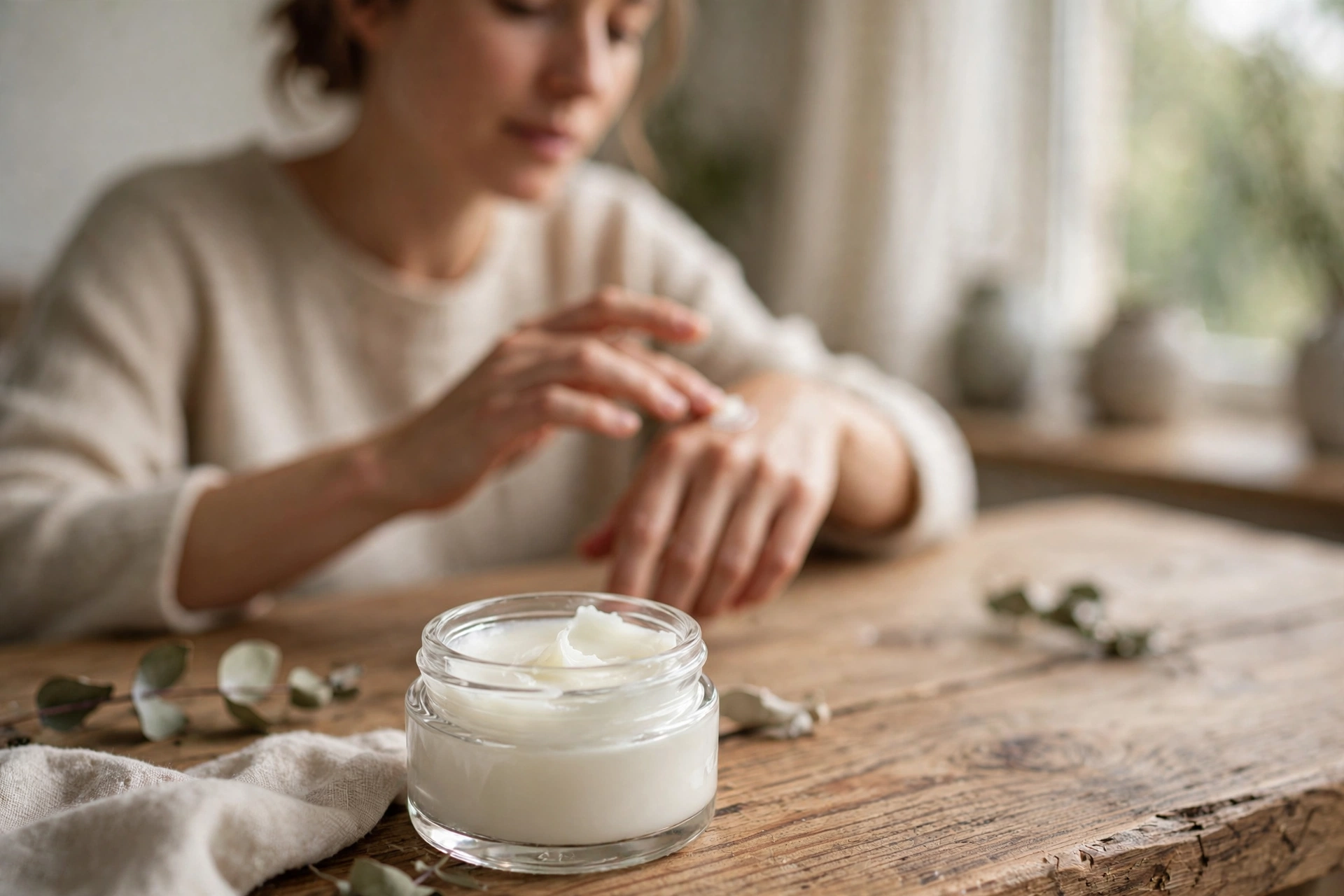
Beef tallow has travelled an unlikely route, from cooking fat to viral skincare balm. Supporters call it ancestral, simple and natural, and show jars of whipped balm being smoothed over dry cheeks and hands.
Critics, including many dermatologists, urge caution. Both reactions become easier to understand once you know what tallow actually does on skin, and what it cannot do.
This honest check explains the real mechanism behind the trend, who might reasonably enjoy it, who should avoid it, and why natural does not automatically mean suitable.
What Beef Tallow Is, and Why People Put It on Skin
Tallow is fat from cattle that has been rendered, meaning gently melted and purified, until it becomes a firm, pale fat. Whipped tallow balms are simply that fat aerated, sometimes with a small amount of another oil added.
Its appeal is easy to see. The ingredient list is short, the tradition is old, and farm and homestead communities have used animal fats in salves for a very long time.
Tallow also contains fat-soluble components, including small amounts of vitamins A, D, E and K, because those vitamins are stored in animal fat. Their presence is often highlighted in marketing, sometimes out of proportion to what a smear of balm can realistically deliver.
None of that history makes tallow either a miracle or a menace. It makes it a heavy fat with one main skin job, explained next.
How Tallow Works on Skin: Occlusion, Explained Simply
Moisturisers generally work in three ways. Some draw water toward the skin, some soften and smooth the surface, and some form a film that slows water escaping from the skin.
Tallow belongs firmly in the third group, the occlusives. Like petroleum jelly, it sits on the surface and reduces water loss, so skin underneath stays hydrated for longer.
That is also its limit. An occlusive does not add water; it traps water that is already present, which is why balms work best applied over slightly damp skin or over a lighter moisturiser.
On very dry hands, heels or rough winter patches, that simple sealing effect can feel genuinely helpful. On skin that is already oily, the same heavy film is where the problems begin.
Where Tallow May Reasonably Help
The most believable success stories involve small, very dry areas: cracked-feeling knuckles, rough heels, dry elbows, or hands punished by cold weather and frequent washing.
In those spots, almost any thick occlusive layer protects the surface while it recovers its comfort. Tallow fans often prefer its texture and short ingredient list over other balms, which is a fair personal preference.
Some people with dry facial skin also report liking a tiny amount in winter. If that is you, tiny really is the key word, and the patch-test advice below still applies.
For a structured approach to very dry skin, our existing dry-skin guidance is a useful companion. Our round-up of natural ways to treat very dry skin at home offers more gentle options.
The Problems Nobody Puts in the Viral Video
The first problem is weight. Tallow is a rich, saturated fat, and on the face it can feel greasy, sit heavily under sunscreen or make-up, and transfer onto pillows.
The second problem is consistency. Homemade and small-batch tallow varies with the source fat, the rendering, storage and any added oils, so one jar can behave quite differently from the next.
The third problem is smell. Well-rendered tallow is mild, but many users notice a faint beefy scent, especially in warm weather or in poorly purified batches. Added fragrance can hide it, but fragrance brings its own irritation risk.
Finally, natural is not a safety guarantee. Plenty of natural substances irritate skin, and a food-grade fat was never formulated or tested as a leave-on facial product.
| Skin type or situation | Honest verdict on tallow |
|---|---|
| Very dry hands, heels or elbows | May help as a thick sealing layer over damp skin |
| Dry, non-sensitive facial skin | A tiny amount may suit some people; patch test first |
| Oily or combination skin | Usually too heavy; likely to feel greasy and congested |
| Acne-prone or clog-prone skin | Best avoided on the face; heavy fats can trap oil and debris |
| Broken, infected or worsening skin | Do not use; seek medical advice instead |
The pattern in this table is simple. The drier and thicker the skin area, the more sense an occlusive fat makes; the oilier and more delicate the area, the less sense it makes.
Tallow and Acne-Prone Skin: The Main Caution
Acne forms when pores become blocked with oil and dead skin and inflammation follows. Adding a heavy, slow-moving fat over an already congested area works against that process, not with it.
Individual reactions vary, and tallow will not affect everyone in the same way. But if you are prone to blackheads, whiteheads or breakouts, your face is the last place to experiment with a rich animal fat.
Claims that tallow clears acne because it is natural or because its fatty-acid profile resembles skin oil are not supported by reliable evidence. Resembling sebum is not the same as regulating it.
If breakouts increase after starting any heavy balm, stop using it on that area. Persistent or painful acne deserves proper treatment advice rather than a rotation of viral remedies, and our guide to skin cycling shows how structured, gentler routines are usually kinder to reactive skin.
Is Tallow a Moisturiser, a Treatment, or Neither?
It is best described as a simple occlusive balm. Used honestly in that role, it can sit alongside familiar options rather than above them.
It is not a treatment. It does not cure eczema, psoriasis, acne, dermatitis or infection, and presenting it as one delays the care those conditions actually need.
It is also not automatically better than a formulated moisturiser. A well-made cream combines water-attracting, softening and sealing ingredients in tested proportions, with preservatives that keep the product safe in the jar.
Homemade balms carry a quiet extra risk here: no preservative system and no stability testing. A jar kept in a warm bathroom for months is not the same product it was on day one.
How to Try It More Safely, If You Decide To
Keep it off your face at first. Test on a small dry area, such as one elbow or the backs of your hands, for several days before considering anywhere more delicate.
Apply a pea-sized amount or less over slightly damp skin, so the occlusive layer has water to seal in. More is not better; excess fat simply sits on the surface.
Choose a properly made, clearly labelled product over an unlabelled homemade jar if you can, and store it cool, clean and dry. Always scoop with clean, dry hands or a clean spatula.
Stop at once for spreading redness, itching, stinging, new bumps or any sign of infection, and do not use it on broken skin. When a skin problem is worsening, that is a reason to book a clinician, not to add another layer.
The Bottom Line on the Tallow Trend
Beef tallow is neither the villain nor the hero of its viral videos. It is a heavy occlusive fat that can protect very dry patches, and that same heaviness makes it a poor bet for oily and acne-prone faces.
If you enjoy simple, traditional balms and your skin is dry and calm, a careful patch test will tell you more than any video can. If your skin is reactive, congested or medically unhappy, better-tested moisturisers and professional advice are the wiser spend.
As with every ancestral trend, the oldest question is still the right one: not whether people once used it, but whether it suits your skin, today, in the area you plan to use it.
This article is general information only and is not medical advice. Please consult a healthcare professional for personal advice.