Table of Contents
Quick Summary / At A Glance
- Sea buckthorn oil is pressed from the bright-orange berries of a hardy shrub, and search interest in it is climbing fast — trend trackers put it near 40,000 monthly searches, up more than 80% year on year.
- Its standout feature is omega-7 (palmitoleic acid), a fatty acid that is rare in plant oils, alongside vitamin E and carotenoids.
- As a moisturiser it is a plausible, pleasant emollient — but robust clinical trials on topical skin benefits are few, so barrier-repair claims run ahead of the evidence.
- The oil’s deep orange colour can temporarily stain skin, nails and pillowcases, which is the most common real-world complaint.
- It is not a treatment for eczema, psoriasis, wounds or burns; anyone with a diagnosed skin condition should talk to a dermatologist before trying it.
Somewhere between the acids and the peptides, an orange berry oil has quietly climbed the skincare search charts. Sea buckthorn oil is now one of the fastest-growing botanical terms in skincare, driven by barrier-repair formulas and a wave of ingredient-first shopping.
The pitch is appealing. One oil that nourishes, protects and helps the skin barrier — with a rare omega-7 fatty acid most plant oils do not have. It sounds like the simple, natural answer to over-exfoliated skin.
As always, the honest question is what the evidence actually supports. This article looks at what sea buckthorn oil is, what is genuinely known about it, and where the marketing runs ahead of the science.
What Sea Buckthorn Oil Actually Is
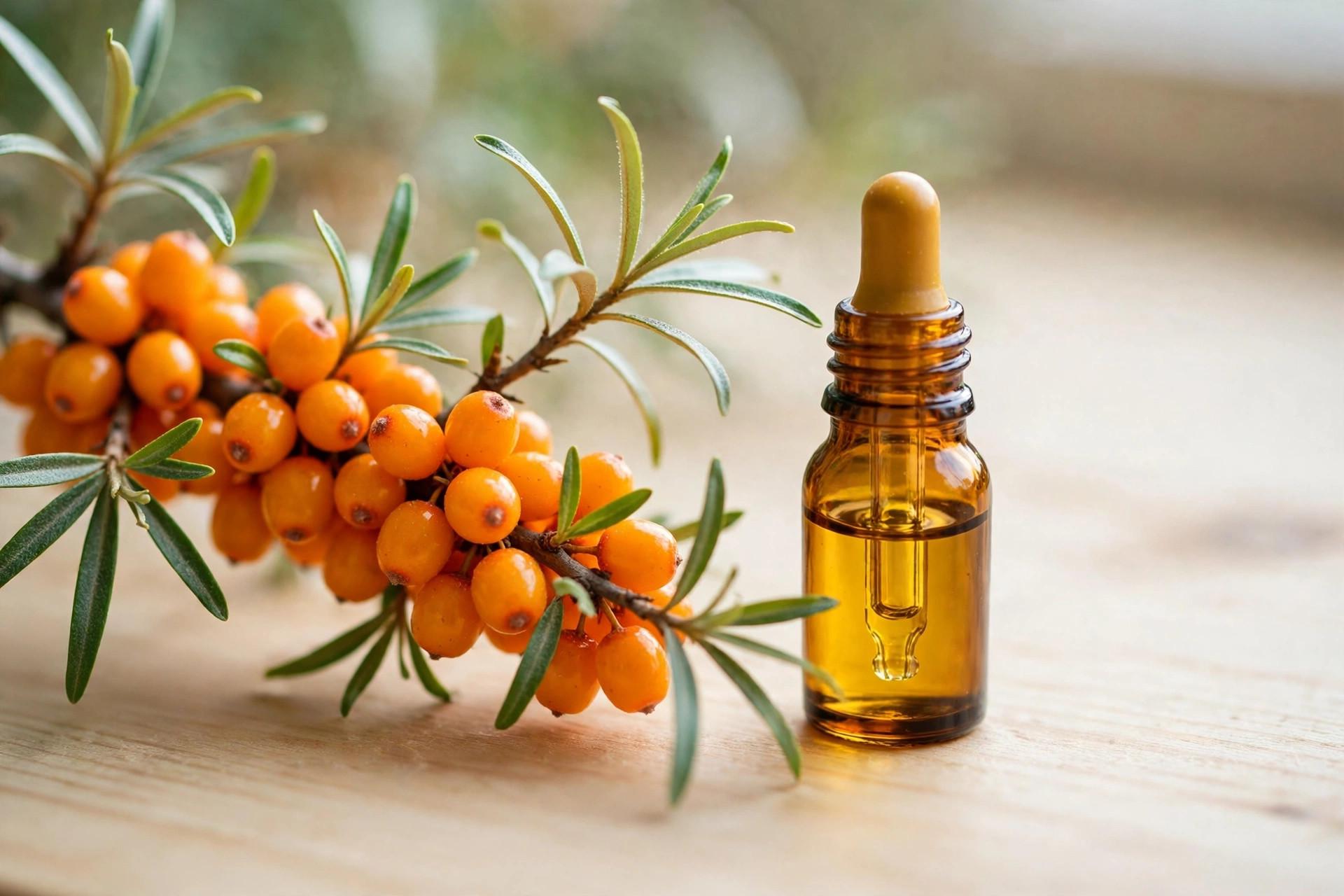
Sea buckthorn is a thorny shrub that grows in cold, harsh climates across Europe and Asia. Its small, bright-orange berries are the source of the oil — and that intense colour is the first thing to understand about it.
Two kinds of oil are pressed from the plant. Seed oil comes from the small seeds inside the berries and is paler, while pulp or fruit oil comes from the fleshy part and carries the deep orange pigment. Many cosmetic products blend the two, and the colour of your bottle tells you roughly how much pulp oil it contains.
The oil has a long traditional history in Tibetan and Chinese herbal practice, where the berries were used for various skin and digestive complaints. Traditional use is interesting context, but it is not the same as modern clinical proof.
Why Searches Are Rising Now
Search-trend trackers put “sea buckthorn” near 40,500 monthly searches, up about 82% year on year — the fastest-growing botanical oil on their current skincare table. That puts it in the same conversation as myrrh and avocado oil, but growing considerably faster.
Several forces are pushing it. The barrier-repair movement has shoppers looking for gentle, nourishing oils after years of strong actives. Ingredient-led buying means people search for the molecule — here, omega-7 — rather than a brand. And the pantry-crossover effect matters: a bright, natural berry oil simply photographs well on social feeds.
Popularity, though, is a signal of curiosity, not of proof. Fast-rising botanical searches tend to have short half-lives, which is all the more reason to check the substance before buying into the spike.
What Is Actually Inside the Bottle
The honest selling point of sea buckthorn oil is its fatty acid profile. It is unusually rich in palmitoleic acid, an omega-7 fatty acid that most common plant oils contain only in trace amounts. Omega-7 is also a natural component of human skin lipids, which is where the barrier-repair story comes from.
Alongside it come vitamin E (tocopherols), carotenoids such as beta-carotene — the pigment behind the orange colour — and various plant sterols. The whole berries are also rich in vitamin C, though most of that stays in the juice rather than the pressed oil.
Composition, however, is a promise, not a result. An oil can contain interesting compounds and still lack good evidence that rubbing it on skin delivers the claimed benefits.
What the Evidence Actually Shows
Here is the careful part. Most published research on sea buckthorn is on oral supplements or laboratory and animal studies, not on the cosmetic serums people are actually buying. Human trials of topical sea buckthorn oil for skin are few and small.
What can be said fairly is this: as an emollient, it is a perfectly reasonable moisturising oil. Oils that are rich in fatty acids and vitamin E generally soften skin and reduce water loss, and sea buckthorn oil is no exception. That is a modest, believable claim.
What cannot be honestly claimed is that it repairs the skin barrier better than other oils, treats eczema or psoriasis, heals wounds, or reverses ageing. Those are medical or strong cosmetic claims, and the clinical evidence simply is not there. If a product page promises them, treat the page — not the oil — with suspicion.
The Orange Problem: Staining and Other Downsides
The most common complaint about sea buckthorn oil has nothing to do with science and everything to do with laundry. The carotenoid pigments that make the oil orange can temporarily tint skin, stain fingernails, and mark pillowcases and white towels.
This is why many people use it only at night, mixed into a moisturiser, or in tiny amounts — two to four drops is plenty. Diluting it does not remove the colour entirely, but it makes the tint far less noticeable by morning.
Other practical notes: the oil has a distinctive, slightly musky scent that some people dislike; very oily or acne-prone skin may find any heavy facial oil too much; and because it is a natural product, composition varies between brands and harvests. Look for cold-pressed oil in dark glass, stored away from heat and light.
How to Use It Without the Mess
If you decide to try it, keep the routine simple. Apply it after water-based serums and before or mixed into your night moisturiser, since oils seal in the layers beneath them. A skin cycling routine is one sensible framework for slotting a new oil into recovery nights rather than active nights.
Always patch test first — a dab behind the ear or on the jawline for 24 hours — because plant oils can irritate sensitive skin even when they are marketed as gentle. Start with a drop or two, and give it two to three weeks before judging whether your skin likes it.
Keep expectations modest. If dryness and tightness ease, the oil is doing its job as an emollient. If you were hoping it would fade dark spots or calm a diagnosed condition, pair it with ingredients that have real evidence for those jobs — azelaic acid, for example, is far better studied for tone and redness.
Who Should Skip It
Anyone with eczema, psoriasis, rosacea or another diagnosed skin condition should not treat a cosmetic oil as therapy. These conditions need proper diagnosis and treatment plans, and an oil can delay both if it becomes a substitute.
People with known allergies to plants in the oleaster family, or who react to fragranced natural products, should be cautious. And if your skin is currently raw, over-exfoliated or broken, skip all new products — including this one — until the barrier has calmed down.
Sea Buckthorn Oil vs Other Popular Facial Oils
| Oil | Standout feature | Evidence level | Main drawback |
|---|---|---|---|
| Sea buckthorn | Rare omega-7, carotenoids | Thin for topical claims | Orange staining |
| Rosehip | Light texture, vitamin A precursors | Modest, small studies | Can oxidise quickly |
| Jojoba | Closest to skin’s own sebum | Long cosmetic track record | Few active compounds |
| Squalane | Stable, non-greasy, low odour | Well tolerated in practice | Minimal nutrient content |
The table makes the trade-off clear. Sea buckthorn oil is the most “interesting” oil on the list and the least proven — while the plainer options have longer, quieter track records. Interesting is not the same as better.
The Honest Bottom Line
Sea buckthorn oil is a legitimate, pleasant emollient with an unusual fatty acid profile and a fast-rising search curve. It is not a miracle, not a treatment, and not — despite the orange glow — liquid sunshine for damaged skin.
If you like botanical oils and accept the staining, it can earn a place in a simple night routine. If you need a specific skin problem solved, spend your money on ingredients with real clinical evidence and a dermatologist’s guidance instead.
This article is general information only and is not medical advice. Please consult a healthcare professional for personal advice.