Table of Contents
Quick Summary / At A Glance
- Red light therapy for hair means low-level laser or LED devices — caps, combs and helmets — that shine red light onto the scalp, with searches up about 22% year on year.
- Several small randomised trials suggest modest improvements in hair density for early pattern hair loss — real but limited evidence, not a breakthrough.
- Results take months of consistent use, work best on early thinning, and cannot regrow hair where follicles are long gone.
- At-home devices vary widely in power and coverage; some are cleared by regulators, but clearance is not proof a specific device works well.
- Sudden, patchy or severe hair loss needs a dermatologist’s diagnosis first — a device is never the right first step for those.
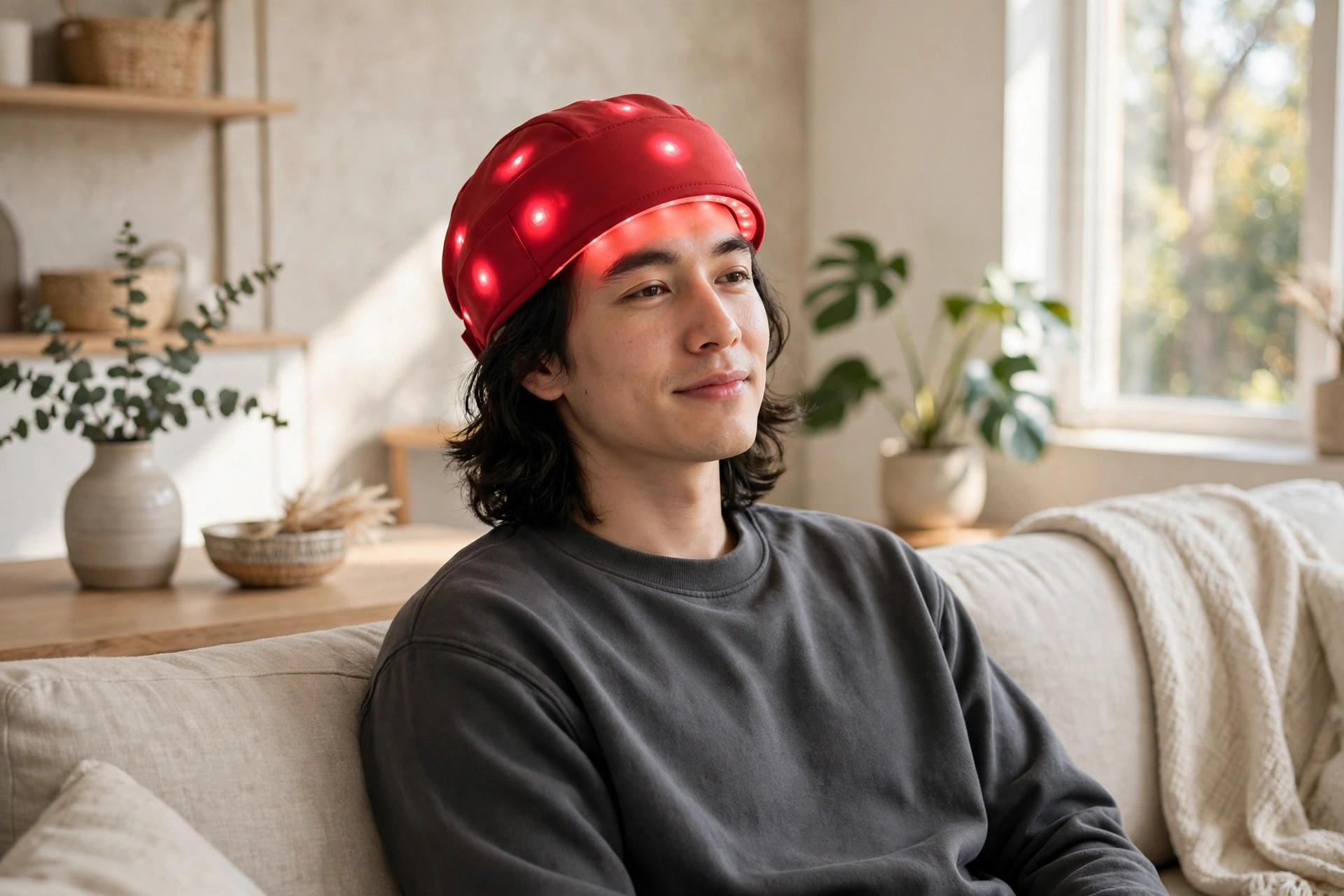
Between the serums and the supplements, a glowing red cap has entered the hair-loss conversation. Red light therapy devices — caps, combs and helmets you wear at home — promise fuller hair with light alone, no drugs and no surgery.
Searches for red light therapy for hair growth keep climbing, and the devices keep getting sleeker. The marketing often borrows the language of clinics: lasers, wavelengths, “clinically shown.”
Some of that language is earned. Low-level light therapy is one of the few device-based approaches with actual randomised trials behind it. But the gap between what the trials showed and what the adverts imply is wide — and worth measuring honestly.
Why Searches Are Rising Now
Search-trend trackers put “red light therapy hair growth” at roughly 18,100 monthly searches, up about 22% year on year. It sits inside a bigger shift: people now research hair-loss options by name — oral minoxidil, red light therapy, named ingredients — instead of buying generic “growth” products.
The appeal is easy to understand. Drugs for hair loss come with prescriptions, side effects and daily commitment; transplants are expensive and surgical. A cap you wear while watching television feels like a middle path — technological, non-invasive, and under your own control.
That feeling is exactly what needs checking against the evidence. Comfort and convenience are real benefits, but they are not the same as effectiveness.
What Red Light Therapy Actually Is
The technical name is low-level laser therapy, or LLLT — though many home devices use LEDs rather than true lasers. The idea is that specific wavelengths of red light, applied to the scalp for several minutes at a time, stimulate cellular activity in and around the hair follicle.
Proposed mechanisms include increased blood flow to the scalp and extra energy production in follicle cells. These are plausible biological stories, supported by laboratory work — but a plausible mechanism is only a hypothesis until human trials confirm the outcome.
Treatment is not instant and not occasional. Trial protocols typically involve using the device several times a week for months. Anyone promising visible regrowth in a few weeks is not describing the therapy the studies tested.
What the Studies Suggest
A number of small randomised, controlled trials have tested low-level light devices in people with pattern hair loss, and several reported modest increases in hair density compared with sham devices. A few systematic reviews have pooled these trials and found a small but statistically detectable benefit.
“Small but detectable” is the honest summary. The improvements are modest — nowhere near the scale of a transplant, and generally smaller than what proven medications achieve. The trials are also short by hair standards, often 16 to 26 weeks, and many were small or partly industry-funded.
Just as important is who the trials studied: mostly people with early to moderate pattern hair loss. There is no good evidence that light therapy helps scarring alopecias, alopecia areata, or areas that have been bald for many years. Before considering any device, it helps to understand why hair falls out in the first place — because the cause decides whether light has any chance of helping.
What the Devices Cannot Do
No home device can diagnose your hair loss, and the wrong diagnosis wastes months. Shedding from stress, thyroid problems, iron deficiency or autoimmune conditions will not respond to red light, and delaying proper treatment can cost hair that might have been saved.
Devices also cannot replace consistency. The trials that showed benefit used the device on schedule, for months. A cap that lives in a cupboard delivers exactly nothing — and buyer reviews are full of people who stopped after a few weeks.
Finally, marketing routinely overstates the science. Phrases like “clinically proven” on a product page may refer to one small study of a different device, or to no study at all. Regulator clearance of a device — where it exists — means it is considered safe for its intended use, not that it works brilliantly.
Caps, Combs and Helmets: What Differs
Caps and helmets cover the whole scalp at once and are the easiest to use consistently — you wear them while doing something else. Laser combs are cheaper and target the parting line, but they demand more effort and patience per session.
In-clinic laser treatments use more powerful equipment under supervision, but they cost far more per session and the evidence for superiority over home devices is not clearly established. For most people the realistic choice is a home device or nothing.
Price is the uncomfortable part. Decent devices cost several hundred pounds or dollars — a lot for a modest, slow benefit. Compare that honestly against a dermatologist visit and proven treatments before spending.
Safety and Smart Shopping
Low-level light therapy is generally well tolerated. The main safety notes are simple: do not stare directly into the light source, follow the manufacturer’s timing exactly, and stop and ask a clinician if you get scalp irritation, headaches or anything unexpected.
When shopping, look for devices that state their wavelength, power and treatment protocol clearly — vagueness is a red flag. Be sceptical of before-and-after photos, which are easy to manipulate with lighting and hair styling. And check the returns policy, since several months of use is the only real test.
A sensible order of operations: first, get a diagnosis; second, discuss proven options with a dermatologist; third, consider a device as a possible add-on rather than a starting point. Good habits support everything — a consistent scalp care routine costs little and helps whatever else you try.
Device Types Compared
| Device type | Coverage | Effort per session | Typical cost | Evidence note |
|---|---|---|---|---|
| Cap / helmet | Whole scalp | Low — wear and wait | High | Most studied home format |
| Laser comb | Parting lines | Medium — slow passes | High | Some trial support |
| Headband / band | Hairline and crown | Low | Moderate | Less studied |
| In-clinic laser | Full scalp | Low — staff operate | Very high per course | Stronger hardware, thin comparison data |
The table shows the real trade: convenience and cost against a modest, slow benefit. No row contains a miracle — which is precisely what an honest comparison should show.
The Honest Bottom Line
Red light therapy for hair is not a scam and not a miracle. It is a plausible, mildly evidence-backed option for early pattern hair loss — slow, expensive, and modest in its effects, with the best results going to people who use it consistently for months.
If your hair loss is sudden, patchy, or severe, put the device catalogue away and see a dermatologist first. The most powerful hair technology remains an accurate diagnosis.
This article is general information only and is not medical advice. Please consult a healthcare professional for personal advice.