Table of Contents
Quick Summary / At A Glance
- Healthy-looking hair starts at the scalp, because hair grows from follicles in scalp skin.
- A beginner routine needs only four basics: regular gentle washing, careful rinsing, light scalp massage, and time between harsh treatments.
- How often you wash depends on your scalp type, not on a universal rule copied from social media.
- Scrubs, oils and serums are optional extras, not essentials, and using too many at once can irritate the scalp.
- Persistent itching, flaking, pain, sores or patchy hair loss are signs to see a doctor or dermatologist, not to add more products.
For years, hair care meant caring for the lengths of the hair. Shampoo was rushed, conditioner got the attention, and the scalp was mostly ignored unless it itched.
That focus is now shifting, and for a sensible reason. Your scalp is skin, and the condition of that skin affects how comfortable your head feels and how well hair can grow from it.
This guide explains a calm, beginner-friendly scalp routine. It avoids hype, expensive steps and harsh tricks, and it helps you spot when a scalp problem needs medical care instead.
Why Scalp Care Has Become the New Hair Care
Hair strands themselves are dead once they leave the scalp. You can soften, coat and protect them, but you cannot feed them back to health.
The living part of the system is the scalp. Each strand grows from a follicle surrounded by oil glands, tiny blood vessels and normal skin microbes.
When the scalp builds up with oil, sweat, dead skin and styling product, it can feel itchy and look flaky. Keeping it clean and calm will not transform hair overnight, but it creates a better base for normal growth.
That is the honest promise of scalp care. It supports comfort and cleanliness, rather than guaranteeing thicker or faster-growing hair.
First, Work Out What Kind of Scalp You Have
Before you copy any routine, notice your own pattern over two or three days. Does your scalp feel tight after washing, greasy by the next morning, or mostly comfortable?
An oily scalp usually looks shiny at the roots quite quickly and may need more frequent washing. A dry scalp often feels tight and may produce small, dry flakes, especially in cold or dry weather.
A sensitive scalp reacts easily, with stinging or redness from fragranced or strong products. Many people are a mix, with oilier roots and drier lengths.
Your routine should follow that pattern. There is no single best schedule for everyone.
A Simple Beginner Scalp Routine, Step by Step
You do not need a shelf of special products to start. A gentle shampoo that suits you, water, your fingertips and consistency cover most of what a healthy scalp needs.
Step 1: Wash for the scalp, not just the hair
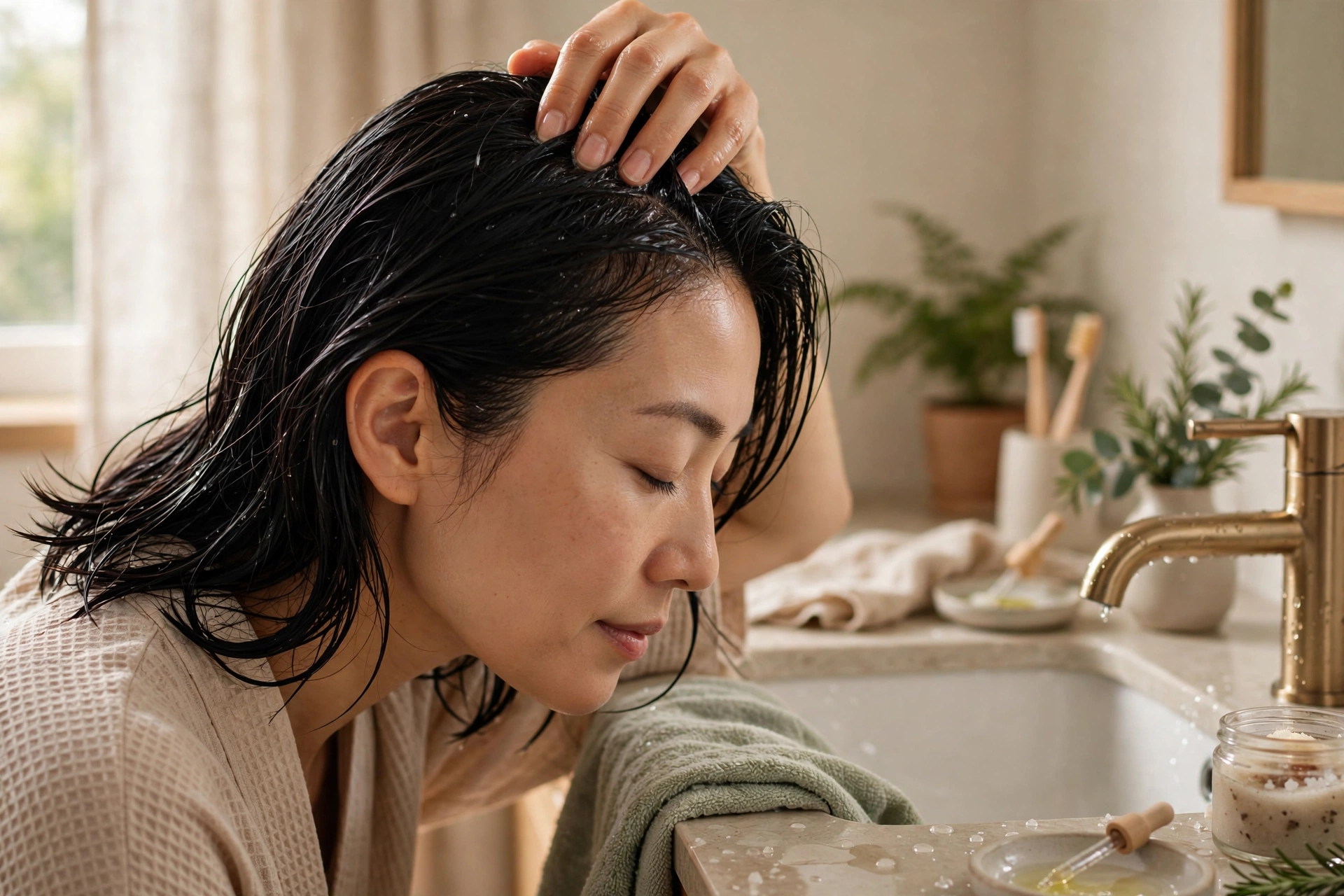
Wet your hair thoroughly, then apply shampoo mainly to the scalp. Massage it in with the pads of your fingers, not your nails, for about a minute.
Let the lather run through the lengths as you rinse, instead of scrubbing the ends hard. The ends are older and drier, and they rarely need the same cleaning as the roots.
If you use a lot of styling product or your scalp feels heavily coated, a second gentle wash can help. If one wash leaves your scalp clean and comfortable, one is enough.
Step 2: Rinse longer than you think you need to
Leftover shampoo and conditioner are a common, boring cause of itch and dull roots. Rinse until the water runs clear and your scalp no longer feels slippery.
Keep conditioner mainly on the mid-lengths and ends unless the product is made for the scalp. Heavy conditioner sitting on the roots can make fine hair look flat very quickly.
Step 3: Add a short, gentle scalp massage
A minute or two of gentle fingertip massage while shampooing helps loosen build-up and spread the product evenly. It should feel pleasant, never painful or scratchy.
Massage is often promoted online as a growth trick, but the evidence for regrowth is limited. Treat it as a useful cleaning and comfort step, not as a proven hair-loss treatment.
If you enjoy using an oil before washing, keep it light and wash it out well. Our evidence check on rosemary oil for hair explains what is known, what is not proven, and how to patch test safely.
Step 4: Dry gently and give your scalp air
Pat hair dry instead of rubbing it hard with a towel. If you use a hair dryer, keep it on a moderate heat and do not hold it too close to one spot on the scalp.
Try not to sleep with a soaking-wet scalp under tight coverings for long periods.
How Often Should You Wash? A Practical Guide
Wash frequency is where most beginners get confused, because advice online swings between daily washing and almost never washing. The right answer sits in the middle and depends on you.
| Scalp pattern | Typical starting point | What to watch for |
|---|---|---|
| Oily scalp | Wash daily or every other day | Greasy roots, itch from build-up if washing is delayed too long |
| Normal scalp | Wash every two to three days | Comfort between washes, no strong build-up or tightness |
| Dry or tight scalp | Wash every three to four days to start | Tightness or dry flakes if washing is too frequent or water is very hot |
| Very active or sweaty routine | Rinse or wash after heavy sweating as needed | Sweat and salt left for days can make the scalp feel irritated |
Use this table as a starting point, not a rule. Adjust by one step at a time and judge the result after a week or two.
If you are also wondering whether a special shampoo can do more than clean, read our honest look at whether a hair growth shampoo can really help hair grow. Contact time on the scalp is short, and that matters for expectations.
Optional Extras: Scrubs, Serums and Oils
Once the basics feel easy, some people add an occasional extra. A gentle scalp scrub, used now and then, can help lift stubborn build-up for some scalps.
Scrubs are not daily products, and harsh physical scrubs can irritate sensitive skin. If your scalp stings, burns or becomes red after a scrub, stop using it.
Scalp serums vary widely, from simple moisturisers to products with active ingredients. Introduce only one new product at a time, so you can tell what helps and what irritates.
Oils can feel soothing before a wash for a dry scalp, but they are not a cure for dandruff or hair loss. Always wash oils out properly, and patch test essential oils first.
Common Scalp Care Mistakes Beginners Make
The most common mistake is doing too much at once. Starting a scrub, a serum, an oil and a new shampoo in the same week makes irritation more likely and harder to trace.
Another mistake is scratching with nails or using very hot water. Both can leave the scalp sore and can worsen flaking rather than fixing it.
Skipping washes for long stretches in the hope of training the scalp is also unreliable. Oil production is largely driven by hormones and genetics, not by how often you wash.
Finally, avoid putting every viral ingredient on your head at the same time. Simple routines are easier to keep, cheaper to maintain and kinder to sensitive skin.
Scalp Care and Hair Shedding: Keeping Expectations Honest
A better scalp routine can reduce build-up and discomfort, and it can help hair look cleaner and less flat at the roots.
What it cannot honestly promise is regrowth where follicles are no longer producing hair, or a fix for medical causes of shedding. Stress, illness, hormones, nutrition and genetics can all play a role in hair loss.
Keeping a simple note of when shedding started and what changed around that time can be useful. If you later see a doctor, that timeline is far more helpful than a list of products you tried.
When to See a Doctor or Dermatologist
See a healthcare professional if you have persistent itching, thick or yellowish flakes, painful bumps, crusts or sores that do not settle. The same applies if flaking spreads to the eyebrows, ears or face.
Book an appointment promptly for patchy hair loss, sudden heavy shedding, or a scalp that is red, swollen or weeping. These signs can point to conditions that need proper diagnosis and treatment.
Do not keep layering cosmetic products over an inflamed scalp hoping it will clear. Early medical advice is usually simpler and more effective than months of guessing.
A calm routine, honest expectations and quick help when warning signs appear will serve your scalp far better than any viral routine. Start simple, stay consistent, and change only one thing at a time.
This article is general information only and is not medical advice. Please consult a healthcare professional for personal advice.