
The Cerave Resurfacing Retinol Face Serum has received positive reviews for its effectiveness in improving skin texture and reducing fine lines and wrinkles. With the Cerave Resurfacing Retinol Face Serum gaining popularity in the skincare market, it’s important to consider the reviews before trying this product.
Users have praised its ability to effectively improve skin texture and reduce fine lines and wrinkles. This serum contains retinol, a powerful ingredient known for its anti-aging properties. It also includes ceramides and niacinamide, which help strengthen the skin’s barrier and even out skin tone.
The lightweight formula absorbs quickly, making it suitable for all skin types. Overall, the Cerave Resurfacing Retinol Face Serum has been well-received by users, making it a promising option for those wanting to achieve smoother, younger-looking skin.
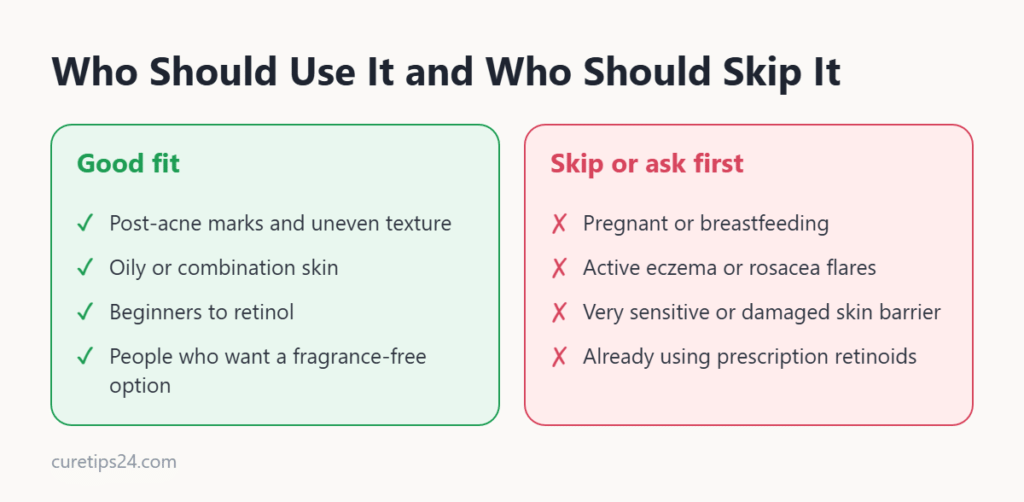
Table of Contents
Who Should (and Should Not) Use It
Retinoids make skin more sensitive to the sun, so the NHS advice to use SPF 30 or higher daily is essential. If your skin stings or peels a lot, pause and follow our skin barrier repair routine. For a broader view of anti-ageing ingredients, see anti-wrinkle products.

What Results to Expect
Retinol works slowly. The Mayo Clinic guide to wrinkle creams notes that retinol is one of the ingredients most likely to improve the look of skin with regular use, but results take weeks to months. Introducing it gently with skin cycling can reduce irritation.
Key Ingredients and How They Work
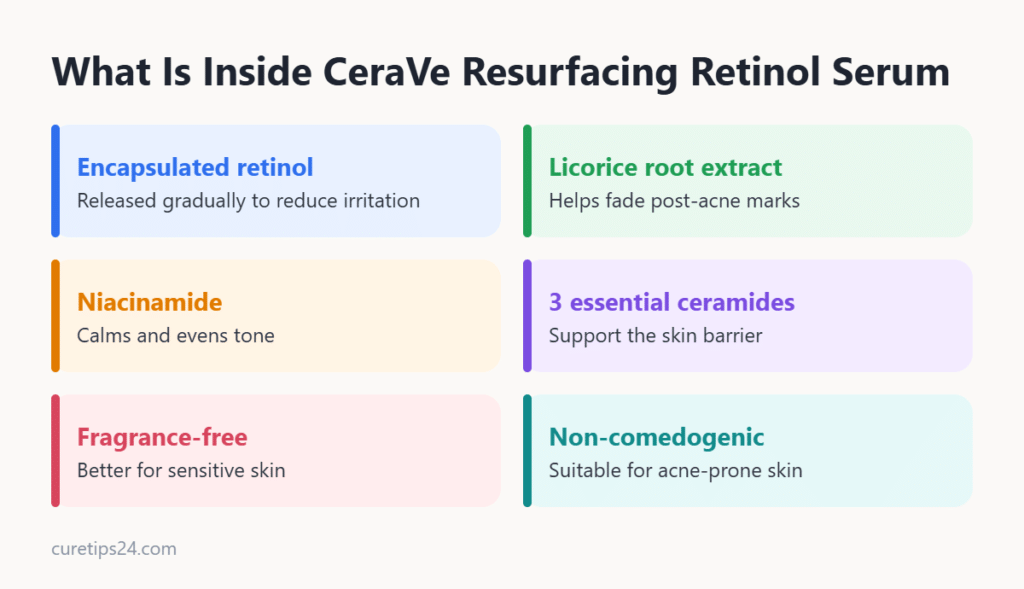
This serum combines a low, encapsulated dose of retinol with barrier-supporting ingredients. Retinoids speed up cell turnover, which can soften post-acne marks and rough texture over time; DermNet explains how topical retinoids work and why they can cause dryness and peeling at first.
How to Use It for Best Results
- Apply a pea-sized amount at night to clean, dry skin, 2-3 nights a week at first.
- Increase to nightly use over several weeks if your skin is comfortable.
- Follow with a moisturiser, and use sunscreen every morning.
- Avoid using it on the same night as strong acids or scrubs.
- Do not use retinol if you are pregnant or trying to conceive.
A Simple Schedule for Starting Retinol
Most retinol irritation happens because people use too much, too often, too soon. Building up slowly gives your skin time to adjust and makes it far more likely you will stick with it long enough to see results.
| Period | How often | Tips |
|---|---|---|
| Weeks 1–2 | Two nights a week | A pea-sized amount for the whole face, on dry skin, followed by moisturiser |
| Weeks 3–4 | Every other night | Only increase if there is no stinging, peeling or redness |
| Week 5 onwards | Most nights, if tolerated | Drop back a step whenever your skin feels tight or sore |
If your skin is sensitive, try the “sandwich” method: a thin layer of moisturiser, then the serum, then more moisturiser. It softens the effect while your skin gets used to it. Avoid the corners of the nose, the lips and the eyelids, where skin is thinner and irritates more easily.
What Not to Mix With Retinol (At Least at First)
- Strong exfoliating acids: glycolic, lactic or salicylic acid products on the same night can lead to redness and peeling. Use them on different nights, if at all, once your skin is used to retinol.
- Benzoyl peroxide: using it at the same time can increase dryness. Many people use it in the morning and retinol at night.
- Scrubs and facial brushes: physical exfoliation on top of retinol often causes irritation.
- Other retinoids: don’t layer an over-the-counter retinol with a prescription retinoid unless your doctor tells you to.
Retinol vs Prescription Retinoids
Retinol is an over-the-counter form of vitamin A that the skin gradually converts into its active form, which is why it is gentler and slower than prescription retinoids such as tretinoin. If you have stubborn acne or significant sun damage and see little change after several months of consistent use, a dermatologist may suggest a stronger prescription option. Retinoids, including over-the-counter retinol, are generally not recommended during pregnancy, so speak to your doctor if you are pregnant, trying to conceive or breastfeeding.
Signs to Slow Down or Stop
Mild dryness and slight flaking in the first weeks are common and usually settle. Burning, swelling, a rash or skin that cracks and bleeds are signs to stop using the serum and let your skin recover. If symptoms don’t improve within a few days, or you think you are having an allergic reaction, seek medical advice.
Who Might Prefer a Different Product
This serum is designed as a gentle introduction to retinol, so it may feel too mild if you have already used stronger retinoids without irritation. On the other hand, people with rosacea, eczema or very reactive skin may find even low-strength retinol uncomfortable and do better with a simple barrier-repair routine first. If your main concern is active, inflamed acne rather than texture or fine lines, a pharmacist or dermatologist can suggest treatments aimed at acne itself. And if you are pregnant or breastfeeding, choose a retinoid-free routine and ask your doctor which ingredients are suitable.
How to Store Your Retinol Serum
Retinol is sensitive to light and air, which can make it less effective over time. Keep the bottle tightly closed, store it at room temperature away from direct sunlight and steamy bathrooms, and use it within the period shown on the pack after opening (often marked with an open-jar symbol, such as “12M”). If the serum changes colour, smell or texture, replace it. Buying a smaller size and finishing it is better than keeping a large bottle open for many months.
Used slowly and consistently, with sunscreen every morning, this serum is a sensible first step into retinol for most adults.
Frequently Asked Questions Of Cerave Resurfacing Retinol Face Serum Reviews
Is It Okay To Use Cerave Resurfacing Retinol Serum Everyday?
Yes, it is safe to use CeraVe Resurfacing Retinol Serum daily for best results.
Is The Cerave Resurfacing Retinol Serum Worth It?
Yes, the CeraVe Resurfacing Retinol Serum is worth it for its effective and skin-smoothing results.
Is It Ok To Use Cerave Resurfacing Retinol Serum?
Yes, it is safe and suitable to use CeraVe Resurfacing Retinol Serum.
What Is Cerave Resurfacing Retinol Serum Good For?
CeraVe Resurfacing Retinol Serum is good for improving skin texture and reducing the appearance of fine lines and wrinkles.
Conclusion
Overall, the Cerave Resurfacing Retinol Face Serum has received positive reviews from users who have experienced impressive results. The serum’s combination of retinol and other key ingredients work together to effectively target a range of skin concerns, including fine lines, uneven texture, and dullness.
With consistent use, many reviewers have noticed a significant improvement in the overall appearance and texture of their skin. Users appreciate the lightweight and easily absorbed formula, which allows for hassle-free application both day and night. Additionally, the product’s non-irritating formula makes it suitable for a variety of skin types, including sensitive skin.
The Cerave Resurfacing Retinol Face Serum is highly recommended by users who are looking to achieve a smoother, more youthful complexion. Start your journey to better skin and try the Cerave Resurfacing Retinol Face Serum today.

1 thought on “Cerave Resurfacing Retinol Face Serum Reviews”