Celluage is an anti-ageing skincare line sold mainly online, with creams marketed to reduce wrinkles, firm the skin and fade dark marks. Like many direct-to-consumer anti-ageing brands, it leans on technical-sounding claims such as “stem cell technology” and named peptide complexes. This guide looks at what the brand says, what its listed ingredients can and cannot realistically do, and what to check before you buy, so you can decide with clear expectations.
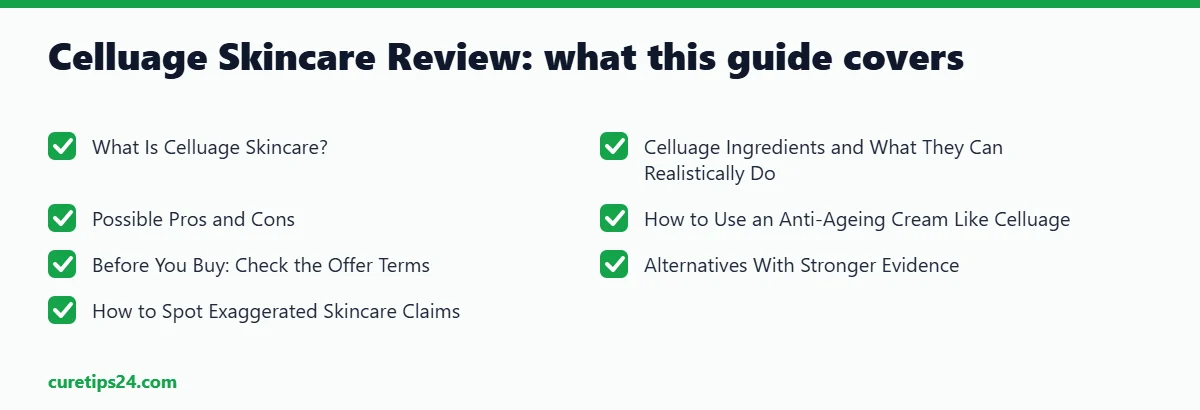
Table of Contents
Quick Summary
- Celluage is marketed as an anti-wrinkle cream combining peptides, hyaluronic acid, kojic acid and plant-derived “stem cell” extracts.
- Some of these ingredients have reasonable evidence for hydration and mild smoothing; dramatic wrinkle “removal” claims are not supported by independent studies of this product.
- A moisturiser is not a sunscreen. You still need a broad-spectrum SPF every day.
- Read the price, subscription and return terms carefully before ordering any skincare sold through online offers.
What Is Celluage Skincare?
Celluage is sold as an anti-ageing cream for the face and neck. Its marketing focuses on reducing fine lines and crow’s feet, firming skin, improving hydration and evening out dark spots. Much of the information about the brand comes from its own sales pages, and there are few independent, published studies on the finished product. That is common for online skincare brands, but it means you should judge it by its ingredients rather than its promises.
The Mayo Clinic guide to wrinkle creams explains that results depend on the active ingredients and their strength, not the brand name, and that over-the-counter creams usually give modest improvements at best. DermNet also lists fragrance as a common cause of skin reactions, which is worth bearing in mind with any new cream.
Celluage Ingredients and What They Can Realistically Do
The brand lists a blend of ingredients that it groups into a named complex. Here is what the main types of ingredient generally do in skincare, based on wider evidence rather than this product specifically:
| Ingredient | What it generally does | Realistic expectation |
|---|---|---|
| Hyaluronic acid | Draws water into the outer layer of skin | Skin looks plumper and feels softer while you use it |
| Peptides (e.g. Syn-Coll, Syn-Ake) | Signalling peptides marketed to support collagen or relax expression lines | Some small studies, often by ingredient makers; effects are modest |
| Kojic acid | Reduces pigment production | May slowly fade dark spots; can irritate sensitive skin |
| Plant “stem cell” extracts | Antioxidant-rich plant extracts | Plant stem cells cannot replace human skin cells; mainly antioxidant benefits |
| Light-reflecting powders (e.g. RonaFlair) | Mineral particles that scatter light | An instant soft-focus effect that washes off |
In short, a cream with these ingredients can hydrate, give an instant smoothing effect and may help a little with tone over time. It is unlikely to “remove” wrinkles or replace proven ingredients such as retinoids and daily sunscreen.
Possible Pros and Cons
Pros
- Contains hydrating ingredients that can make skin feel smoother.
- Light-reflecting particles can give an instant, more even look.
- Can be part of a simple night routine on face and neck.
Cons
- Few independent studies on the finished product; big claims rely on marketing.
- Kojic acid and fragrance can irritate sensitive skin or cause contact dermatitis.
- Usually more expensive than well-established moisturisers with similar ingredients.
- Return policies for online-only skincare can include restocking fees or short deadlines.
How to Use an Anti-Ageing Cream Like Celluage
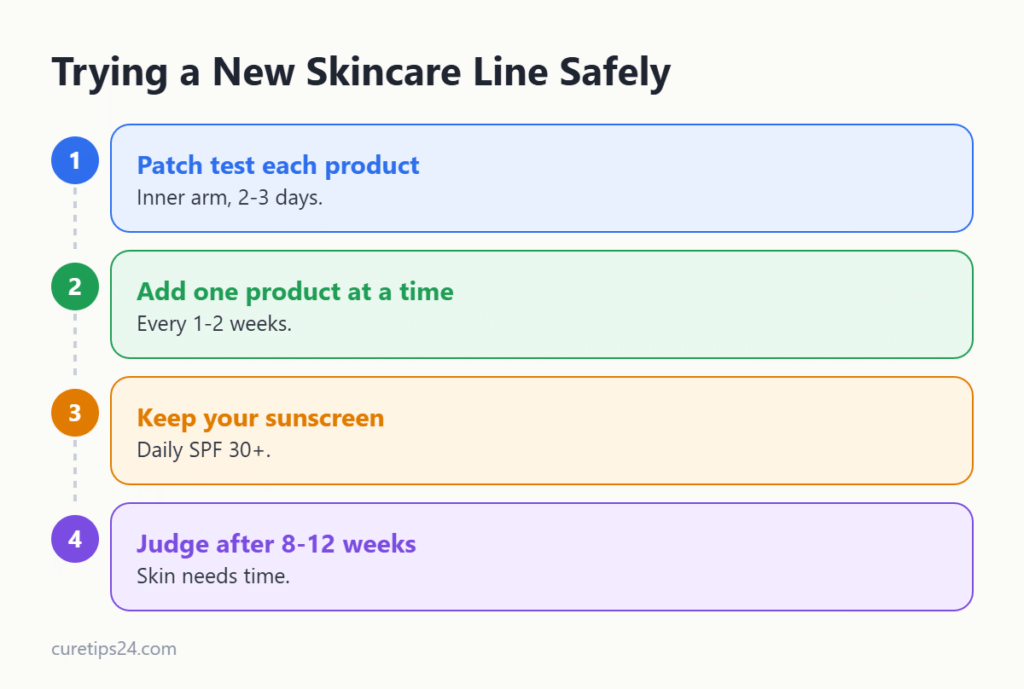
- Patch test first: apply a small amount behind the ear or on the inner arm for a few days and watch for redness or itching.
- Cleanse gently: wash with a mild cleanser and pat skin dry.
- Apply a thin layer: smooth it over the face and neck, avoiding the eyes unless the label says it is suitable for the eye area.
- Use sunscreen every morning: a moisturiser does not protect against UV unless it is labelled with an SPF, and even then you need enough of it.
- Give it time: judge any skincare over eight to twelve weeks, using photos in the same light.
The NHS recommends using sunscreen with at least SPF 30 and good UVA protection. Sun protection does more to prevent wrinkles and dark spots than any anti-ageing cream.
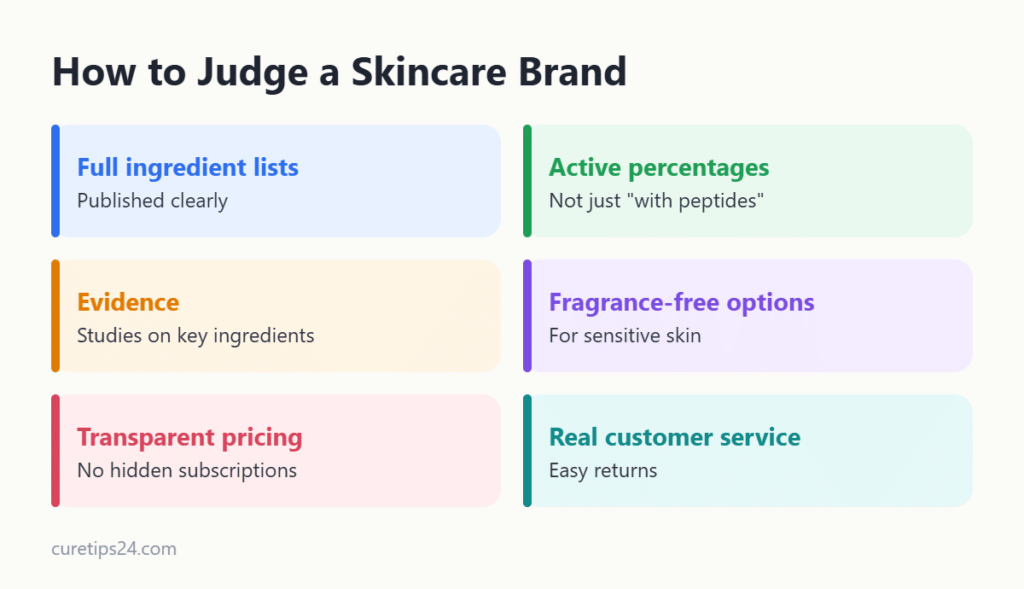
Before You Buy: Check the Offer Terms
Skincare sold through online adverts sometimes uses “free trial” or discounted first-order offers that automatically turn into monthly subscriptions. Before ordering any product of this kind, read the full terms: the total price, how often you will be charged, how to cancel, the return deadline and whether there are restocking fees. Use a payment method that offers buyer protection, keep your order confirmation and set a reminder to cancel if you don’t want further deliveries.
Alternatives With Stronger Evidence
- Daily broad-spectrum sunscreen: the single most effective anti-ageing step.
- Retinol or prescription retinoids: the best-studied ingredients for fine lines and texture. See our CeraVe retinol serum review.
- Vitamin C serums: antioxidants that can help brightness alongside sunscreen.
- A simple, fragrance-free moisturiser: often gives the same hydration as expensive creams for much less money.
For more comparisons, see our Derma Progenix review, our look at Botox-style serums and our guide to choosing skincare for your skin type.
How to Spot Exaggerated Skincare Claims
- “Instant facelift” or “Botox in a jar”: no cream can relax muscles or lift skin like a medical procedure.
- Before-and-after photos with no details: lighting, make-up and editing can change how skin looks far more than a cream.
- “Clinically proven” with no study named: ask who ran the study, how many people took part and what was measured.
- Celebrity endorsements you can’t verify: fake endorsements are common in online skincare adverts.
- Pressure to buy now: countdown timers and “limited stock” messages are sales tactics, not information.
When in doubt, compare a product’s ingredient list with a well-reviewed, reasonably priced moisturiser from a pharmacy. If the ingredients are similar, the difference you are paying for is mostly marketing.
Frequently Asked Questions
Does Celluage remove wrinkles?
No cream removes wrinkles. Hydrating and light-reflecting ingredients can make lines look softer while you use it, but deep wrinkles need other treatments.
Does Celluage contain stem cells?
Skincare “stem cell” ingredients are plant extracts. They cannot become human skin cells, though they may have antioxidant benefits.
Can I use Celluage instead of sunscreen?
No. Unless a product is labelled and tested with an SPF, it does not protect against UV damage. Use a separate broad-spectrum sunscreen every day.
Is Celluage safe for sensitive skin?
It may not suit very sensitive skin because of ingredients such as kojic acid and fragrance. Patch test first and stop if you notice redness, burning or itching.
Conclusion
Celluage is a hydrating anti-ageing cream with some well-known ingredients, but its biggest claims are not backed by independent research on the product itself. It may help your skin look smoother and feel softer, especially in the short term. For lasting results, focus on daily sunscreen, a proven active such as retinol, and a simple routine you can stick with, and read the offer terms carefully before buying any skincare online.
This article is for general information only and is not medical advice. If you have a skin condition or a reaction to a product, speak to a pharmacist or dermatologist.