Table of Contents
Quick Summary / At A Glance
- Start with three basics used every day: a gentle cleanser, a moisturizer, and broad-spectrum sunscreen.
- Match your cleanser, moisturizer, and exfoliation frequency to your skin type, whether oily, dry, sensitive, or combination.
- Add a toner, serum, or eye cream only for a specific concern, and introduce new products one at a time.
- Patch-test new products first, watch for irritation, and stop or scale back if your skin reacts.
- Use sunscreen of at least SPF 30 during the day, moisturize twice daily, and keep the routine consistent.
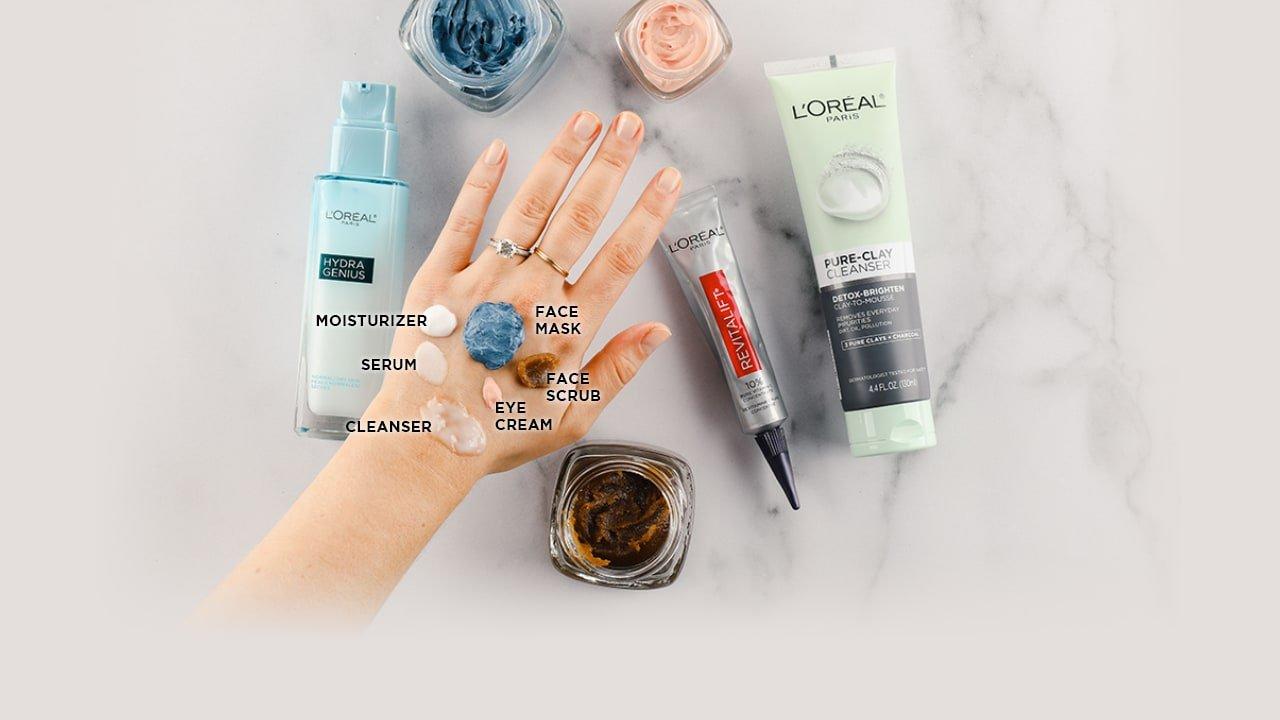
A simple daily routine does not need many products. This guide covers seven types of everyday product, from cleanser to nighttime care, and the order in which they are used.
Consistency matters more than a long product list. Customizing a routine to your skin type can help keep skin looking healthy and resilient, as long as changes are made gradually.
Cleansing: The First Step, Morning and Evening
A consistent cleansing routine helps remove impurities, excess oil, and makeup. It also prepares the skin for the products that follow.
Choosing the right cleanser is the first step to an effective routine. Your cleanser should match your skin type, and you should always read the label before purchasing.
Look for gentle cleansers and avoid harsh chemicals and alcohol, which can irritate the skin. The table below summarizes the cleanser types described in the original guide.
| Skin Type | Recommended Cleanser |
|---|---|
| Oily | Foaming or gel cleanser |
| Dry | Hydrating cream cleanser |
| Sensitive | Gentle, fragrance-free cleanser |
Morning Versus Evening Cleansing
Morning and evening cleansing serve different purposes. In the morning, a light cleanse removes overnight sweat and oils and prepares your skin for the day.
- Wet your face with lukewarm water.
- Apply a small amount of cleanser.
- Massage gently in circular motions.
- Rinse thoroughly and pat dry.
Evening cleansing is more intensive because it removes makeup, dirt, and pollutants from the day. The original guide describes double cleansing for this step.
- Start with an oil-based cleanser and massage it into dry skin to dissolve makeup.
- Rinse with lukewarm water.
- Follow with a water-based cleanser, massage, and rinse again.
Stick to the routine consistently rather than changing cleansers often. If a cleanser leaves your skin irritated, stop using it and return to a gentler option.
Moisturizer: Locking in Hydration Twice a Day
Moisturizers help lock in moisture, preventing dryness and irritation. This daily step can help skin look smoother and more radiant.
Proper hydration from moisturizers may also help slow the appearance of fine lines and wrinkles. Different skin types need different moisturizers, as the summary below shows.
| Type | What It Does | Suitable For |
|---|---|---|
| Humectants | Draw moisture from the air into the skin | All skin types |
| Emollients | Fill in gaps between skin cells for a smooth surface | Dry, sensitive skin |
| Occlusives | Create a barrier to prevent moisture loss | Very dry skin |
How to Apply Moisturizer
- Cleanse: Wash your face with a gentle cleanser.
- Pat dry: Gently pat your face dry with a soft towel.
- Apply: Take a small amount of moisturizer.
- Spread evenly: Gently rub it into your skin using upward strokes.
- Include your neck: Apply some moisturizer to your neck as well.
Use a moisturizer twice daily, once in the morning and once before bed. Regular use is what keeps skin hydrated over time.
Sun Protection: Broad-Spectrum Sunscreen Every Day
Sun protection is a crucial part of a daily routine because it shields skin from harmful UV rays. Protecting your skin from the sun helps prevent premature aging and reduces the risk of skin cancer.
- Helps prevent premature aging.
- Reduces the risk of skin cancer.
- Minimizes sunburns and sun damage.
How to Choose an SPF
- Consider your skin type and sensitivity.
- Opt for a broad-spectrum sunscreen.
- Choose an SPF of at least 30 for daily use.
Sunscreen is the last step of a morning routine, after moisturizer. Do not skip it on days when you will be outdoors, even if the rest of your routine is simple.
Serums: Targeted Products for Specific Concerns
Serums are lightweight, potent formulas designed to target specific skin concerns. Depending on the type, they are used for hydration, signs of aging, or brightening.
| Type of Serum | Main Benefit Described | Key Ingredient |
|---|---|---|
| Hydrating serum | Provides deep hydration | Hyaluronic acid |
| Anti-aging serum | Reduces fine lines | Retinol |
| Brightening serum | Evens skin tone | Vitamin C |
| Acne-fighting serum | Reduces blemishes | Salicylic acid |
When to Apply Serums
- Morning: Use a vitamin C serum to brighten your skin.
- Evening: Apply a retinol serum for signs of aging.
- Anytime: Use a hydrating serum whenever your skin feels dry.
Apply serums after cleansing and before moisturizing, so they can reach the skin first. Always follow with sunscreen during the day.
Introduce only one serum at a time and patch-test first. That makes it easier to spot irritation and to know which product caused it.
Hydrating Toners: pH Balance and Preparation
Hydrating toners help balance the skin’s pH levels and provide moisture. They can leave skin feeling fresh and can prepare it for the products that follow.
How to Use a Toner
- Clean your face with a gentle cleanser.
- Pour toner onto a cotton pad.
- Swipe the cotton pad across your face and neck.
- Wait a few minutes to let it absorb.
- Follow up with a serum or moisturizer.
A toner is optional for many people. If you use one, choose a hydrating type and stop if it causes stinging, redness, or dryness.
Eye Cream: Gentle Care for Delicate Skin
The skin around the eyes is delicate and often shows the first signs of aging. Eye creams are used for concerns such as puffiness, dark circles, and fine lines.
When choosing an eye cream, start with your specific concern. Different products target different issues, as summarized below.
| Concern | Ingredients to Look For |
|---|---|
| Dark circles | Vitamin C, niacinamide |
| Fine lines | Retinol, peptides |
| Puffiness | Caffeine, green tea extract |
How to Apply Eye Cream
- Use your ring finger; it applies the least pressure.
- Take a small amount of eye cream on your fingertip.
- Gently tap the cream around your eyes, from the inner corner outwards.
- Do not rub; just tap lightly.
Apply eye cream every morning and night if you use one, and store it in a cool, dry place. Use only a small amount, because the area is small and sensitive.
Exfoliation: Helpful, but Easy to Overdo
Exfoliation removes dead skin cells from the surface of the skin, revealing brighter, smoother skin underneath. It can help unclog pores and can improve the absorption of other products.
There are two main types. Physical exfoliants use small grains or particles, such as scrubs, brushes, and exfoliating gloves, while chemical exfoliants use acids or enzymes, such as AHAs, BHAs, and fruit enzymes.
How Often to Exfoliate
- Dry or sensitive skin: Exfoliate 1-2 times per week.
- Normal or combination skin: Exfoliate 2-3 times per week.
- Oily or acne-prone skin: Exfoliate 3-4 times per week.
Those ranges come from the original guide, and your own skin’s response matters more than a schedule. Over-exfoliation can damage your skin barrier, so scale back if you notice irritation.
Always follow exfoliation with moisturizer to keep skin hydrated and protected. Start at the lower end of the range when a product is new to you.
Nighttime Care: Night Creams and Overnight Masks
Nighttime care matters because skin repairs itself while you sleep. Using suitable products at night supports that process and replaces the sunscreen step used in the morning.
Night Creams
Night creams are thicker than day creams and provide deep hydration. The original guide lists hyaluronic acid and retinol among the ingredients to look for in them.
Apply night cream as the final moisturizing step in the evening. If a night product contains a strong active ingredient, introduce it gradually and watch for irritation.
Overnight Masks
Overnight masks are designed to be left on overnight for a more intensive treatment. The guide describes antioxidant-rich masks, vitamin C masks for brightening, and hydrating masks with hyaluronic acid.
Using an overnight mask once a week is enough for this step. It is an occasional extra, not a replacement for daily cleansing and moisturizing.
Putting It Together: A Simple Daily Order
| Time | Steps in Order |
|---|---|
| Morning | Gentle cleanser, toner if used, serum if used, moisturizer, broad-spectrum sunscreen of at least SPF 30 |
| Evening | Cleanser, toner if used, serum if used, eye cream if used, moisturizer or night cream |
| Weekly | Exfoliation on the schedule for your skin type, and an overnight mask once a week if used |
If you want the shortest possible routine, the guide’s own answer is three products: a gentle cleanser, a moisturizer, and a broad-spectrum sunscreen. Cleanse to remove impurities, moisturize for hydration, and protect your skin with SPF.
Conclusion
Choosing everyday products is mainly about matching a small set of basics to your skin type. Daily use of a cleanser, moisturizer, and sunscreen is the core of the routine described here.
Add toner, serum, eye cream, exfoliation, and nighttime products only where they serve a clear purpose. Introduce them one at a time, patch-test first, and keep the routine consistent.
This article is general information only and is not medical advice. Please consult a healthcare professional for personal advice.