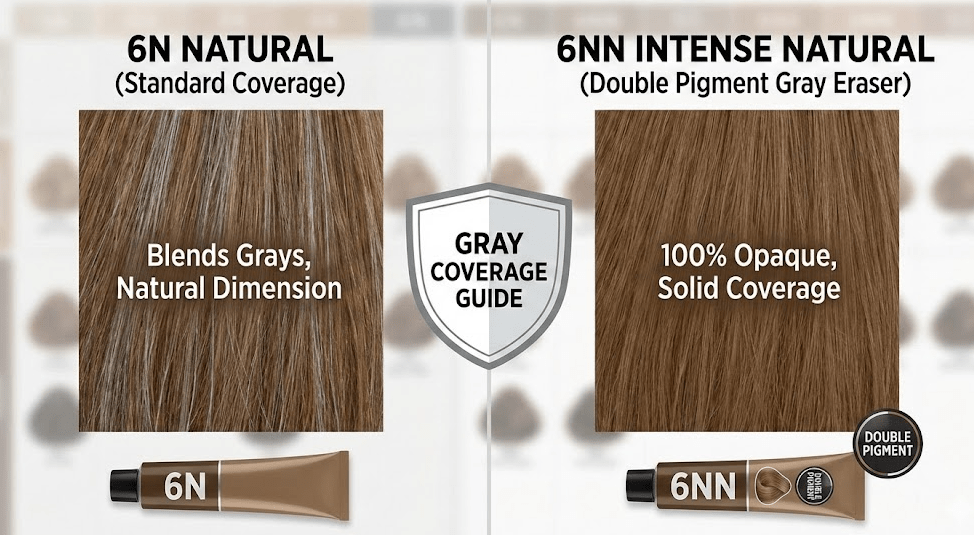
6N vs. 6NN hair color codes can confuse anyone shopping for hair dye. This guide breaks down the differences, pigment concentrations, and gray coverage capabilities to help you choose the right shade for your hair type.Whether you’re seeking to compare 6N versus 6NN shades, understand hair color chemistry, or determine which hair color formula best suits your specific needs, this comprehensive analysis delivers expert insights into hair coloring systems, dye formulations, and the key variations between these two popular hair color options
Table of Contents
Quick Answer of 6N vs. 6NN Hair Color
6N is ideal for natural-looking blonde with good gray coverage, while 6NN is specially formulated for stubborn, resistant gray hair with enhanced pigment concentration for 100% opaque coverage.
Understanding the Hair Color Numbering System
Before diving into ‘N’ and ‘NN’, let’s quickly grasp the universal language of hair color. Professional and retail hair dyes typically use a two-part system:
- The First Number (Level): This digit indicates the depth or lightness of the hair color, ranging from 1 (Black) to 10 (Lightest Blonde).
- 1 = Black2 = Darkest Brown3 = Dark Brown4 = Medium Brown5 = Light Brown6 = Dark Blonde (Our focus today!)7 = Medium Blonde8 = Light Blonde9 = Very Light Blonde10 = Lightest Blonde
- The Letters (Tone/Undertone): The letters following the number denote the tone or undertone of the hair color. These determine whether the shade appears warm, cool, or neutral. Common tone letters include:
- N = Natural/Neutral
- A = Ash (blue/violet base, to counteract warmth)
- G = Gold (yellow base, for warm tones)
- C = Copper (orange base)
- R = Red (red base)
- V = Violet (purple base)
- M = Mahogany (red-violet base)
Now, let’s zoom in on the ‘N’ and ‘NN’.
Decoding ‘N’ – The Natural Series
When you see an ‘N’ after the level number, like in 6N, it signifies “Natural” or “Neutral.”In the context of hair coloring, understanding the 6N designation means recognizing this as a natural blonde shade with balanced pigmentation suitable for achieving consistent hair color results.
Characteristics of ‘N’ Shades:
- Balanced Tones: ‘N’ shades are designed to be neither overtly warm (like gold or copper) nor overtly cool (like ash). They aim to mimic the most common natural hair colors found in nature.
- Neutral Blend: These shades typically contain a balanced blend of primary colors (red, yellow, blue) to achieve a harmonious, balanced result.
- Gray Coverage: 6N provides good gray coverage for most non-resistant gray hair. It’s a reliable choice for blending grays seamlessly into your natural color, especially if your grays aren’t particularly stubborn.
Specific to 6N (Dark Natural Blonde):
A 6N is a true, balanced dark blonde. It’s ideal if you want a shade that looks like your hair could naturally be that color. It can also be used as a base to neutralize very slight unwanted warmth or simply to provide a beautiful, authentic-looking dark blonde without strong red or golden undertones.
Unpacking ‘NN’ – The Double Neutral/Intense Natural Series
The ‘NN’ in codes like 6NN stands for “Double Natural,” “Intense Natural,” or “Extra Natural.” This seemingly small addition makes a significant difference in how the color performs.The 6NN hair color variant is specifically engineered for superior performance, particularly when dealing with challenging gray hair situations requiring maximum coverage and color intensity.
Key Differences from ‘N’:
- Increased Dye Load/Pigment Concentration: This is the most crucial distinction. ‘NN’ shades contain a higher concentration of natural pigments compared to their ‘N’ counterparts. Think of it as a double dose of color.
- Enhanced Gray Coverage: Because of this elevated pigment load, ‘NN’ shades are specifically formulated for stubborn, resistant gray hair. If your grays seem to repel color or always end up looking translucent, 6NN is designed to deliver 100% opaque coverage.
- Intensity: The higher pigment concentration means ‘NN’ colors can appear slightly deeper, richer, and more opaque than a single ‘N’ at the same level. While it’s not necessarily “darker” in terms of level, it’s more saturated.
- Cooler Bias (Brand Dependent): While primarily neutral, some brands formulate their ‘NN’ series with a slightly cooler bias. This is often done to counteract the underlying warm pigments of the hair (which become more apparent when covering gray) and ensure a truly neutral or even slightly cool result, preventing the color from pulling too warm.
Specific to 6NN (Intense Dark Natural Blonde):
6NN delivers maximum gray coverage for dark blonde results. It ensures a richer, more solid, and opaque dark blonde, making it the go-to choice for those with a high percentage of resistant grays or anyone desiring a more saturated and impactful dark blonde.
Side-by-Side Comparison: 6N vs. 6NN
To summarize the distinctions, here’s a direct comparison:This detailed 6N versus 6NN comparison chart will help you understand the distinctive characteristics, feature differences, and color performance outcomes of each hair color shade option.
| Feature | 6N (Natural Dark Blonde) | 6NN (Intense Natural Dark Blonde) |
| Meaning | Natural/Neutral Dark Blonde | Double/Intense Natural Dark Blonde |
| Dye Load | Standard pigment concentration | Higher pigment concentration |
| Gray Coverage | Good for non-resistant grays | Excellent for resistant/stubborn grays, 100% coverage focus |
| Color Intensity | Natural, balanced depth; can appear slightly sheerer | More opaque, richer, and saturated |
| Result | True-to-tone dark blonde | Deeper, more solid dark blonde |
| Best For | Achieving a natural dark blonde, slight tone adjustment | Achieving full gray coverage, adding depth and richness |
When to Choose Which: Making Your Decision
Knowing the difference is one thing; deciding which to use is another. Here’s a guide to help you choose between 6N and 6NN:Whether you’re selecting the right hair dye for your needs or determining if 6N shade is appropriate for your hair type, these selection criteria will help guide your decision-making process.
Choose 6N if:
- You have minimal to no gray hair, or your grays are fine and easily covered.
- You desire a natural-looking dark blonde that isn’t overly deep or opaque.
- You’re aiming for a balanced base before potentially adding other tones like highlights or lowlights later.
- Your hair generally accepts color well and doesn’t struggle with absorption.
Choose 6NN if:
- You have resistant or stubborn gray hair that doesn’t seem to hold color well, leaving a translucent or “sparkly” effect.This challenging hair coloring situation is precisely where 6NN hair dye formulation excels with its superior color deposit capacity.
- You desire maximum, opaque gray coverage and want your grays to disappear completely.
- You want a richer, more intense, and saturated dark blonde result.
- You’re looking to counteract strong underlying red/orange tones that might unexpectedly pull through with a regular ‘N’ shade, as the higher pigment load can help neutralize them.
Factors Influencing Results (Beyond the Tube)
While the choice between 6N and 6NN is crucial, other factors also play a significant role in your final hair color:
- Developer Volume: The developer (peroxide) determines how much the hair’s natural pigment is lifted and how much color is deposited. For standard deposit and gray coverage, 20 volume developer is typically recommended.
- Hair Porosity: This refers to your hair’s ability to absorb and retain moisture and color. Highly porous hair (often due to damage) can absorb color faster and appear darker, while low porosity hair can resist color absorption.
- Natural Hair Color: Your starting hair color significantly impacts the final result. Dyeing dark hair lighter requires different processes than dyeing lighter hair darker.
- Previous Color Applications: Existing dyes, especially permanent ones, can affect how new color takes. Color doesn’t lighten color, so layering shades requires careful consideration.
Professional Advice and DIY Considerations
While understanding 6N and 6NN empowers you to make informed decisions, remember these vital tips:
Frequently Asked Questions About 6N and 6NN Hair Color
- Always Perform a Patch Test: This is crucial to check for allergic reactions before applying color to your entire head.
- Strand Testing is Key: Before coloring all your hair, apply the mixed color to a small, inconspicuous strand. This will show you exactly how the color will look on your hair.
- Consult a Professional: For complex color changes, significant gray percentages, or if you’re unsure, a professional stylist can provide personalized advice and ensure optimal results, minimizing damage and disappointment.
- Brand Variations: Be aware that while the numbering system is universal, the exact nuances of ‘N’ and ‘NN’ can vary slightly between different hair color brands.
What percentage of gray hair should I use 6NN for?
For gray coverage, use the percentage of 6NN that matches your gray percentage. For example, if you have 75% gray hair, mix 75% 6NN with 25% of another shade. If you have 100% gray hair, use 100% 6NN for complete coverage.
Can I mix 6N and 6NN together?
Yes! You can mix 6N and 6NN to customize your color results. If 6N seems too light and 6NN too dark, blending them creates a custom shade. This is a common technique among professional colorists for achieving personalized results.
How long does 6N or 6NN color last?
With proper care using color-safe shampoo and conditioner, 6N and 6NN hair color typically lasts 4-6 weeks before significant fading. Root touch-ups may be needed every 4-8 weeks depending on your hair growth rate.
Which is better for first-time colorers: 6N or 6NN?
6N is generally better for first-timers because it’s more forgiving with application and provides good results without the heavy pigment load of 6NN. 6NN requires more careful application due to its intensity.
Does 6NN leave a green or brassy tint?
6NN can appear slightly ashier than 6N due to its higher pigment concentration, but it shouldn’t leave a green tint if used correctly. Pre-pigmenting with a base color before applying 6NN prevents unwanted cool tones.
What developer should I use with 6N or 6NN?
Use 20 volume developer for both 6N and 6NN as standard. Only use 10 volume if you’re doing a gloss or toner application on previously colored hair. Never use 40 volume with these shades as it may cause damage and uneven color.
Is 6N vs 6NN permanent?
Both 6N and 6NN are permanent hair colors when mixed with developer. They will not wash out but will fade gradually over time. Semi-permanent alternatives exist but offer less gray coverage.
Conclusion
The difference between 6N and 6NN hair color boils down primarily to pigment concentration and, consequently, gray coverage ability. While 6N offers a beautiful, natural dark blonde for general use, 6NN steps up as the powerhouse for those stubborn grays and when a richer, more intense dark blonde is desired.
By understanding these nuances, you’re better equipped to navigate the world of hair color, make confident choices, and achieve the stunning, natural-looking results you desire. Happy coloring!
Key Takeaways:
Here’s a comprehensive summary of the essential distinctions between the 6N hair color shade and the 6NN hair color shade for making your informed decisi
- 6N = Natural dark blonde with standard pigment concentration; best for minimal to no gray hair
- 6NN = Double/intense natural dark blonde with higher pigment concentration; best for resistant gray hair
- 6NN provides 100% opaque coverage for stubborn grays, while 6N offers good coverage for non-resistant grays
- Consider developer volume, hair porosity, and natural hair color when choosing between 6N and 6NN
- Always perform patch and strand tests before full application to ensure optimal results.By mastering the 6N vs 6NN comparison and hair color selection process, you’re taking an important step toward achieving your desired hair coloring outcomes with confidence.