
Moisturizer is the first fix for dry, tight or flaky skin, but what you eat also matters. Your skin barrier is built from fats, proteins and vitamins that come from your diet, and low levels of some nutrients are linked to rough, dry skin. This guide covers the best foods for dry skin, the key nutrients behind them, foods to limit, and a simple one-day meal plan, using foods that are easy to find in Bangladesh and South Asia as well as worldwide.
Table of Contents
Quick Summary / At A Glance
- Oily fish, nuts, seeds, avocado and olive oil provide healthy fats that support the skin barrier.
- Orange and green vegetables give vitamin A; guava, amla, citrus and peppers give vitamin C for collagen.
- Sunflower seeds and almonds supply vitamin E; pumpkin seeds, fish and lentils supply zinc and selenium.
- Water and water-rich foods such as cucumber, watermelon and soups support hydration.
- Limit alcohol, very salty, sugary and fried foods, which can worsen dryness.
- Diet supports skin but does not replace a moisturizer; see a doctor for cracked, itchy or inflamed skin.
How Diet Affects Dry Skin
The outer layer of your skin works like a brick wall: skin cells are the bricks, and natural fats such as ceramides, cholesterol and fatty acids are the mortar that keeps water in. When this barrier is weak, water escapes and skin feels dry, tight and itchy. Healthy fats, protein and vitamins from food help your body build and repair that barrier.
According to Medical News Today’s guide to food for dry skin, low levels of vitamins A, C, D and E, zinc, selenium and essential fatty acids are all linked to dry skin. Most people can get enough of these from a varied diet. Dry skin is also caused by weather, hot showers, harsh soaps, age and conditions such as eczema or an underactive thyroid, so food is only one part of the solution.
14 Best Foods for Dry Skin
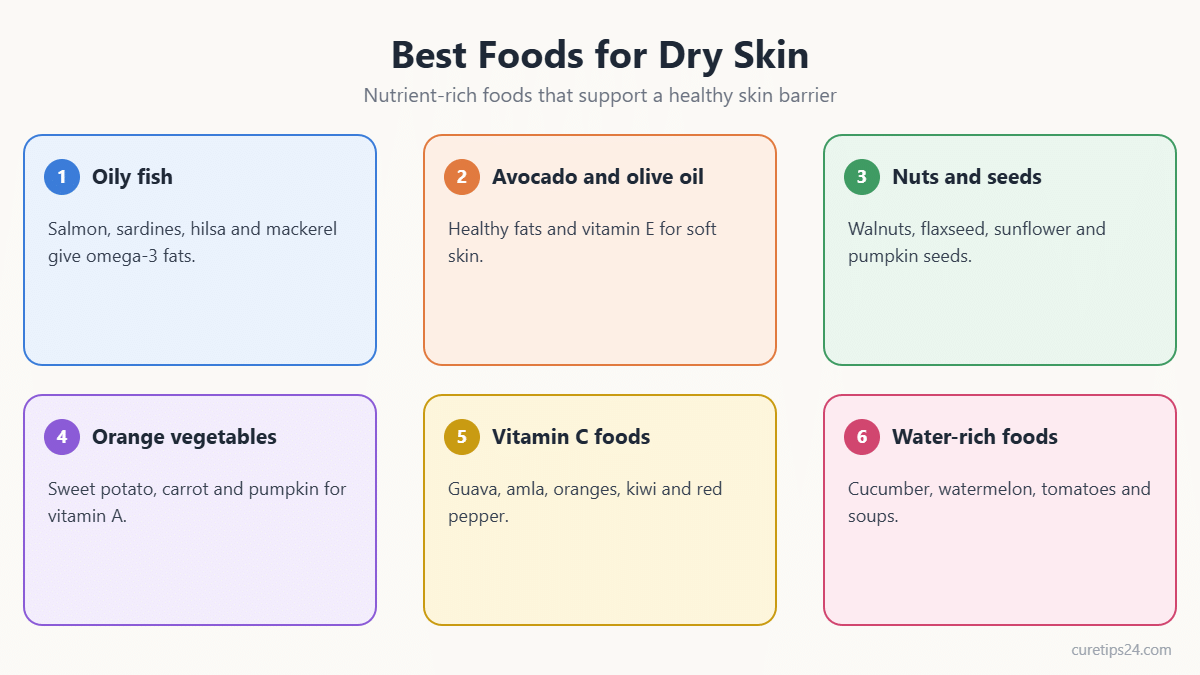
1. Oily Fish (Salmon, Sardines, Mackerel, Hilsa)
Oily fish is one of the best foods for dry skin because it is rich in omega-3 fatty acids, which help strengthen the skin’s lipid barrier and calm inflammation. It also provides protein, vitamin D, zinc and selenium. Aim for two portions of fish a week, including one oily fish. The NIH fact sheet on omega-3 fatty acids lists fatty fish, flaxseed, chia seeds, walnuts and plant oils as the main food sources.
2. Avocado
Avocados contain monounsaturated fats and vitamin E, which help keep skin soft and supple. Add slices to salads or toast, or blend into a smoothie.
3. Walnuts
Walnuts are one of the few nuts that provide plant omega-3 (ALA), plus vitamin E and zinc. A small handful a day is enough.
4. Flaxseed and Chia Seeds
These seeds are rich in plant omega-3 fats and fibre. Sprinkle ground flaxseed or chia seeds over yogurt, oats or salads. Ground flaxseed is easier to digest than whole seeds.
5. Sunflower Seeds and Almonds
Both are excellent sources of vitamin E, an antioxidant that helps protect skin cells and the skin barrier. Snack on a small handful or add them to breakfast.
6. Pumpkin Seeds
Pumpkin seeds provide zinc, a mineral the skin needs to repair itself. Roast them lightly as a crunchy snack.
7. Sweet Potatoes, Carrots and Pumpkin
These orange vegetables are rich in beta-carotene, which the body turns into vitamin A. Vitamin A supports normal skin cell renewal and repair, and too little is linked to dry, rough skin.
8. Spinach and Other Leafy Greens
Spinach, palong shak, lal shak and other leafy greens provide vitamins A, C and E, folate and antioxidants. Cook them with a little oil to help your body absorb the fat-soluble vitamins.
9. Guava, Amla and Citrus Fruits
Vitamin C is needed to make collagen, the protein that keeps skin firm and helps it heal. Guava and amla are among the richest sources, along with oranges, kiwi and lemons.
10. Red and Yellow Bell Peppers
Bell peppers are packed with vitamin C and beta-carotene. Add them raw to salads or lightly stir-fry them.
11. Eggs
Eggs provide protein, biotin, vitamin A, vitamin D, zinc and selenium, all important for healthy skin. They are an easy, affordable addition to breakfast.
12. Soy Foods
Tofu, soy milk and edamame provide protein and isoflavones, plant compounds that some studies suggest may help skin hydration and elasticity, particularly after menopause.
13. Tomatoes
Tomatoes are rich in lycopene, an antioxidant that may help protect the skin from sun damage, which can make dryness worse. Cooking tomatoes with a little oil increases lycopene absorption.
14. Water-Rich Foods and Drinks
Cucumber, watermelon, oranges, lettuce, soups and dal all add water to your diet. Together with 6 to 8 glasses of fluid a day, they help keep your body hydrated, though drinking extra water will not cure dry skin on its own.
Key Nutrients for Dry Skin
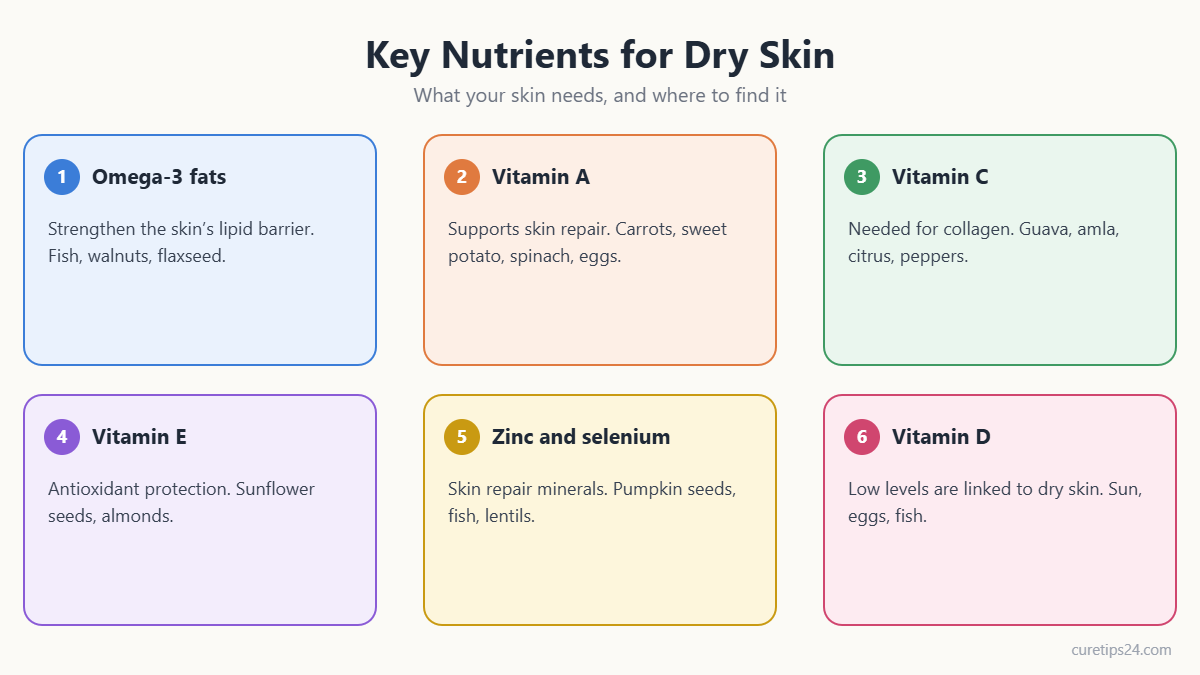
| Nutrient | Why skin needs it | Good food sources |
|---|---|---|
| Omega-3 fatty acids | Strengthen the lipid barrier; calm inflammation | Oily fish, walnuts, flaxseed, chia seeds |
| Vitamin A | Supports skin cell renewal and repair | Carrots, sweet potato, pumpkin, spinach, eggs |
| Vitamin C | Needed for collagen and healing | Guava, amla, oranges, kiwi, bell peppers |
| Vitamin E | Antioxidant that protects skin cells | Sunflower seeds, almonds, avocado, spinach |
| Vitamin D | Low levels are linked to dry skin | Sunlight, oily fish, eggs, fortified milk |
| Zinc | Skin repair and healing | Pumpkin seeds, lentils, chickpeas, meat, fish |
| Selenium | Antioxidant protection | Fish, eggs, brown rice, sunflower seeds |
Foods and Drinks to Limit
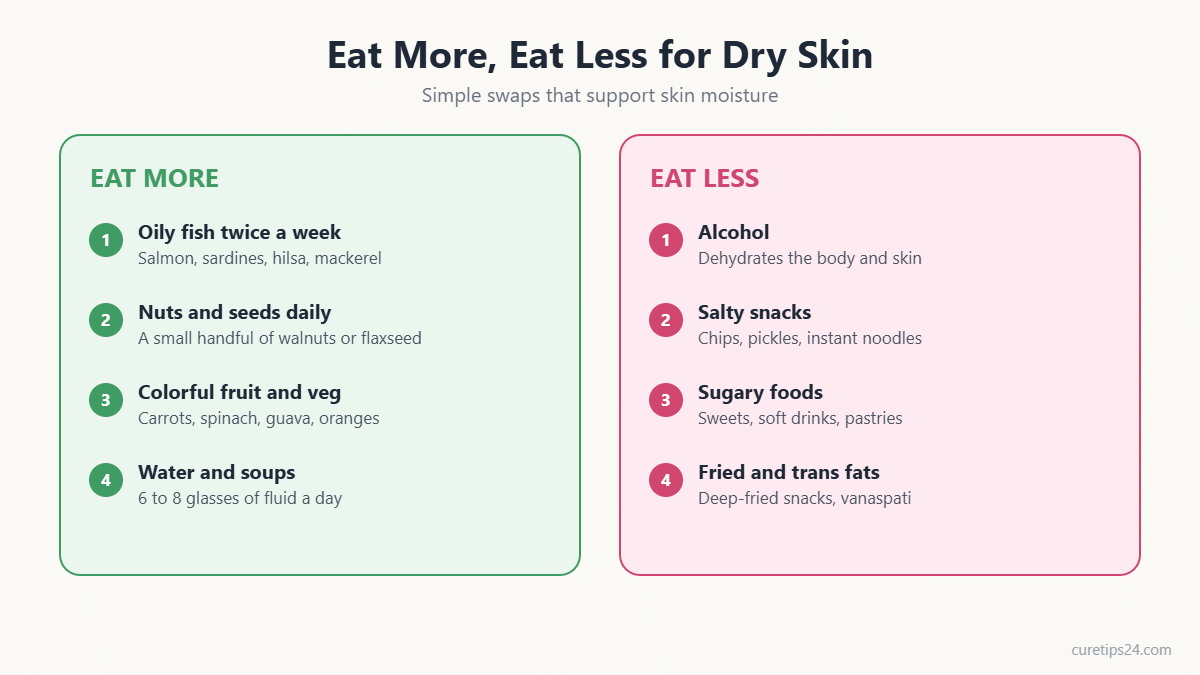
- Alcohol: dehydrates the body and can leave skin dry and dull.
- Very salty foods: chips, pickles, instant noodles and processed snacks.
- Sugary foods and drinks: sweets, soft drinks and pastries may increase inflammation.
- Fried foods and trans fats: deep-fried snacks and vanaspati or hydrogenated oils.
- Too much caffeine: moderate tea and coffee are fine, but balance them with water.
A Simple One-Day Meal Plan for Dry Skin
| Meal | Example |
|---|---|
| Breakfast | Oats cooked in milk or soy milk, topped with banana, ground flaxseed and a few walnuts |
| Mid-morning | A guava or an orange and a small handful of sunflower or pumpkin seeds |
| Lunch | Brown or red rice, dal, palong shak, and a piece of hilsa, sardine or salmon curry |
| Afternoon | Cucumber and tomato salad with a drizzle of olive oil |
| Dinner | Atta roti, egg or tofu curry with carrots and bell peppers |
| Drinks | Water through the day, plus green tea or soup |
For more ideas on balanced eating, see our effective tips for a healthy diet.
Skin Care Habits That Work With Your Diet
Food works best together with good daily care. The American Academy of Dermatology’s tips for relieving dry skin recommend short, lukewarm showers, gentle fragrance-free cleansers, moisturizing straight after washing, and choosing creams or ointments rather than lotions. Our guides to the best moisturizer for dry skin, skin barrier repair and natural remedies for dry skin patches cover the outside part of the routine.
Food Allergy and Supplement Cautions
Several foods on this list, including fish, nuts, soy, eggs and dairy, are common allergens. Never eat a food you are allergic to for the sake of your skin. Supplements such as fish oil, vitamin A or vitamin E are not needed by most people and can be harmful in high doses or interact with medicines; talk to a doctor before starting one, especially if you are pregnant.
When to See a Doctor
See a doctor or dermatologist if your skin is very dry, cracked, bleeding, itchy or red, if dryness does not improve with moisturizer and a good diet, or if it comes with tiredness, weight changes or hair loss, which can point to a thyroid problem or nutrient deficiency. Eczema, psoriasis and other conditions need proper treatment.
Frequently Asked Questions
What is the best food for dry skin?
Oily fish such as salmon, sardines and hilsa is one of the best, because it provides omega-3 fats, vitamin D, zinc and protein that support the skin barrier.
Which fruit is best for dry skin?
Avocado is great for healthy fats, while guava, amla, oranges and kiwi provide vitamin C for collagen. Water-rich fruits like watermelon help with hydration.
Can a vitamin deficiency cause dry skin?
Yes. Low levels of vitamins A, C, D and E, zinc, selenium or essential fatty acids are linked to dry skin. A doctor can check your levels with a blood test if needed.
How long does it take for diet to improve dry skin?
Skin renews itself over several weeks, so it usually takes one to three months of consistent eating to notice a difference.
This article is general information only and is not medical advice. Please consult a doctor or registered dietitian for personal advice.

4 thoughts on “Best Foods for Dry Skin: 14 Foods and Key Nutrients”