Hair loss in women has many possible causes, including pattern hair loss, illness, stress, nutritional problems, thyroid conditions and certain medicines. Because the right response depends on the cause, the most helpful first step is not a product at all: it is a proper diagnosis from a doctor or dermatologist, especially if shedding is sudden, patchy or accompanied by scalp pain, redness or scaling.
Table of Contents
Start with a diagnosis
A dermatologist can examine your scalp, ask about your health and medicines, and arrange blood tests where needed. Treating the wrong problem wastes money and can delay care for conditions that need prompt attention. Be sceptical of any product page that promises fast results or certain regrowth: hair grows slowly, and realistic timelines for any genuine treatment are measured in months.
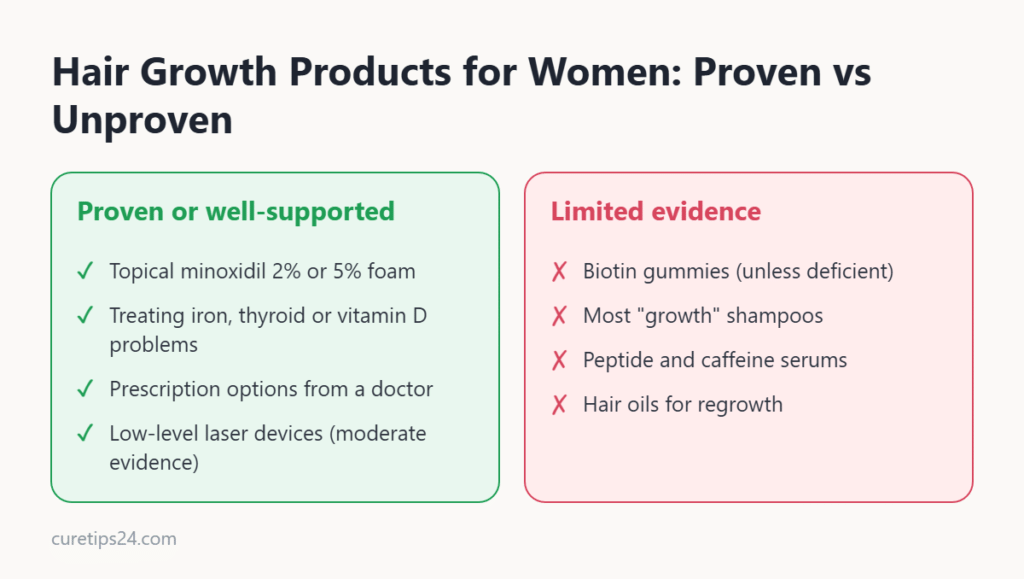
DermNet explains that female pattern hair loss usually shows as a widening part and responds best to early treatment.
Minoxidil: the main over-the-counter option
Minoxidil is a topical medicine used for pattern hair loss. It is applied to the scalp exactly as its product label directs. This site does not give dosing instructions: how much to use and how often comes only from the label and from a doctor or pharmacist. Minoxidil is not side-effect free. It can cause scalp irritation and other side effects, so read the label carefully and seek advice if you have a reaction. Any benefit takes months to appear, and it continues only while the treatment is used; stopping usually means the benefit is gradually lost.
Warning: finasteride is not for women
Finasteride is a prescription-only medicine approved for men. It is not approved for women. Women who are pregnant or may become pregnant must not use it and must not even handle crushed or broken finasteride tablets, because it can harm a developing male baby. If you see finasteride marketed to women, treat that as a serious warning sign about the seller, and discuss any prescription hair-loss medicine with your own doctor instead.
Supplements and vitamins
No supplement, including biotin and so-called DHT blockers, is proven to regrow hair or stop hair loss. Supplements can help only where a genuine nutrient deficiency exists, which is why testing and medical advice come before buying bottles of vitamins. Supplements are not side-effect free either: they can cause side effects and can interact with medicines, and how much to take is a question for the product label and a doctor or pharmacist, not a blog post.
Shampoos, serums and oils
Cosmetic products can improve how hair looks and feels, reduce breakage and make fine hair appear fuller, but a shampoo, oil or serum cannot be relied on to regrow hair. Anti-dandruff shampoos can be genuinely useful where dandruff or scalp inflammation is part of the problem; use them as their labels direct. Spend on these products for cosmetic reasons if you enjoy them, not because of regrowth promises.
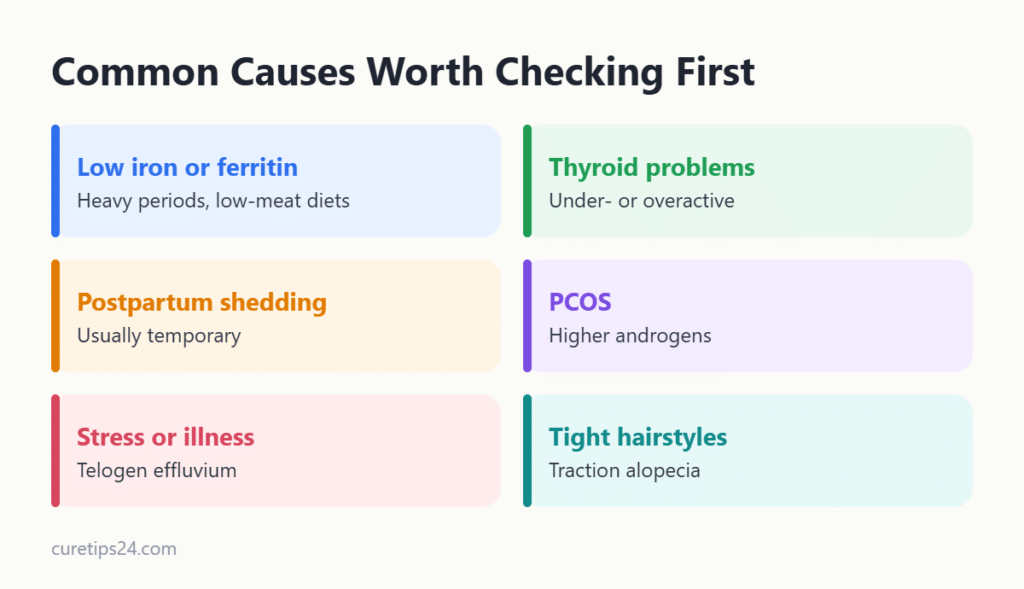
The American Academy of Dermatology lists many causes of hair loss, several of which are treatable once identified, and the NIH Office of Dietary Supplements explains who is most at risk of low iron.
How to Choose a Product Wisely
- Look for active ingredients with evidence, such as minoxidil, rather than marketing terms.
- Avoid mega-dose biotin unless a doctor finds a deficiency; it can interfere with blood tests.
- Give any treatment at least 4 to 6 months before judging it.
- Take monthly photos in the same light to track changes.
See our full evidence check in hair growth products for women: what the evidence shows, plus hair fall vs hair loss and rosemary oil.
When to seek help promptly
- Sudden or rapid shedding
- Round bald patches, or pain, redness, scaling or sores on the scalp
- Hair loss after starting a new medicine
- Shedding alongside other symptoms such as fatigue or weight change
The bottom line
For women, the honest order is: get a diagnosis, consider minoxidil only as its label directs and with professional advice, avoid finasteride, and treat supplements and growth serums as unproven extras rather than treatments. Expect months, not weeks, and be wary of any seller who quotes percentages, promises results or claims a medicine is completely free of side effects.
This article is general information only and is not medical advice. Please consult a healthcare professional for personal advice.