Vibrant, healthy-looking skin is rarely the result of one expensive cream. It comes from simple habits repeated every day: protecting your skin from the sun, cleansing gently, moisturizing, eating well, sleeping enough and managing stress. These health tips for vibrant skin bring together what dermatologists and major health organizations recommend, so you can build a routine that works for your skin type and your budget.
Table of Contents
Quick Summary / At A Glance
- Daily broad-spectrum sunscreen with SPF 30 or higher is the single most important habit for healthy skin.
- Cleanse gently with a mild cleanser and warm water, and moisturize to protect your skin barrier.
- A colorful diet rich in vitamins C and E, omega-3 fats, zinc and protein supports skin from the inside.
- Sleep, exercise, managing stress and avoiding smoking all show in your skin.
- Choose proven ingredients such as vitamin C and retinoids over trendy quick fixes, and add one product at a time.
- Check your skin regularly and see a dermatologist about any spot that changes, itches or bleeds.
What Makes Skin Look Vibrant?
Skin is the body’s largest organ and its first line of defence against UV light, pollution, germs and water loss. Healthy skin looks even, smooth and gently radiant because its outer layer, the skin barrier, holds in moisture and reflects light well, while collagen and elastin in the deeper layers keep it firm and supple.
Your skin also renews itself constantly, shedding old cells and replacing them with new ones. When dead skin cells build up, when skin is dehydrated, or when sun damage, smoking, poor sleep or stress get in the way, skin starts to look dull, uneven and tired. Most of the tips below simply remove those obstacles.
Know Your Skin Type First
There is no single best routine for everyone, so start by recognising your skin type before copying someone else’s products:
- Normal skin feels comfortable, neither very oily nor very dry.
- Dry skin feels tight and may look flaky, rough or itchy.
- Oily skin looks shiny and greasy, especially on the forehead, nose and chin, and is more prone to breakouts.
- Combination skin is oily in the T-zone and normal or dry on the cheeks.
- Sensitive skin stings, burns or turns red easily after using products.
12 Health Tips for Vibrant Skin
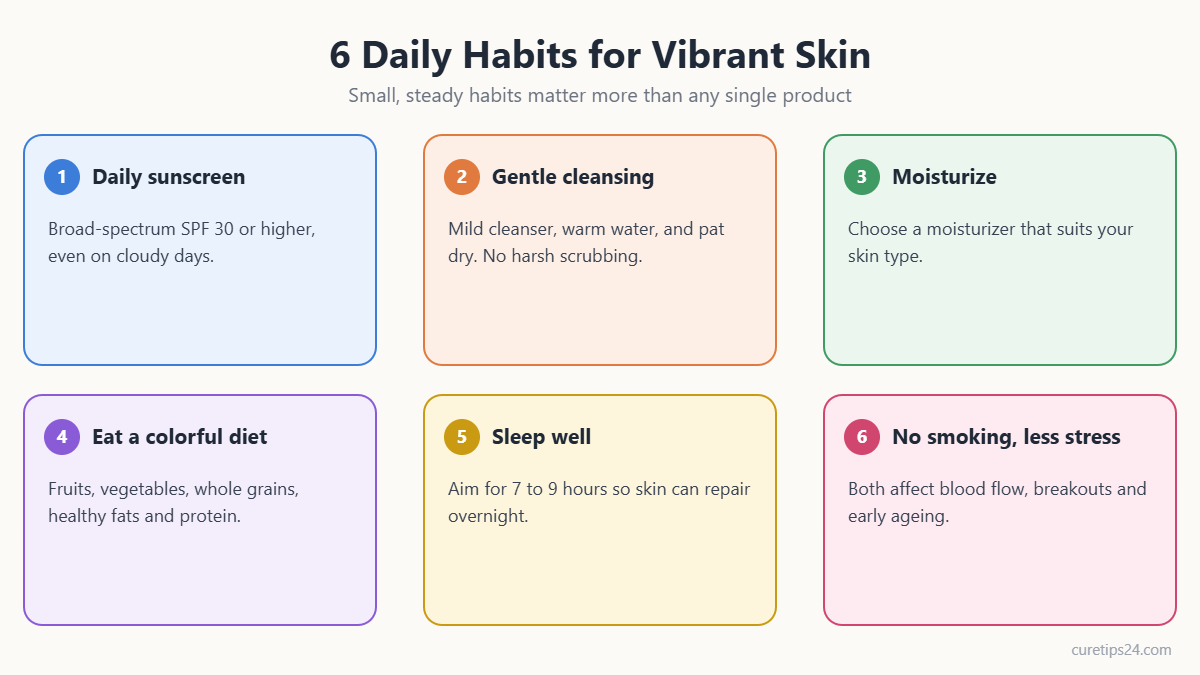
1. Wear Sunscreen Every Day
Sun exposure causes most visible skin ageing, including wrinkles, age spots, uneven tone and rough texture, and it raises the risk of skin cancer. Use a broad-spectrum sunscreen, which protects against both UVA rays (linked to ageing) and UVB rays (which cause sunburn), with an SPF of 30 or higher. The Mayo Clinic’s skin care tips also advise reapplying every two hours, or more often if you swim or sweat, and avoiding direct sun between 10 a.m. and 4 p.m., when UV rays are strongest.
Use enough to cover all exposed skin, roughly a shot glass full for the body, and do not rely on the SPF in makeup alone. Add shade, a wide-brimmed hat, sunglasses and tightly woven clothing. If you want a bronzed look, a self-tanner is a far safer choice than tanning in the sun or on a sunbed, though you still need sunscreen with it.
2. Cleanse Gently, at the Right Times
Wash your face when you wake up, before bed, and after heavy sweating. Use warm (not hot) water and a mild, fragrance-free cleanser, apply it with your fingertips, rinse well and pat your skin dry with a clean towel. Harsh soaps, scrubbing and long, hot showers strip away natural oils, so keep showers short and warm. If you shave, do it after washing, when skin and hair are soft, using shaving cream and a clean, sharp razor.
3. Moisturize to Protect the Skin Barrier
Moisturizer helps the skin barrier hold on to water, which keeps skin soft, smooth and less reactive. Apply it straight after washing, while skin is still slightly damp. Look for ingredients such as ceramides, glycerin and hyaluronic acid; choose a light, oil-free, non-comedogenic lotion for oily skin and a richer cream for dry skin. If your skin often stings, flakes or feels tight, read our guide to signs of a damaged skin barrier and how to repair it.
4. Exfoliate Gently, Not Often
Exfoliation removes the dead skin cells that can clog pores and make skin look dull. For most people, once or twice a week is enough. Gentle chemical exfoliants, such as lactic or glycolic acid (AHAs) or salicylic acid (a BHA), are usually kinder than gritty scrubs. Skip exfoliation on irritated, sunburned or broken skin, and do less if you have sensitive skin or use a retinoid.
5. Eat a Balanced, Colorful Diet
Your skin reflects your general health, and a balanced diet gives it the building blocks it needs. Fill half your plate with fruits and vegetables, choose whole grains, and include lean protein and healthy fats. Key skin nutrients include vitamin C (for collagen), vitamin E and beta-carotene (antioxidants that help protect against oxidative stress), omega-3 fatty acids, zinc and protein.
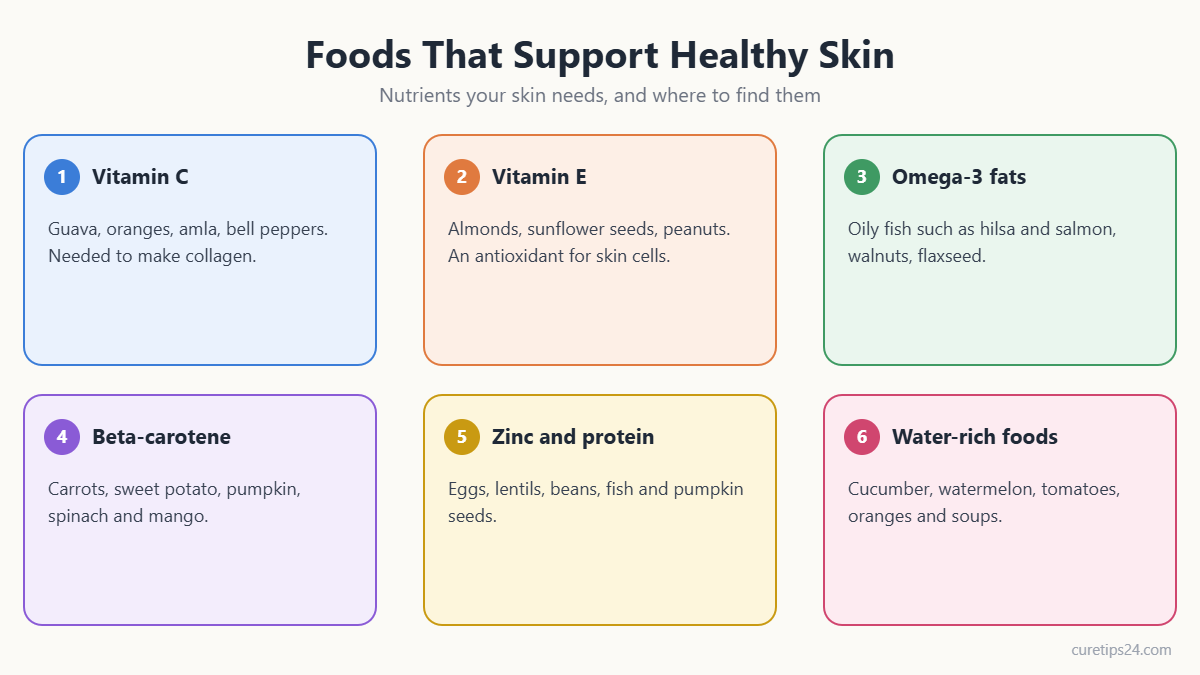
Try to limit added sugar, refined carbohydrates and heavily processed snacks, which some studies link to faster skin ageing and, for some people, more acne. For specific food ideas, see our guides to the best foods for dry skin and our effective tips for a healthy diet.
6. Stay Hydrated
Drinking enough water supports every system in your body, including your skin, and water-rich foods such as cucumber, watermelon, tomatoes and oranges add to your daily intake. Extra water will not cure dry skin or acne on its own, though. Think of hydration as one healthy habit alongside moisturizing, not as a treatment.
7. Get Enough Sleep
Your body repairs and renews skin cells while you sleep. Most adults need about 7 to 9 hours a night, and poor sleep often shows as dullness, puffiness and dark circles. Remove makeup before bed and change your pillowcase regularly to keep oil and bacteria off your face.
8. Manage Stress
Stress can make skin more sensitive and is a common trigger for flare-ups of acne, eczema, psoriasis and rosacea. Regular sleep, physical activity, time outdoors, breathing exercises, meditation or yoga, and time with people you enjoy can all help. The American Academy of Dermatology’s tips for healthier-looking skin list stress management alongside sun protection and gentle cleansing.
9. Move Your Body
Regular exercise improves blood flow, which carries oxygen and nutrients to the skin, and it helps with stress and sleep too. Shower and change out of sweaty clothes soon after a workout to help prevent clogged pores and body breakouts.
10. Avoid Smoking and Limit Alcohol
Smoking narrows the tiny blood vessels in the outer layers of skin, which reduces blood flow and makes skin look pale and dull. It also damages collagen and elastin, speeds up wrinkles, slows wound healing and raises the risk of skin cancer. Drinking a lot of alcohol dehydrates the skin and can cause redness and puffiness. Quitting smoking is one of the best things you can do for your skin at any age.
11. Choose Proven Ingredients, Not Hype
A short routine with a few well-studied ingredients beats a shelf full of products. A morning antioxidant such as a vitamin C serum for your face can help brighten skin and support sun protection, while a retinoid used at night is one of the best-studied ingredients for improving texture, tone and fine lines. Niacinamide and hyaluronic acid are other gentle options. Introduce one new product at a time, patch-test it on a small area first, and give it six to twelve weeks before judging the results.
12. Check Your Skin Regularly
Healthy skin also means catching problems early. Look over your skin once a month, including your back, scalp and the soles of your feet, using a mirror or asking someone to help. The AAD explains how to perform a skin self-exam; see a dermatologist promptly about any spot that is new, looks different from your other moles, or changes, itches or bleeds.
A Simple Morning and Night Skin Care Routine
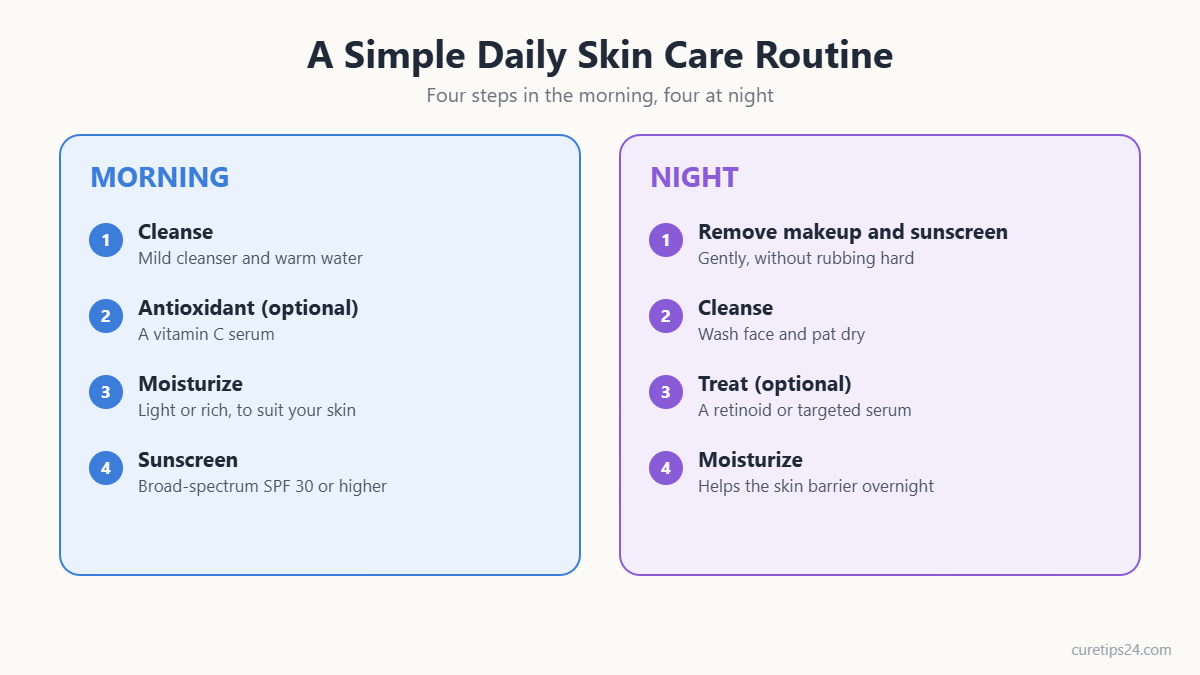
You do not need ten steps. In the morning, cleanse, apply an optional antioxidant serum, moisturize and finish with sunscreen. At night, remove makeup and sunscreen, cleanse, apply an optional treatment such as a retinoid, then moisturize. Stick with the same simple routine for several weeks rather than changing products every few days.
Tea and Home Remedies: Comfort, With Limits
Green tea, chamomile, rooibos and other teas can be a pleasant, calming part of your day, and green tea contains antioxidants called polyphenols. However, evidence that drinking tea noticeably improves the skin is limited, so enjoy it as part of a healthy routine rather than as a treatment. Be careful with DIY face masks: lemon juice, baking soda, toothpaste and undiluted essential oils can irritate or burn the skin. Patch-test anything new and stop if your skin becomes red, itchy or sore.
Everyday Habits at a Glance
| Habit | What to do | Why it helps |
|---|---|---|
| Sun protection | Broad-spectrum SPF 30+, reapply every 2 hours, seek shade, wear a hat | Prevents sunburn, dark spots, wrinkles and skin cancer |
| Gentle cleansing | Mild cleanser and warm water morning, night and after sweating | Removes oil and grime without stripping the skin barrier |
| Moisturizing | Apply to damp skin daily, matched to your skin type | Keeps skin soft, smooth and less reactive |
| Balanced diet | Fruits, vegetables, whole grains, protein and healthy fats; less added sugar | Supplies vitamins, antioxidants and building blocks for collagen |
| Hydration | Drink water and eat water-rich foods | Supports general health and skin comfort |
| Sleep and exercise | 7 to 9 hours of sleep and regular activity | Supports skin repair, blood flow and stress control |
| No smoking, less alcohol | Quit smoking and keep alcohol moderate | Protects collagen, blood flow and an even skin tone |
| Skin checks | Monthly self-exam; see a dermatologist about changing spots | Helps catch skin cancer and other problems early |
When to See a Dermatologist
Everyday habits support healthy skin, but they do not diagnose or treat skin disease. See a doctor or dermatologist if a rash, acne, dryness, itching or discoloration persists, keeps returning or gets worse despite gentle care, if a product causes swelling, blistering or a severe reaction, or if you notice a new or changing mole or spot. A dermatologist can also build a routine around your skin type and recommend prescription treatments when needed.
Frequently Asked Questions
How can I get vibrant skin naturally?
Focus on the basics: daily sunscreen, gentle cleansing, a moisturizer that suits your skin, a colorful diet, enough water and sleep, regular exercise, stress management and no smoking. These habits together have more effect than any single natural remedy.
How long does it take to see results?
Skin renews itself over several weeks, so most new habits and products take about one to three months to show a visible difference. Sun protection and quitting smoking also pay off over years by slowing skin ageing.
Does drinking water make your skin glow?
Staying hydrated supports your overall health, but drinking extra water on its own will not transform your skin. Moisturizing, sun protection and a balanced diet make a bigger visible difference.
What foods make your skin glow?
Colorful fruits and vegetables such as guava, oranges, carrots, spinach and tomatoes, plus oily fish, nuts, seeds, eggs and lentils, provide the vitamins, healthy fats and protein that skin needs. Limiting added sugar and highly processed food also helps.
This article is general information only and is not medical advice. Please consult a doctor, pharmacist or dermatologist for advice about your own skin.