Making your own skin care at home is fun, cheap and a good way to know exactly what goes on your skin. These homemade vegan skin care recipes use simple plant ingredients you can find in most kitchens, such as oats, aloe vera, avocado, coconut oil, shea butter and gram flour, with no honey, beeswax, milk or other animal products. Below you will find 10 easy recipes with amounts, vegan swaps for common ingredients and the safety rules that matter most when you make skin care yourself.
Table of Contents
Quick Summary / At A Glance
- Vegan skin care avoids all animal-derived ingredients, including honey, beeswax, lanolin, milk, yogurt and carmine.
- Good kitchen basics include oats, aloe vera, avocado, banana, sugar, coconut and olive oil, shea butter, green tea and besan.
- Homemade products have no preservatives: make small batches, keep them in the fridge and use them within a few days.
- Patch-test every new recipe and never use lemon juice, baking soda or undiluted essential oils on your face.
- DIY recipes can make skin feel soft and refreshed, but they do not treat acne, eczema or other skin conditions.
What Makes Skin Care Vegan?
Vegan skin care contains no ingredients that come from animals. That rules out obvious ones like honey, beeswax, milk and yogurt, and less obvious ones such as lanolin (from sheep’s wool), carmine (a red dye made from insects), squalene from shark liver, and some forms of glycerin, collagen and keratin. “Vegan” is different from “cruelty-free”, which means a product was not tested on animals; many people look for both.
Making your own products gives you full control over ingredients, cuts down on packaging waste and saves money. Remember that “natural” does not automatically mean gentle: plant ingredients can still irritate skin or cause allergies, so the safety section below is just as important as the recipes.
Basic Vegan Ingredients for DIY Skin Care
| Ingredient | What it does | Best for |
|---|---|---|
| Oats (colloidal or finely ground) | Soothes and gently cleanses; helps hold moisture | Dry, itchy and sensitive skin |
| Aloe vera gel | Cooling and lightly hydrating | Most skin types, after sun exposure |
| Avocado | Rich in fatty acids and vitamin E; nourishing | Dry and mature skin |
| Coconut oil | Seals in moisture on the body and lips | Dry body skin (may clog pores on the face) |
| Shea and cocoa butter | Thick, creamy moisturizers that soften rough skin | Dry hands, feet, elbows and body |
| Jojoba, sweet almond and olive oil | Lightweight oils that soften skin | Most skin types; jojoba suits oily skin |
| Green tea | Contains antioxidants called polyphenols; refreshing | Oily and combination skin |
| Besan (gram flour) | A gentle traditional cleanser and mask base | Oily and normal skin |
| Brown or white sugar | A soft physical exfoliant for lips and body | Lips and body only, not the face |
10 Easy Homemade Vegan Skin Care Recipes
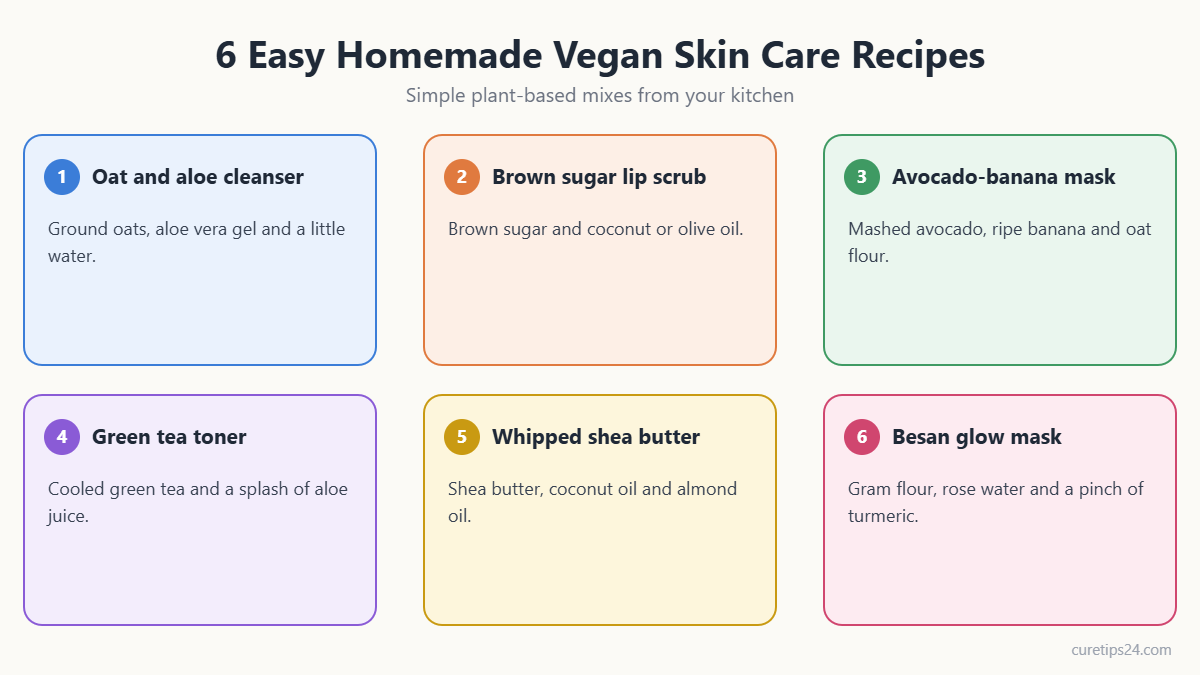
1. Oat and Aloe Gentle Cleanser
Mix 2 tablespoons of finely ground oats with 1 tablespoon of aloe vera gel and enough water to make a soft paste. Massage gently over damp skin for 30 seconds, then rinse with lukewarm water. This mild, soap-free cleanser suits dry or sensitive skin. Make it fresh each time.
2. Brown Sugar and Coconut Lip Scrub
Stir 1 teaspoon of brown sugar into 1 teaspoon of coconut or olive oil. Rub very gently over your lips for a few seconds, wipe away and follow with a lip balm. Use once or twice a week at most. Keep sugar scrubs off your face, where the crystals can cause tiny tears in the skin; the AAD’s advice on exfoliating safely recommends gentler methods for facial skin.
3. Avocado and Banana Nourishing Mask
Mash a quarter of a ripe avocado with a quarter of a ripe banana and 1 teaspoon of oat flour until smooth. Apply to clean skin, leave for 10 to 15 minutes and rinse with lukewarm water. This creamy mask leaves dry skin feeling soft. Use it once a week and throw away any leftovers.
4. Green Tea and Aloe Refreshing Toner
Brew 1 green tea bag in half a cup of hot water, let it cool completely, then add 1 tablespoon of aloe vera juice. Pour into a clean spray bottle, mist over your face after cleansing and let it dry before moisturizing. Store it in the fridge and use within three to four days.
5. Whipped Shea Body Butter
Gently melt 4 tablespoons of shea butter with 2 tablespoons of coconut oil in a bowl over warm water. Remove from the heat, stir in 1 tablespoon of sweet almond or jojoba oil and leave to cool until slightly firm. Whisk with a hand mixer for a few minutes until fluffy and spoon into a clean jar. Use on dry hands, elbows, knees and feet. Because it contains no water, this butter keeps longer than other recipes, usually for several weeks in a cool, dry place, but throw it away if it smells or looks different. Leave out almond oil if you have a nut allergy.
6. Besan, Rose Water and Turmeric Glow Mask
Mix 2 tablespoons of besan (gram flour) with a tiny pinch of turmeric and enough rose water to form a smooth paste. Apply to clean skin, leave for about 10 minutes until it starts to dry, then rinse gently with lukewarm water. Use a very small amount of turmeric, as it can stain light skin and fabric yellow.
7. Cucumber and Aloe Cooling Gel
Blend a few slices of peeled cucumber, strain the juice and mix 1 tablespoon of it with 2 tablespoons of aloe vera gel. Apply a thin layer to the face or sun-exposed skin for a cooling, refreshing feel. Keep it in the fridge and use within two days. This does not replace sunscreen or treat sunburn.
8. Coffee and Coconut Body Scrub
Combine 2 tablespoons of used or fresh coffee grounds with 1 tablespoon of brown sugar and 1 to 2 tablespoons of coconut oil. Massage gently over damp skin on the body in the shower and rinse well. Use once a week, and be careful, as the oil can make the shower floor slippery.
9. Soothing Oatmeal Bath Soak
Blend half a cup of plain oats into a fine powder and stir it into a warm (not hot) bath, or tie it in a clean cotton cloth and let it soak in the water. Relax for 10 to 15 minutes, then pat skin dry and moisturize. Oatmeal baths are a gentle comfort for dry or itchy skin.
10. Plant-Based Lip Balm
Melt 1 teaspoon of candelilla wax with 1 teaspoon of shea butter and 2 teaspoons of coconut or jojoba oil over gentle heat. Pour into a small clean tin or tube and let it set. For a natural pink tint, stir in a tiny pinch of beetroot powder before it cools. Candelilla wax replaces beeswax, which is not vegan.
Vegan Swaps for Common Ingredients
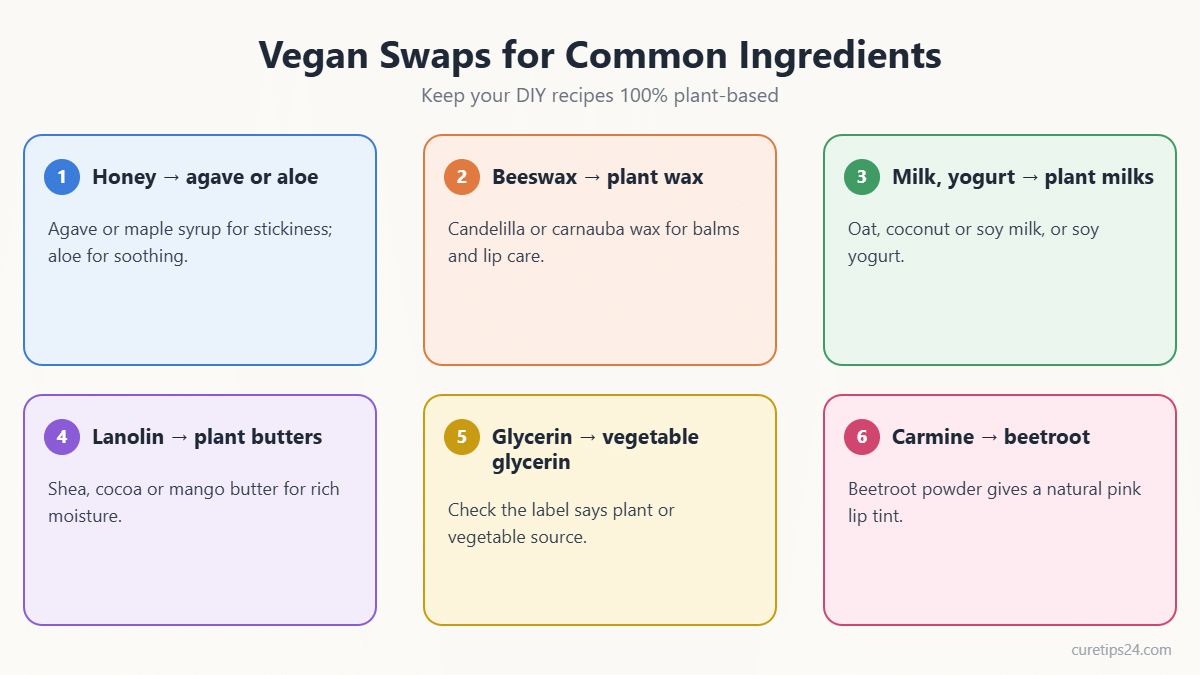
Many popular DIY recipes online use honey, beeswax, milk or yogurt. You can keep any recipe vegan with these simple swaps: agave or maple syrup instead of honey for stickiness, or aloe vera for soothing; candelilla or carnauba wax instead of beeswax; oat, coconut or soy milk or soy yogurt instead of dairy; shea, cocoa or mango butter instead of lanolin; and beetroot powder instead of carmine for colour. When you buy glycerin, check that it is labelled vegetable glycerin.
If you prefer ready-made products, our guide to the best natural moisturizing face masks compares store-bought options.
Essential Oils: Use Them Carefully
Essential oils add a lovely scent, but they are highly concentrated plant extracts. The FDA’s page on aromatherapy points out that plant-derived oils are not automatically safe for skin: many can irritate or cause allergic reactions, and some citrus oils, such as bergamot, lemon and lime, can cause burns or dark patches on skin exposed to sunlight. If you use them, add no more than one or two drops to a full recipe, never apply them undiluted, keep them away from the eyes and leave them out entirely for facial products, sensitive skin, pregnancy and children.
DIY Skin Care Safety Rules
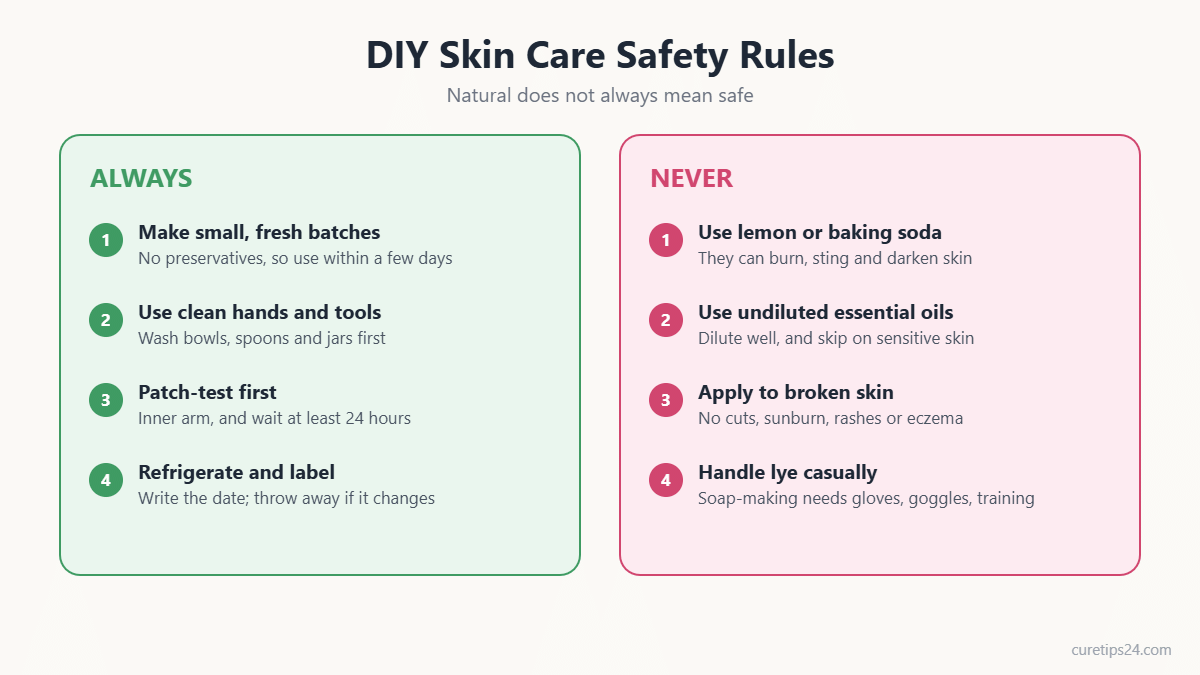
- Make small, fresh batches. Recipes with water, aloe, fruit or tea have no preservatives and can grow bacteria and mould quickly. Keep them in the fridge and use within two to four days.
- Keep everything clean. Wash your hands, bowls, spoons and jars before you start, and use a clean spoon to take product out of a jar.
- Patch-test first. Apply a small amount to your inner arm and watch for redness or itching. The American Academy of Dermatology’s guide to testing skin care products explains how to test a new product over several days.
- Avoid harsh kitchen ingredients. Lemon juice, lime, baking soda, vinegar, cinnamon and garlic can burn, sting or darken the skin.
- Do not use on broken skin. Skip DIY products on cuts, sunburn, rashes, eczema or active infections.
- Watch for food allergies. Leave out nut oils and butters if you have a nut allergy, and avoid any ingredient you react to when you eat it.
- Leave soap-making to the experts. Making soap or shampoo bars involves lye (sodium hydroxide), which is caustic and needs gloves, goggles, ventilation and proper training.
How Often to Use Each Recipe
| Recipe | How often | How long it keeps |
|---|---|---|
| Oat and aloe cleanser | Daily or as needed | Make fresh each time |
| Lip scrub | 1 to 2 times a week | About 1 week in a sealed jar |
| Avocado-banana mask | Once a week | Use immediately |
| Green tea toner | Daily | 3 to 4 days in the fridge |
| Whipped shea body butter | Daily | Several weeks, cool and dry |
| Besan glow mask | 1 to 2 times a week | Make fresh each time |
| Cucumber-aloe gel | As needed | 2 days in the fridge |
| Coffee body scrub | Once a week | About 1 week, kept dry |
| Oatmeal bath soak | As needed | Dry oat powder keeps for months |
| Plant-based lip balm | Daily | Several months |
When DIY Is Not Enough
Homemade recipes can make skin feel softer and more comfortable, but they do not cure acne, eczema, psoriasis, rosacea or fungal infections. If your skin is red, very itchy, cracked, spotty or painful, or if dryness does not improve with regular moisturizing, see a doctor or dermatologist. For gentle at-home support, read our guide to natural remedies for dry skin patches, our skin barrier repair routine and our beauty tips for clear and glowing skin.
Frequently Asked Questions
Is homemade skin care better than store-bought?
Not necessarily. Homemade products let you control ingredients and avoid waste, but store-bought products are tested for stability and safety and contain preservatives that stop germs growing. Many people use both.
How long do homemade vegan skin care products last?
Recipes with water, aloe, fruit or tea last only a few days in the fridge. Oil-and-butter recipes with no water, such as body butter and lip balm, can last several weeks to months if kept clean and cool.
Is coconut oil good for the face?
Coconut oil is a good body moisturizer, but it can clog pores on the face and trigger breakouts in acne-prone skin. Jojoba oil or a light, non-comedogenic moisturizer is a safer choice for the face.
Is honey vegan?
No. Honey is made by bees, so it is not vegan. Agave or maple syrup can replace it for texture, and aloe vera gel is a soothing alternative.
This article is general information only and is not medical advice. Please consult a doctor or dermatologist about your own skin, especially if you have allergies or a skin condition.