Is Jello good for weight loss? Jello can fit into a weight-loss diet, mainly because sugar-free versions are very low in calories and can satisfy a sweet craving. But it isn’t a “weight-loss food”: it has very little protein, no fibre and few vitamins or minerals, and regular Jello is mostly sugar. This guide compares regular and sugar-free Jello, explains what gelatin can and can’t do, and shows how to make jelly desserts more filling.
Quick answer
Sugar-free Jello is a low-calorie treat that can help you swap out higher-calorie desserts. Regular Jello is mainly sugar. Neither one burns fat or replaces balanced meals.

Table of Contents
What Is Jello Made Of?
Jello is the popular brand name for flavoured gelatin desserts, and many people use “jello” for any jelly dessert. A typical powdered mix contains gelatin (a protein made from animal collagen), sugar or sweeteners, acids for tartness, flavourings and colourings. You add hot water to dissolve it, then cold water, and it sets in the fridge. Ready-to-eat cups are also widely sold.
Regular vs Sugar-Free Jello: Nutrition Compared
Exact values vary by brand and flavour, so always check the label. As a general guide for a half-cup serving:
| Per serving (about ½ cup) | Regular gelatin dessert | Sugar-free gelatin dessert |
|---|---|---|
| Calories | Roughly 70–90 | Roughly 5–15 |
| Sugar | Most of the calories come from sugar | Little or none (uses sweeteners) |
| Protein | About 1–2 g | About 1 g |
| Fibre | None | None |
| Vitamins and minerals | Very few | Very few |
In other words, Jello is not a meaningful source of calcium, potassium, fibre or protein, despite claims you may see online. Its main advantage for weight loss is simply that the sugar-free version is very low in calories.
How Jello Can Help With Weight Loss
- A low-calorie swap: a bowl of sugar-free jelly instead of cake, ice cream or biscuits can save a few hundred calories.
- Satisfies a sweet tooth: having a planned sweet treat can make a diet easier to stick to.
- Portion control: ready-made cups come in fixed servings.
- Hydration: jelly is mostly water.
The Limits of Jello for Weight Loss
- It isn’t very filling: with almost no protein or fibre, it won’t keep you full for long.
- Regular Jello is mostly sugar: it adds “empty” calories without much nutrition.
- Additives: most mixes contain artificial colours and flavours, and sugar-free versions use sweeteners such as aspartame or sucralose, which some people prefer to limit.
- It can’t replace meals: “jello diets” that replace food with jelly are unbalanced and unsustainable.

Does Gelatin Itself Help You Lose Weight?
Gelatin is a protein, and protein in general helps people feel full. A few small studies have looked at gelatin and appetite, but the amount in a serving of jelly dessert is small. There is no good evidence that eating Jello, or gelatin supplements, causes meaningful weight loss on its own. You will get far more benefit from including protein-rich foods such as eggs, yoghurt, fish, beans or lentils in your meals.
How to Make Jelly Desserts More Filling and Nutritious
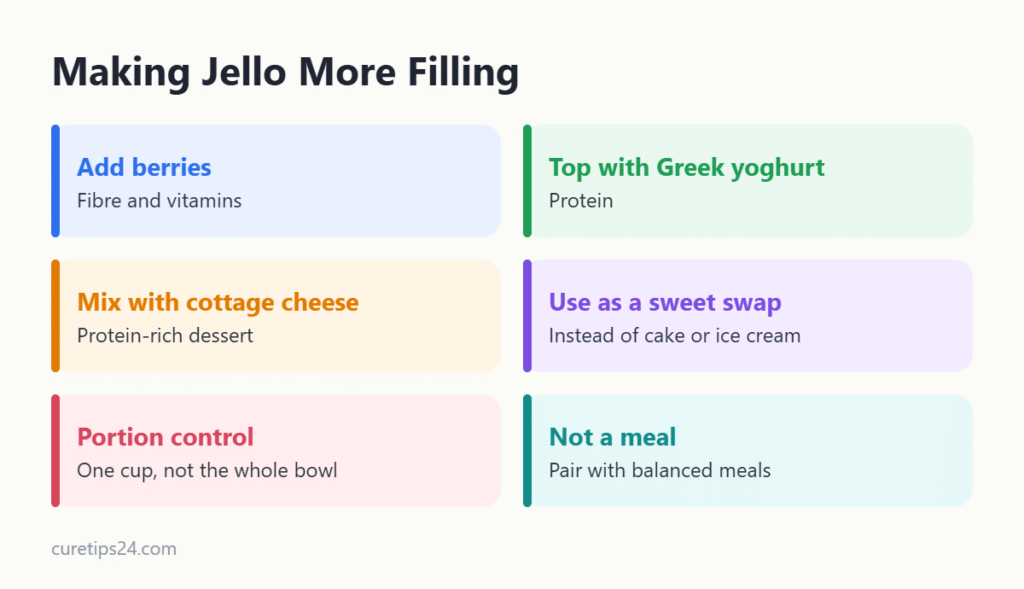
- Add fruit: set berries, orange segments or chopped apple in sugar-free jelly for fibre and vitamins.
- Add protein: serve it with a spoon of Greek yoghurt, or blend plain yoghurt into partly set jelly for a creamy dessert.
- Make it at home: use unflavoured gelatin with unsweetened fruit juice or puréed fruit to control sugar and avoid artificial colours.
- Keep portions sensible: even low-calorie desserts add up if eaten in large amounts with toppings.
Is Jello Pudding Good for Weight Loss?
Jello pudding is different from gelatin dessert. It is usually made with milk and contains more calories and sugar, although it also provides some protein and calcium from the milk. Sugar-free pudding made with skimmed or low-fat milk can be a reasonable treat, but regular pudding is closer to a standard dessert. Check the label and watch the portion size.
Who Should Be Careful
- Vegetarians and vegans: gelatin comes from animals. Plant-based jellies use agar or carrageenan instead.
- People with phenylketonuria (PKU): many sugar-free products contain aspartame, which they must avoid.
- Anyone following a medical or religious diet: check the source of the gelatin and any additives.
For a balanced, gradual approach to weight loss, the NHS Better Health weight loss plan is a useful free resource. You may also find our guides to oats for weight loss and the best diet plans to lose weight helpful.
Better Low-Calorie Desserts to Rotate With Jello
Relying on one dessert gets boring quickly, which is when cravings win. Rotating a few low-calorie options keeps things interesting and adds nutrition that jelly alone doesn’t provide:
| Dessert | Why it helps |
|---|---|
| Greek yoghurt with berries | High in protein, so more filling than jelly |
| Frozen grapes or banana slices | Naturally sweet, with fibre and potassium |
| Baked apple with cinnamon | Warm, filling and no added sugar needed |
| Chia pudding made with milk | Fibre and protein for longer-lasting fullness |
| A square or two of dark chocolate | Rich flavour in a small portion |
Does a “Jello Diet” Work?
Some online plans suggest eating mostly jelly to lose weight fast. Any very low-calorie plan will cause weight loss at first, but much of it is water and muscle, and the weight usually returns when normal eating resumes. Living on jelly also misses out on protein, fibre, vitamins and minerals, which can leave you tired, hungry and low on nutrients. Very low-calorie diets should only be followed under medical supervision. A modest, steady calorie deficit with real meals is safer and far more likely to last.
The simplest way to use Jello well: treat it as a light dessert, not a meal, and build the rest of your day around vegetables, protein and wholegrains.
If you enjoy jelly, keep a few cups of the sugar-free kind in the fridge for evening cravings, and pair them with fruit or yoghurt when you need something more filling. Small, enjoyable swaps like this make healthy eating easier to stick to over months, which is what matters most.
Frequently Asked Questions
Can I eat sugar-free Jello every day?
For most people, a serving of sugar-free jelly a day is fine as part of a balanced diet. If you prefer to limit artificial sweeteners, choose homemade jelly with fruit instead.
Will eating Jello at night make me gain weight?
Weight gain depends on your total calories over time, not the time of day. A small portion of sugar-free jelly is a low-calorie evening treat.
Is Jello good when you’re sick or after surgery?
Clear jelly is sometimes used on clear-liquid diets because it is easy to digest. Follow your doctor’s instructions about what to eat in these situations.
Does gelatin help hair, skin or joints?
Gelatin and collagen supplements are popular for skin and joints, but evidence is mixed, and the amount in a dessert is small. See our guide to collagen supplements for more.
Conclusion
Jello isn’t a weight-loss food, but sugar-free versions can be a helpful low-calorie swap for heavier desserts. Use it as an occasional treat, add fruit or yoghurt to make it more satisfying, and rely on balanced meals, regular activity and sensible portions for real, lasting results.
This article is general information only and is not medical advice. Please consult a healthcare professional or registered dietitian for personal advice.