Table of Contents
Quick Summary / At A Glance
- A rash is irritated or swollen skin that may be red, itchy, painful, dry or scaly.
- Causes named in this article include allergies, irritants, infections, medicines, stress and underlying skin conditions.
- Common patterns described include eczema, psoriasis, contact dermatitis, hives and seborrheic dermatitis.
- Noting shape, colour, texture, location and other symptoms can help a clinician assess a rash.
- Seek prompt medical care for fever, blistering, pain, rapid spread, eye involvement, or a rash in a young child.
What a Skin Rash Is, in General Terms
A rash is an area of irritated or swollen skin. Rashes are often itchy, red and painful, and they can also lead to blistering or peeling of the skin.
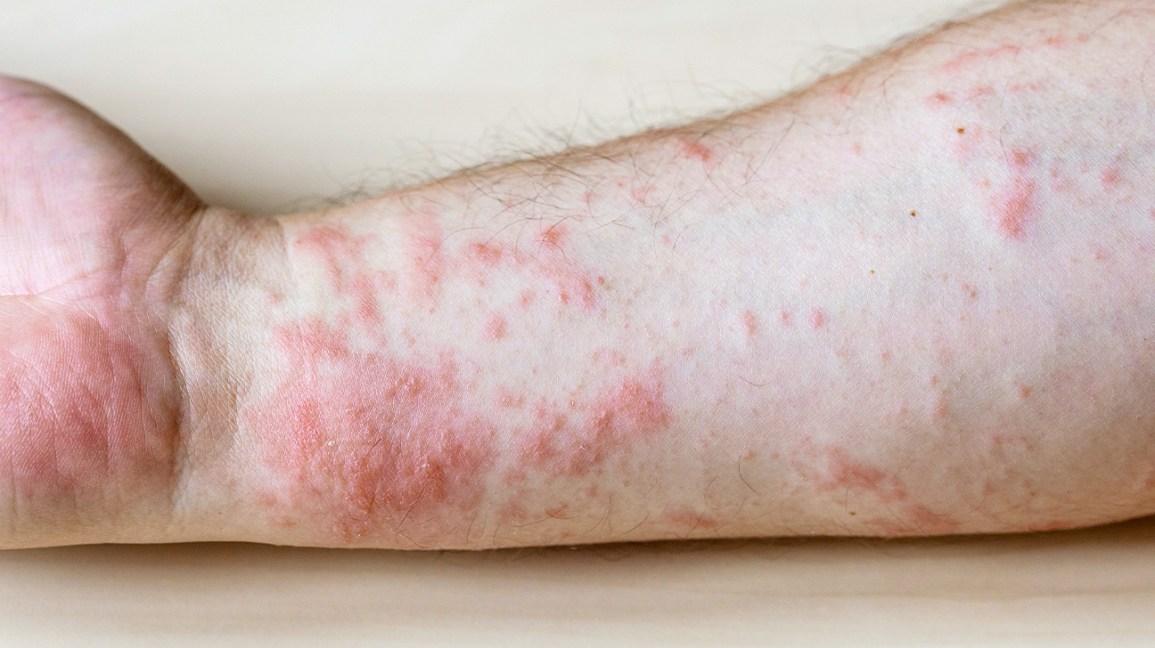
Rashes vary widely in appearance from person to person. Some are red and blotchy, others are dry and scaly, and some form small bumps, raised patches or thickened areas of skin.
This article describes rash patterns in general educational terms only. It cannot tell you which rash you have, and a doctor or dermatologist can assess a rash in person if you are unsure.
Some common causes of rash include infection, allergies and irritants. Infectious rashes are caused by viruses, bacteria or fungi and can be contagious, while allergic rashes occur after contact with an allergen such as poison ivy or cosmetics.
Why a Rash Might Appear Suddenly
There are many possible reasons why someone might suddenly start experiencing skin rashes. It could be due to an allergic reaction, a change in climate or environment, a new medication, or an underlying medical condition.
If you have never had skin rashes before and suddenly start developing them, it is important to see a doctor to rule out any serious causes. That advice applies even when a rash seems mild at first.
Allergic reactions can sometimes be treated with over-the-counter antihistamines, but more severe reactions may require prescription medications or even hospitalisation. If a rash is due to a new medication, treatment may involve stopping the drug or switching to another one, under medical advice.
Five Main Types of Rash Named in This Article
The original article groups rashes into five main types: contact, atopic, seborrheic, drug-related and infectious. The table below summarises those groups using only the descriptions given in that article.
| Type of rash | General description | Examples or triggers mentioned |
|---|---|---|
| Contact | Occurs when skin comes into direct contact with an irritant | New soap or detergent, chemicals, poison ivy, nickel jewellery |
| Atopic | Linked to an allergic reaction and to atopic dermatitis, which often runs in families | Pollen or pet dander; also linked in the article to asthma or hay fever |
| Seborrheic | Red, scaly or flaky patches of skin | Scalp, face, chest and back; also known as dandruff on the scalp |
| Drug-related | A reaction to a medication a person is taking | A new medication; symptoms can range from mild rashes to blistering and peeling |
| Infectious | Caused by viruses, bacteria or fungi, and can be contagious | Chickenpox, measles, impetigo, ringworm and athlete’s foot |
Eczema, Psoriasis and Other Long-Term Skin Conditions
Eczema is described as a common condition that can cause dry, itchy skin and small bumps on the surface of the skin. It can make skin dry, red and cracked, and it can be very itchy and uncomfortable.
Psoriasis is described as a chronic condition that causes redness, itchiness and thickened patches on the surface of the skin. The article describes thick, red patches that are often covered in silver scales, and notes that psoriasis can be painful.
Seborrheic dermatitis causes flaky, scaly patches to form on the scalp, face, chest and back. Rosacea is described as a chronic condition that causes redness and pimples on the face.
Contact Dermatitis, Hives and Allergy-Related Rashes
Contact dermatitis occurs when skin comes into contact with an irritant, such as a chemical substance, poison ivy, or jewellery made from nickel. It can cause a red, itchy rash in the area that was in contact.
Urticaria, also known as hives, is described as a reaction that has triggered the release of histamine in the body. The result is raised, red welts on the skin that can be extremely itchy.
A drug eruption is a reaction to a medication, and it can cause a wide range of symptoms, from mild rashes to blistering and peeling skin. Photosensitivity refers to an exaggerated response of the skin to sunlight exposure.
Stress Rashes and Sensitive Skin
A stress rash is usually characterised in the article by small, red bumps on the skin. The bumps may be itchy or painful, and they may appear in clusters.
Emotional stress can trigger the release of inflammatory chemicals in the body, which can lead to skin irritation and inflammation. The article suggests talking to a therapist or counsellor if significant psychological stress is part of the picture.
Bacterial, Viral and Fungal Rashes
Possible causes named in the article include viral infections, such as chickenpox or measles, bacterial infections, such as impetigo, and fungal infections, such as athlete’s foot or ringworm. Infectious rashes can be contagious, so do not share towels or similar personal items while a rash is being assessed.
Cellulitis is described as the most common type of bacterial skin rash named in the article, typically affecting the lower legs and feet, but it can occur anywhere on the body. It occurs when bacteria enter the skin through a cut or other wound and begin to multiply, and the affected area often looks red, swollen and painful.
If left untreated, cellulitis can spread to nearby lymph nodes and even the bloodstream, causing a potentially life-threatening infection. It is therefore important to see a doctor if you develop signs or symptoms of this condition.
Other bacterial skin infections named in the article include impetigo, folliculitis and boils. These are described as generally less serious than cellulitis, but they can still cause discomfort and may require treatment with antibiotics, as decided by a clinician.
How a Rash Can Be Described to a Clinician
There are many different types of skin rashes, and it can be difficult to identify which one a person has. Noting the shape and size, whether a rash is raised or flat, and whether it has sharp edges or is more blotchy can help describe it.
Colour and texture are also part of that description. A rash may be red, purple, white or yellow, it may feel rough or smooth, and there may be bumps or blisters.
Pay attention to any other symptoms alongside a rash, such as itchiness, pain or swelling. Location, appearance, duration, whether the rash is getting worse or better, and symptoms such as fever or difficulty breathing were all listed in the article as points to keep in mind.

Credit: www.healthline.com
General Care Information and Treatment Boundaries
Treatment depends on the specific rash and its cause, so identifying the cause is one of the most important steps. Many rashes are caused by an allergic reaction or irritation, so avoiding known triggers, if possible, is part of the general guidance in the article.
The article mentions over-the-counter creams and ointments, antihistamines, moisturisers and topical corticosteroids as options that may be used in some cases. Follow the instructions on the package and only use such products as directed, and ask a pharmacist or clinician if you are unsure.
For more severe rashes, a doctor may consider prescription medication, and the options named in the article include oral corticosteroids, topical corticosteroids, immunosuppressants and antimalarial drugs. These medications can have serious side effects, so they belong under medical supervision rather than self-treatment.
See a Doctor Promptly: Warning Signs
See a doctor promptly, rather than waiting to see whether the rash settles, if any of the following apply:
- A rash that comes with a fever
- A rash with blistering or pain
- A rapidly spreading rash
- A rash around the eyes
- A rash in babies or young children
- A rash that does not improve within a few days
Also seek medical help promptly for difficulty breathing, swelling, or signs of cellulitis, such as an area that is red, swollen and painful. Those symptoms were highlighted in the original article as reasons not to delay assessment.
If you are concerned about a rash, or it is causing pain or discomfort, make sure to see a doctor so the cause can be properly diagnosed and treated. A first-time rash, a rash after a new medication, and a rash with no clear cause also deserve medical advice.
Conclusion: What to Take Away
There are many different types of rashes that can affect the skin, with common causes including allergies, infections and contact with irritants. Rashes can vary from a small cluster of bumps to large, inflamed patches, and they can be itchy, painful or cause no discomfort at all.
Depending on the cause, a rash may go away on its own or require treatment from a healthcare provider. Use this guide as background information only, note the warning signs above, and seek prompt care whenever they are present.
This article is general information only and is not medical advice. Please consult a healthcare professional for personal advice.