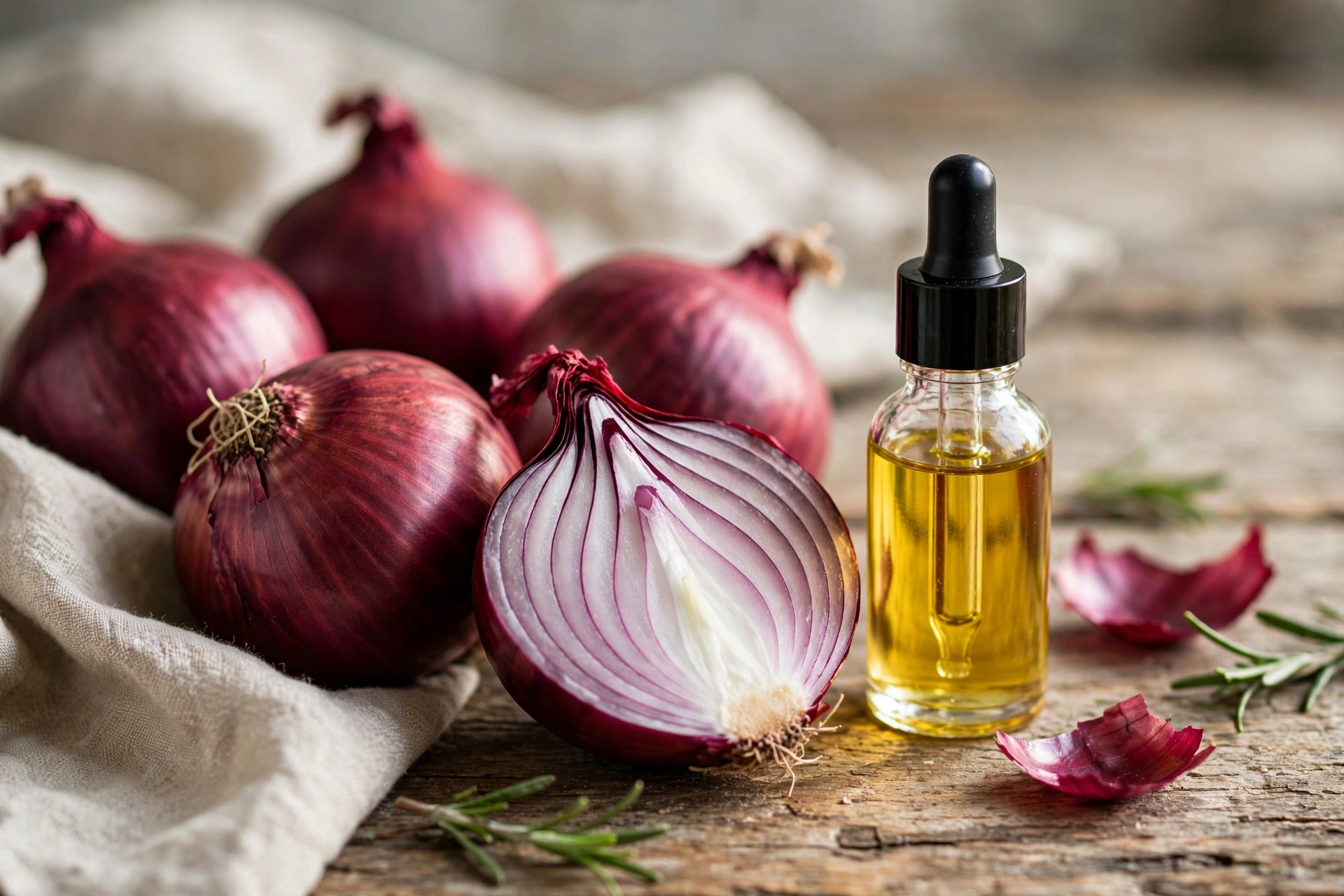
Onion oil is used as a pre-wash scalp treatment, usually once or twice a week. You apply it to the scalp, massage it in, leave it for a short time, then wash it out well before your normal routine. People try it hoping for fuller-looking hair, and onions do have a sensible link to hair: they are rich in sulfur, a building block of hair. The evidence, however, is limited, so this guide keeps the claims honest.
Table of Contents
What onion oil is claimed to do
Onions are rich in sulfur, and sulfur is part of the structure of hair itself. That is the main reason onion preparations became popular for hair care. In practice, onion oil is best thought of as a scalp and hair treatment that can leave hair feeling conditioned and looked after, rather than a proven growth treatment. Like other hair growth oils, it supports the condition of the hair you have.
What the evidence actually says
A small 2002 study tested onion juice, not shop-bought oil, on patchy hair loss known as alopecia areata. Some people in that study saw regrowth with the juice. That distinction matters: fresh onion juice and a commercial onion oil are different products, with different strengths and ingredients. The study was small, it was about a specific patchy condition, and it was not a test of bottled onion oil for general thinning. Treat the evidence as limited and interesting, not as proof that onion oil regrows hair.
How to use onion oil, step by step
Using a pre-made onion oil
Start with dry or slightly damp hair. Part your hair, apply a small amount of oil directly to the scalp in sections, and massage gently with your fingertips for a few minutes. Leave it on for 30 minutes to an hour, then shampoo thoroughly and condition as usual. Use it one to two times a week as a pre-wash treatment.
A simple homemade version
To make a basic version at home, blend or grate a small onion, strain the juice through a clean cloth, and mix that juice with a spoonful of a plain carrier oil such as coconut oil. Use it straight away, apply it to the scalp in the same way as above, and wash it out well. Make a fresh batch each time rather than storing it.
If you prefer a scented option and a simpler routine, you may find our guide to using rosemary oil correctly easier to stick with.
How to reduce the smell
- Rinse well and shampoo carefully, focusing on the scalp.
- Add a drop of a pleasant essential oil to the mixture before applying it.
- Do not leave it on overnight if the smell bothers you; a shorter pre-wash treatment is fine.
- Rinse with plenty of water before you condition.
Safety notes and patch test
Onion can irritate sensitive skin. Always do a patch test first: dab a little of the oil or mixture behind your ear or on your inner elbow, wait 24 hours, and check for redness, itching or burning. Do not use it on broken or sore skin, keep it out of your eyes, and stop using it if irritation continues. If you make the homemade version, be extra careful when straining and applying it near your eyes, as fresh onion juice stings.
What to expect, honestly
Oils support hair and scalp care and appearance. They do not cure baldness or guarantee regrowth. Onion oil may help your hair feel softer and break less, so it can keep its length better, but any visible change takes months of consistent use. If your hair loss is patchy, sudden or spreading, see a doctor: patchy loss in particular deserves a proper diagnosis rather than home treatment alone.
Frequently asked questions
How often should I use onion oil?
Once or twice a week, before washing, is plenty for most people.
Is onion oil the same as onion juice?
No. The small 2002 study used fresh onion juice. Bottled oils are different products, so its results cannot simply be transferred to them.
Will it make my hair smell?
A thorough wash removes most of the smell. The tips above help if any scent lingers.
Key takeaways
- Onions provide sulfur, a building block of hair, but evidence for onion oil is limited.
- Apply to the scalp, leave 30 to 60 minutes, wash out well, one to two times a week.
- Patch test first, because onion can irritate sensitive skin.
- Expect better-feeling hair over time, not guaranteed regrowth.
Keep reading: Rosemary Oil for Hair Growth: How to Use It Correctly and Homemade Hair Growth Oil Recipe with Coconut, Curry Leaves and Fenugreek.
This article is general information only and is not medical advice. Please consult a healthcare professional for personal advice.
2 thoughts on “Onion Oil for Hair Growth: Benefits, How to Use It and What to Expect”