Quick Summary / At A Glance
- Most hair loss in men is genetic pattern baldness, and no oil treats it or regrows hair on fully bald areas.
- Oils still earn their place: they moisturise the scalp, soften coarse hair and reduce breakage.
- Rosemary, castor, jojoba and pumpkin seed oils are the main options, each suiting a different hair type.
- A simple routine works best: massage in, leave for at least 30 minutes, wash out, two to three times a week.
- For actual regrowth, see a doctor or dermatologist about proven medical treatments.
Hair growth oil can help the hair men have look and feel better: softer, less brittle, and easier to manage. What it cannot do is just as important.
Most male hair loss is pattern baldness, which is genetic and hormonal, and oils do not treat it or regrow hair on fully bald areas. Used with that honesty in mind, oils such as rosemary, castor and jojoba are a sensible, low-effort addition to a grooming routine, not a substitute for medical advice.
Table of Contents
The honest starting point: pattern baldness
Most hair loss in men is pattern baldness. It runs in families, it is driven by genetics and hormones, and it follows a predictable pattern over time.
No oil changes that underlying process. An oil cannot wake up a follicle that has stopped producing hair, and it cannot regrow hair where the scalp has been fully bald for a long time.
Any product that promises otherwise is misleading you. Pattern baldness usually creeps in gradually, thinning at the temples, the hairline or the crown while the back and sides stay thick.
Hair loss that is sudden, patchy, or paired with a sore or flaky scalp points to something else. That is worth a medical opinion rather than an oil.
Proven medical treatments for pattern hair loss do exist, in general terms ranging from medicines applied to the scalp to prescription tablets and procedures carried out by specialists. Which, if any, is right for you is a decision for a doctor or dermatologist, who can confirm what is causing your hair loss first.
If regrowth is your main goal, that conversation matters far more than any oil.
What oils can genuinely do for men
Oils support scalp health and hair appearance. They can moisturise a dry scalp, soften coarse hair, and reduce breakage, so the hair you have keeps its length and looks fuller.
Among hair growth oils, that conditioning role is the real benefit, and for many men it is enough. Hair that breaks less and looks healthier feels like a clear improvement.
When you buy one, read the ingredients list before the promises on the front. A short list built around the oil itself, without heavy added fragrance, is usually the safer buy, and a dropper bottle makes it easier to use a few drops at a time rather than flooding the scalp.
The best options to consider
Rosemary oil
A popular essential oil option, always diluted in a carrier oil and massaged into the scalp before washing. It suits men who want a light routine a few times a week.
Because it is an essential oil, the dilution step is not optional. Blend a few drops into a spoonful of a carrier such as jojoba or coconut oil rather than applying it neat.
Castor oil
Very thick and rich, so best used in small amounts and mixed with a lighter oil. Good for dry, coarse hair, but it needs a thorough wash to remove.
Jojoba oil
A light oil that feels close to the scalp’s own natural oil, so it is a comfortable everyday-style choice for men who dislike a heavy or greasy finish.
Pumpkin seed
Pumpkin seeds are eaten as a food and the oil is also sold for general use. Mentioned here only in general terms, it is one more plant oil some men try as part of a wider routine, without any promise of regrowth.
| Oil | Texture | Best for | How to use it |
|---|---|---|---|
| Rosemary (diluted) | Light, once blended into a carrier oil | A pre-wash scalp massage routine | Massage in before washing, a few times a week |
| Castor | Very thick and rich | Dry, coarse hair | Small amounts mixed with a lighter oil, then washed out thoroughly |
| Jojoba | Light and non-greasy | Everyday-style use, and men who dislike a heavy finish | A few drops massaged in before washing, or as part of a blend |
| Pumpkin seed | A general plant oil | Trying as part of a wider routine | Use like other carrier oils, without expecting regrowth |
A simple routine for short hair
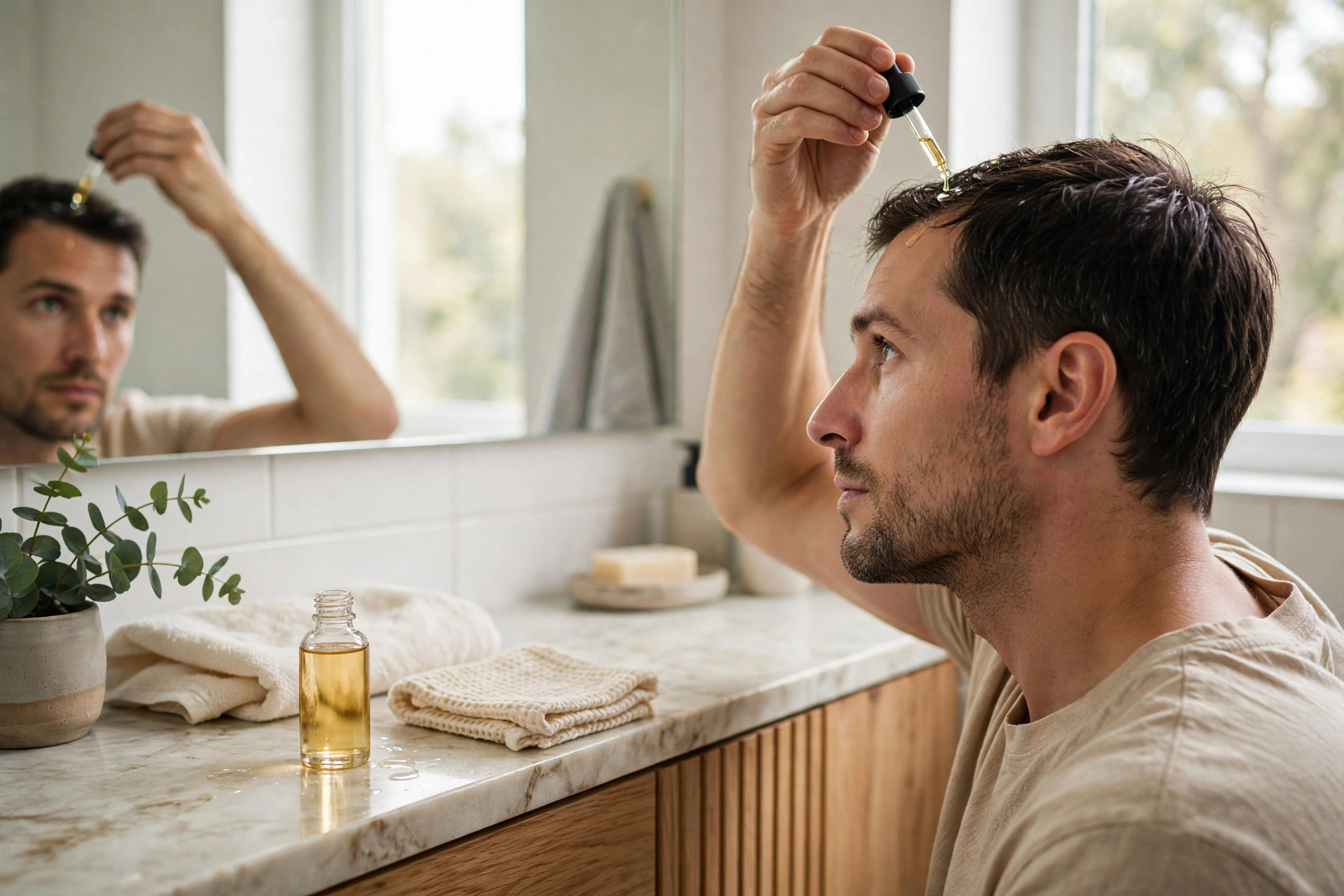
Short hair makes oiling easy, and the basic method takes only a few minutes:
- Put a few drops of your chosen oil, or your diluted rosemary mixture, on your fingertips.
- Massage it over the scalp for a minute or two.
- Leave it for at least 30 minutes.
- Shampoo it out, working the shampoo in before adding lots of water so the oil lifts away cleanly.
Do this two or three times a week before a shower. Our guide to how often to apply hair growth oil will help you adjust that frequency if your hair is fine or your scalp is oily.
The whole routine adds only minutes to your week.
Safety notes
Do a patch test before using a new oil, especially an essential oil such as rosemary: dab a little diluted oil behind your ear, wait 24 hours, and check for redness or itching. Always dilute essential oils in a carrier oil, and keep oils out of your eyes.
Stop using anything that irritates your scalp. If your scalp is sore, flaky in patches, or losing hair in an unusual pattern, skip the oil and see a doctor.
What to expect, honestly
Oils support hair and scalp care and appearance. They do not cure baldness or guarantee regrowth, and they cannot bring back hair on fully bald areas.
Expect the hair you have to feel softer, look tidier and break less over two to three months of consistent use. If your hair loss is progressing and it bothers you, a doctor or dermatologist can talk you through the proven medical options in good time, which is when they tend to work best.
Frequently asked questions
Can oil regrow hair on a bald patch?
No. Oils cannot regrow hair on fully bald areas.
That claim is not supported, and you should be wary of products that make it.
Which oil is best for men?
The one you will actually use. Jojoba is light and simple, rosemary suits a pre-wash massage routine, and castor is best for very dry, coarse hair in small amounts.
How long before I notice a difference?
Judge it on feel and appearance rather than new growth. Softer, tidier hair that breaks less usually shows over two to three months of consistent use.
Should I see a doctor about hair loss?
Yes, if it worries you, is sudden or patchy, or you want to discuss proven treatments. Early advice gives you the most options.
Key takeaways
- Most male hair loss is genetic pattern baldness, and oils do not treat it.
- Oils still help the hair you have look and feel better and break less.
- Keep it simple: massage in, leave 30 minutes, wash out, two to three times a week.
- For regrowth, talk to a doctor or dermatologist about proven medical treatments.
Keep reading: Rosemary Oil for Hair Growth: How to Use It Correctly and Hair Growth Oil for a Dry, Itchy Scalp: What Helps and What to Avoid.
This article is general information only and is not medical advice. Please consult a healthcare professional for personal advice.