
Rogaine is a well-known name in hair-loss care, and many men consider it when they notice thinning. Like any treatment, it can cause side effects. This article explains, in general terms, what Rogaine is, the side effects people most commonly report, the warning signs that need prompt medical attention, and who should speak to a doctor before using it.
Table of Contents
What Rogaine Is
Rogaine’s active ingredient is minoxidil. It is an over-the-counter hair-loss treatment that is applied to the scalp. It is one option among several for pattern hair loss, and it does not work for everyone, or for every cause of hair loss.
Rogaine is a brand of topical minoxidil, an over-the-counter treatment for male pattern hair loss (androgenetic alopecia). It is thought to widen blood vessels around the follicle and lengthen the growth (anagen) phase. DermNet describes how this type of hair loss usually starts at the temples or crown.
Common Side Effects
The side effects reported most often affect the scalp where the product is applied. These include scalp irritation, itching and dryness. If irritation is severe or does not settle, stop using the product and get medical advice.
Unwanted facial hair growth can also occur if the product spreads or drips onto the face. Take care to apply it to the scalp only.
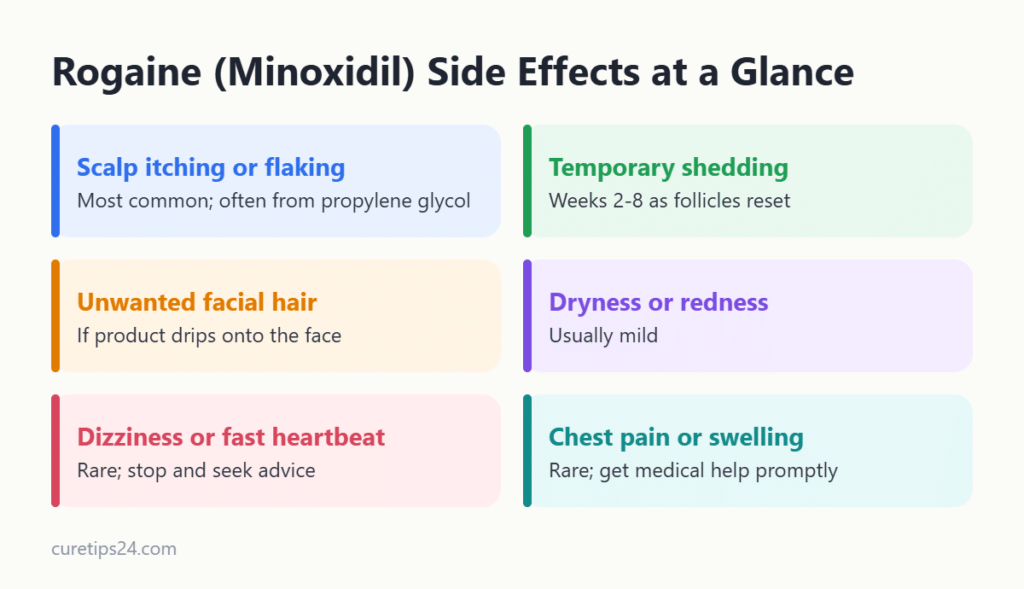
According to MedlinePlus, mild scalp irritation is the most common side effect, while symptoms such as chest pain, rapid heartbeat, faintness or sudden swelling need prompt medical attention.
Why Shedding Happens at the Start
Many men notice more hair in the shower 2 to 8 weeks after starting. This “dread shed” happens because minoxidil pushes resting hairs out so new, stronger hairs can grow. It usually settles within a couple of months, so stopping too early is a common mistake.
Less Common Effects That Need Prompt Medical Attention
Less commonly, some users report dizziness or a rapid heartbeat. These effects are uncommon, but they need prompt medical attention. Stop using the product and seek medical help straight away if you notice them.
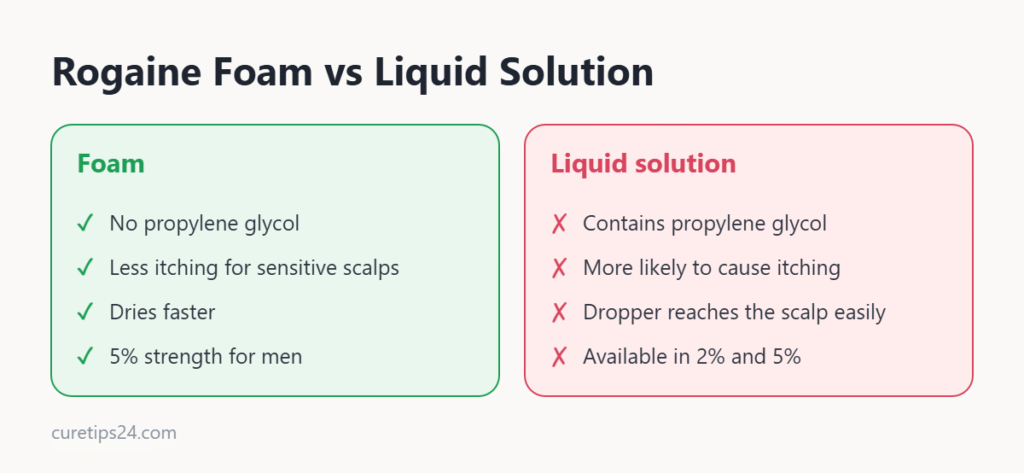
If the liquid makes your scalp itch or flake, switching to the foam often helps because it does not contain propylene glycol, a common irritant.
Who Should Speak to a Doctor First
Rogaine is not suitable for everyone. It is not meant for hair loss that is sudden or patchy, for scalp skin that is inflamed or broken, or for anyone under 18. Hair loss can have many causes, and some need medical treatment rather than a product applied to the scalp, so it is sensible to see a doctor about the cause of your hair loss first.
How to Use Rogaine
How to use Rogaine is directed by the product label and by a pharmacist or doctor. Follow the package directions for the product you have bought, and ask a pharmacist if you are unsure. This article does not give dosing instructions, because correct use depends on the specific product and on your own situation.
Results take time: most people need 4 to 6 months of twice-daily use, and any regrowth is lost if you stop. If hair loss is sudden or patchy, the NHS recommends seeing a GP because minoxidil may not be the right treatment. Compare it with other options in our guides to hair growth oils for men, rosemary oil vs minoxidil and red light therapy.
What to Expect
Rogaine is not a quick fix. Results, if any, take several months of continued use before any regrowth is visible. Any benefit also depends on keeping up the treatment: when use stops, regrowth stops.
How to Reduce Rogaine Side Effects
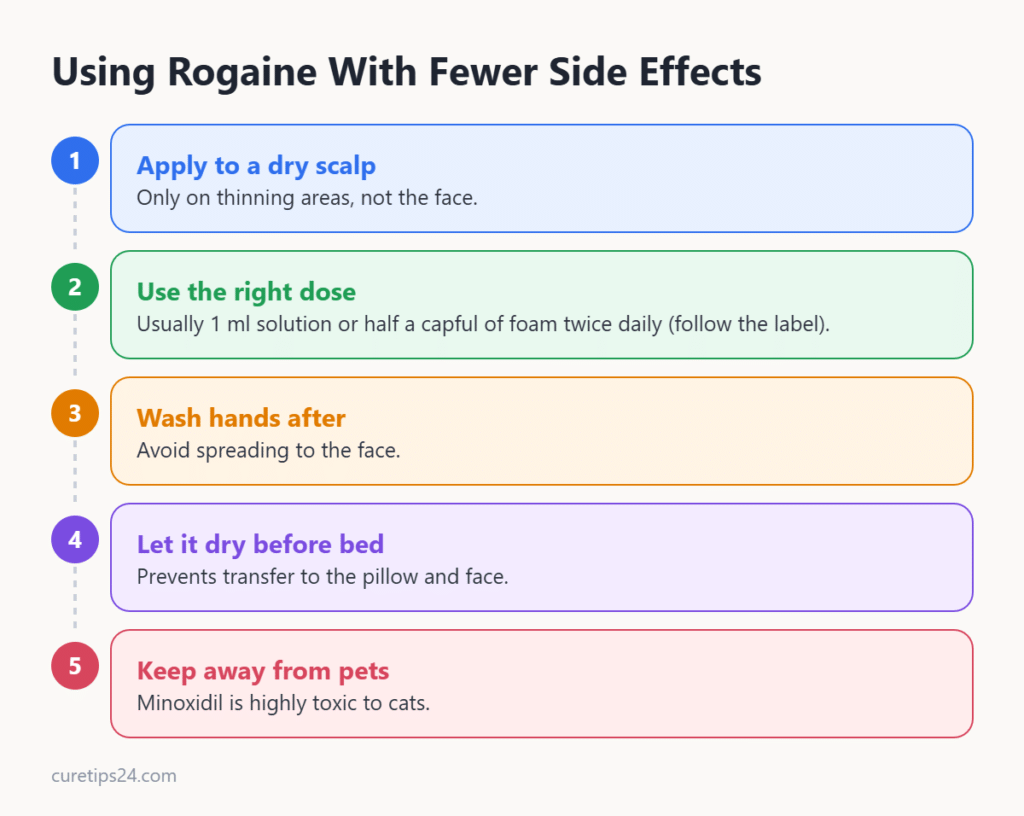
- Apply to a dry scalp only: applying to wet or damaged skin can increase absorption and irritation.
- Use the amount on the label: using more does not work better and makes side effects more likely.
- Keep it off your face: product that drips onto the forehead or cheeks can cause unwanted facial hair. Let it dry before lying down, and wash your hands after applying.
- Consider the foam if the solution irritates: many liquid minoxidil solutions contain propylene glycol, a common cause of itching and flaking, while foam versions are usually made without it. Ask a pharmacist which is right for you.
- Don’t use it on irritated skin: pause and seek advice if your scalp is sunburnt, inflamed or broken.
The “Shedding Phase” Explained
Some people notice more hair falling out in the first weeks of using minoxidil. This is often described as hairs in the resting phase being pushed out as new growth begins, and it usually settles. Even so, if shedding is heavy, lasts for more than a couple of months or worries you, speak to a doctor or pharmacist rather than simply stopping or increasing the dose.
A Warning for Pet Owners
Minoxidil is highly toxic to cats, even in small amounts, such as from licking a treated scalp, a pillow or your hands. Store it out of reach, let it dry fully, wash your hands after use and keep pets away from treated areas. If you think a pet has been exposed, contact a vet immediately.
What Happens If You Stop Using Rogaine?
Minoxidil only works while you keep using it. If you stop, hair that was maintained by the treatment usually sheds over the following months, and thinning returns to where it would have been without treatment. If side effects make you want to stop, talk to a doctor about alternatives first. Read our wider guide to hair loss treatments for men for the other options.
Rogaine Side Effects at a Glance
| Side effect | How often | What to do |
|---|---|---|
| Scalp itching, dryness or flaking | Common | Try the foam version or ask a pharmacist; stop if it becomes severe |
| Temporary increase in shedding | Common in the first weeks | Usually settles; seek advice if heavy or prolonged |
| Unwanted facial hair | Less common | Keep product off the face; it usually fades after stopping |
| Dizziness, chest pain, fast heartbeat, swelling of hands or feet | Rare | Stop using it and get medical help promptly |
Always read the leaflet that comes with your product, as it lists the full set of side effects and warnings for that formula.
Rogaine is one of the most studied over-the-counter hair loss treatments, and most people who use it have no serious problems. Knowing the possible side effects in advance helps you use it safely, spot the rare warning signs quickly and decide with your doctor or pharmacist whether it is the right option for you. If you have heart problems, low blood pressure or take blood pressure medicines, check with a doctor before you start, as the leaflet advises.
Keep a simple note of when you started, any side effects and monthly photos. That record makes any conversation with your doctor or pharmacist quicker and more useful.
Conclusion
Rogaine (minoxidil) can cause side effects, most commonly scalp irritation, itching and dryness. Serious effects such as dizziness or a rapid heartbeat are uncommon, but they need prompt medical attention. Follow the product label, and speak to a doctor or pharmacist if you are unsure whether Rogaine is suitable for you.
This article is general information only and is not medical advice. Please consult a healthcare professional for personal advice.

1 thought on “Rogaine for Men Side Effects: Understanding, Precautions, and Safety”