If your scalp feels dry, tight and itchy, the right oil can help — but only if you pick one that suits the cause of the itching. For simple dryness, gentle oils such as jojoba and coconut can add moisture and make your scalp feel more comfortable. For dandruff and other scalp conditions, oil alone may not be enough, and the wrong oil, used the wrong way, can actually make itching worse. This guide explains which hair growth oils can help a dry scalp, what to avoid, and the warning signs that mean you should see a doctor instead.
Table of Contents
First, why is your scalp dry and itchy?
A dry, itchy scalp has several possible causes, and they do not all respond to oil in the same way:
- Simple dryness — dry weather, frequent washing or harsh shampoos can leave the scalp short of moisture, with fine, dry flakes.
- Dandruff and seborrheic dermatitis — a very common cause of itching with larger, sometimes yellowish flakes and possibly red, greasy patches.
- Product build-up — oils, styling products and dry shampoo can accumulate on the scalp and irritate it.
- Sensitivity to fragrances — strongly scented products can irritate an already sensitive scalp.
Knowing which cause is most likely helps you choose sensibly. Oil helps most clearly with simple dryness. If you suspect seborrheic dermatitis or a reaction to a product, treat the oil as a side helper at most — gentle washing and, where needed, proper treatment matter more.
Oils that can suit a dry scalp
Jojoba oil
Jojoba is a popular choice for dry scalps because it is similar to the scalp’s own natural oil, sebum. It moisturises without feeling as heavy as some other oils, spreads easily, and is usually well tolerated. It is a good first oil to try if your scalp is dry but also quick to feel greasy.
Coconut oil
Coconut oil is widely used for moisture. It can help dry hair and a dry-feeling scalp feel softer and less tight. Use a modest amount, and wash it out properly afterwards — leaving thick layers on for days at a time can add to build-up, which defeats the purpose.
Tea tree oil — only diluted, and with realistic expectations
Tea tree oil has been studied for dandruff in shampoo form, which is why it appears in many scalp products. That does not make it a cure, and the neat essential oil is far too strong to put straight on your skin. If you want to try it, use it only diluted in a carrier oil such as jojoba, in a small amount, or choose a ready-made product designed for scalp use. Stop if it stings, burns or increases redness.
How to use oil on a dry, itchy scalp
- Do a patch test first (see the safety notes below), especially if your scalp is already irritated.
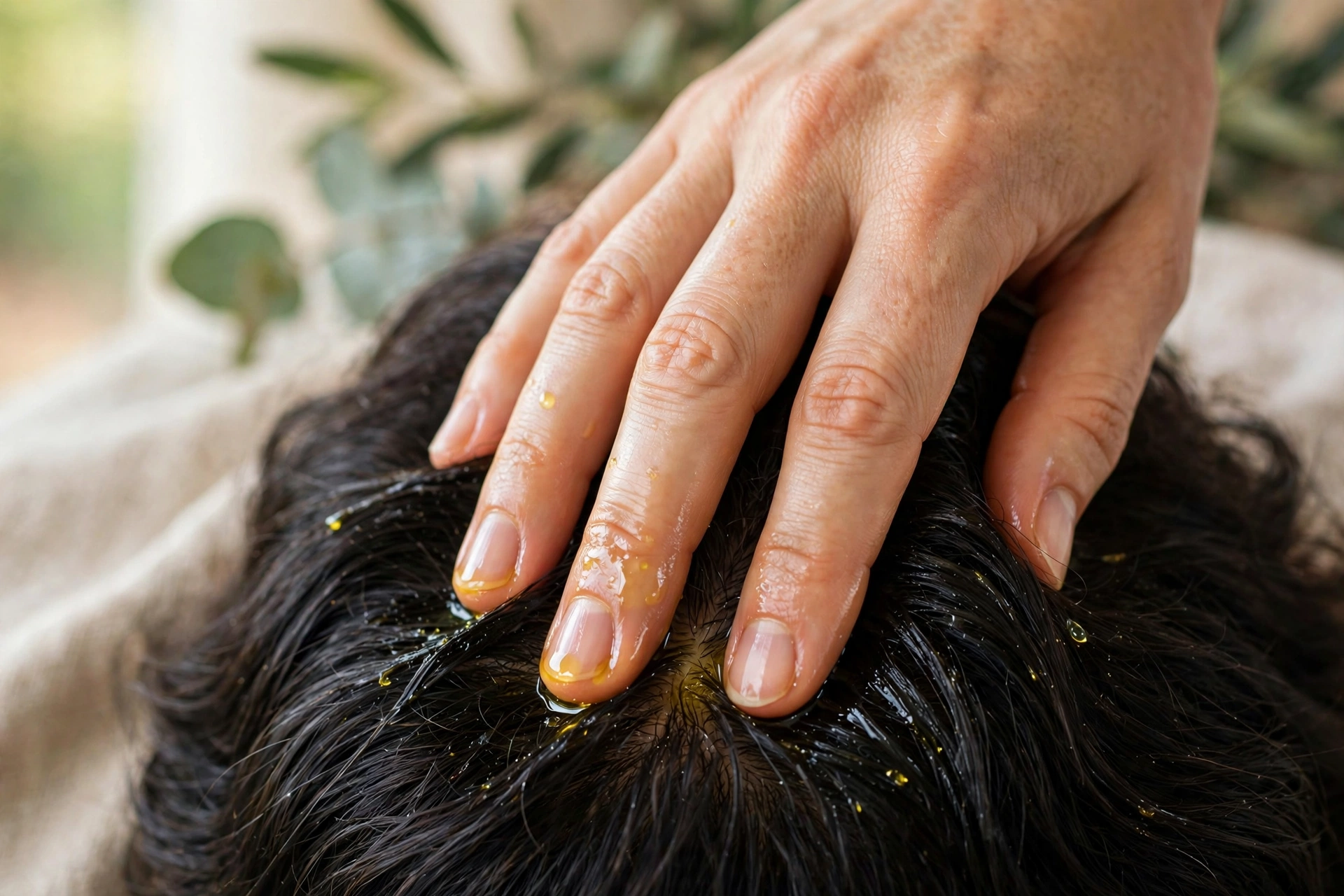
- Apply a small amount of your chosen oil to your fingertips and massage it gently into the scalp in sections. Be gentle — scratching with nails makes irritation worse.
- Leave it on for 30 minutes to a few hours. There is no benefit in leaving heavy oil on for days.
- Wash with a gentle shampoo, massaging the scalp with your fingertips to lift oil and loose flakes. Rinse thoroughly.
- Repeat once or twice a week. If itching is no better after a few weeks of gentle care, see the red flags section below.
What to avoid
- Undiluted essential oils. Never apply tea tree or any other essential oil neat to your scalp — it can irritate or burn the skin.
- Heavy oils left on for days. Build-up can worsen itching and make flakes stickier and harder to wash away.
- Strongly fragranced products. Heavy perfume on an irritated scalp is a common trigger for more itching and redness.
- Very hot water and harsh scrubbing. Both strip moisture and aggravate a sensitive scalp.
Your wash routine matters as much as the oil
It is easy to focus on the oil and forget the washing — but the two work together. Wash regularly enough that oil and product do not build up, using a gentle shampoo and lukewarm water. Rinse until the water runs clear and your scalp feels clean but not squeaky or tight. If flakes and itching look like dandruff, an anti-dandruff shampoo used as directed is a more targeted step than adding more oil. Condition the lengths of your hair rather than the scalp, so you moisturise where it is needed without coating irritated skin.
Safety notes, including a patch test
Always patch test a new oil before using it on your whole scalp: apply a small amount behind your ear or on your inner elbow, wait 24 hours, and check for redness, burning or increased itching. This is essential before using anything containing tea tree or other essential oils, which must always be diluted in a carrier oil. Do not apply oil to broken, weeping or very sore skin. If a product makes itching worse, wash it out and do not push through — irritation is information, not a stage to endure.
Red flags: when to see a doctor or dermatologist
Book medical advice rather than trying more oils if you notice any of the following:
- Thick scaling or crusting on the scalp.
- Sores, weeping patches or signs of infection.
- Patches of redness or flaking that are spreading.
- Hair falling out in patches.
- Itching that persists beyond a few weeks of gentle care.
What to expect
For simple dryness, a suitable oil plus gentler washing can leave your scalp feeling more comfortable within a few washes. Be honest about the limits, though: oils support hair and scalp care and appearance — they do not cure baldness, they do not guarantee regrowth, and they are not a treatment for seborrheic dermatitis or other medical scalp conditions. If your symptoms fit the red flags above, proper diagnosis will help you far more than another bottle of oil.
Frequently asked questions
Which oil is best for a dry, itchy scalp?
Jojoba is a good first choice because it resembles your scalp’s own sebum and feels light. Coconut oil suits many people for moisture. The best oil is also the one you wash out properly and use consistently.
Can oil make an itchy scalp worse?
Yes, if it is heavy, left on for days, strongly fragranced, or an undiluted essential oil. Keep amounts small, wash out thoroughly, and stop anything that increases itching.
How often should I oil a dry scalp?
Once or twice a week as a pre-wash treatment is enough for most people. More frequent oiling usually adds build-up rather than benefit.
Keep reading: Best Time to Apply Hair Oil: Before Bed or Before Washing? and Castor Oil for Hair Growth: Does It Really Work?.
This article is general information only and is not medical advice. Please consult a healthcare professional for personal advice.