
Acne is not just a teenage problem. Many men deal with breakouts well into their twenties, thirties and beyond, and men’s oilier skin, daily shaving, sweat and gym gear all add to the challenge. The good news is that acne is very treatable. This guide explains the best acne treatment for men step by step: what causes it, which over-the-counter ingredients work, when you need prescription treatment, and a simple daily routine that fits into a busy morning.
Table of Contents
Quick Summary / At A Glance
- Men’s acne is mainly driven by androgens such as testosterone, which increase skin oil.
- The best first-line treatments are benzoyl peroxide, salicylic acid and adapalene gel, all available without a prescription.
- Give any treatment at least 6 to 8 weeks before judging it.
- Shave gently with a sharp blade, wash after workouts and use oil-free products.
- Never pick or squeeze spots; it causes scars and dark marks.
- See a dermatologist for painful, deep or scarring acne; prescription treatments work well.
What Causes Acne in Men?
Acne starts when pores (hair follicles) become clogged with oil (sebum) and dead skin cells. Bacteria called Cutibacterium acnes then multiply in the blocked pore and trigger inflammation, producing blackheads, whiteheads, red papules, pus-filled pustules and, in more severe cases, deep nodules and cysts. It most often appears on the face, jawline, back, chest and shoulders.
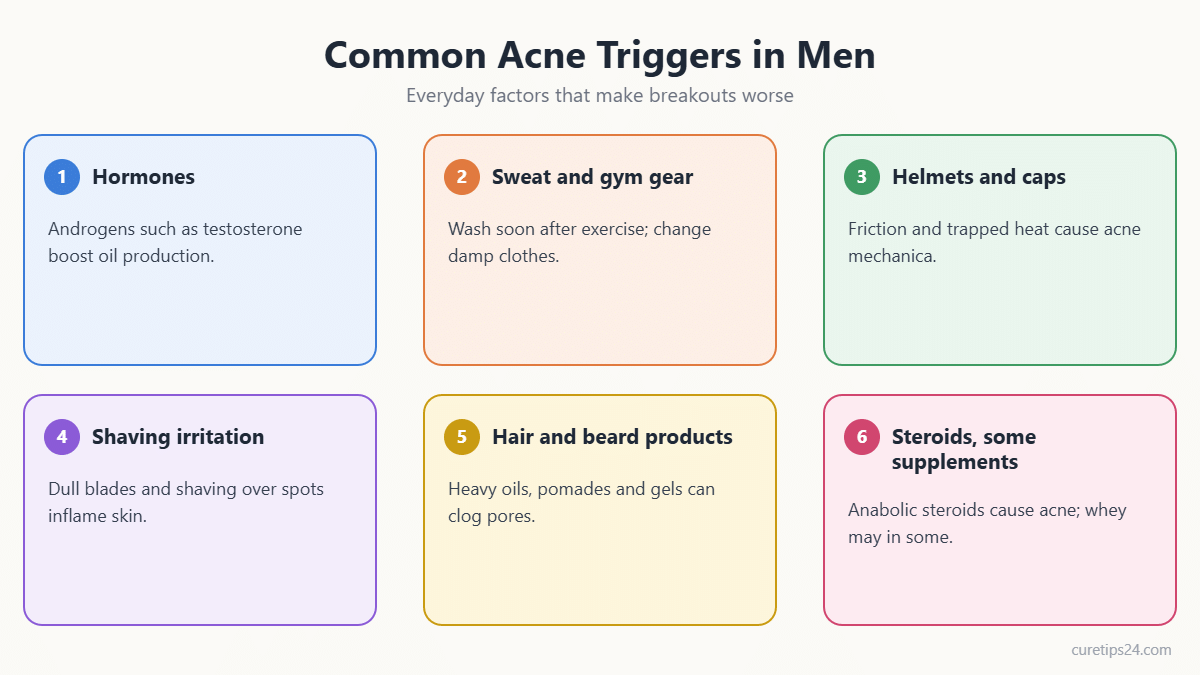
- Hormones: androgens such as testosterone make oil glands larger and more active, which is why men often have oilier skin.
- Genetics: acne tends to run in families.
- Sweat and friction: helmets, caps, backpack straps and tight sports gear trap heat and sweat, causing a type of breakout called acne mechanica.
- Shaving: shaving does not cause acne, but a dull blade or shaving over spots irritates them.
- Products: heavy hair pomades, oils and beard products can clog pores on the forehead and jawline.
- Steroids and supplements: anabolic steroids are a well-known cause of severe acne, and some studies link whey protein supplements to breakouts in some people.
Best Over-the-Counter Acne Treatments for Men
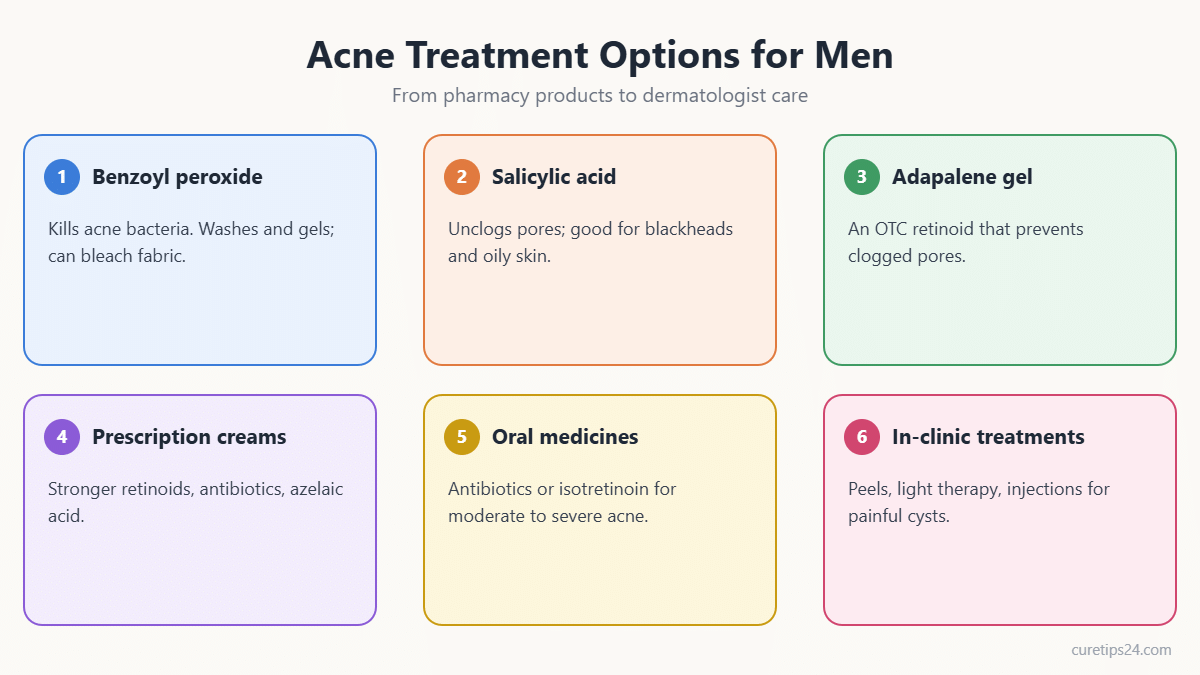
For mild to moderate acne, the American Academy of Dermatology’s guide to acne treatment lists benzoyl peroxide, salicylic acid and adapalene among the effective non-prescription options. Use them as the label directs and start slowly to limit dryness.
1. Benzoyl Peroxide
Benzoyl peroxide kills acne-causing bacteria and helps clear pores. It is one of the most effective options for red, inflamed pimples and works well as a face or body wash for back and chest acne. Lower strengths (2.5% to 5%) cause less irritation and work about as well as higher ones. It can bleach towels, pillowcases and shirts, so use white fabrics.
2. Salicylic Acid
Salicylic acid is a beta hydroxy acid (BHA) that dissolves oil and dead skin inside pores, making it good for blackheads, whiteheads and oily skin. It is common in daily face washes and toners for men.
3. Adapalene Gel
Adapalene 0.1% is a retinoid available over the counter in many countries. It helps prevent new clogged pores and reduces inflammation. Apply a pea-sized amount to the whole affected area at night, not just individual spots. Expect some dryness or peeling in the first few weeks, and wear sunscreen in the day.
4. Azelaic Acid and Niacinamide
Azelaic acid and niacinamide are gentler options that help calm redness and reduce dark marks left by old spots, which are common on darker skin tones.
How Long Does It Take?
Most acne treatments take at least six to eight weeks to show fewer breakouts, and around three months for the full effect. Stick with one routine instead of switching products every week.
Prescription Acne Treatments
If over-the-counter products have not helped after two to three months, or your acne is painful, widespread or scarring, a doctor or dermatologist can prescribe stronger options:
- Prescription topical treatments: stronger retinoids such as tretinoin or tazarotene, topical antibiotics (usually combined with benzoyl peroxide), azelaic acid and combination gels.
- Oral antibiotics: such as doxycycline for moderate to severe inflammatory acne, usually for a limited number of months alongside a topical treatment.
- Isotretinoin: a powerful oral medicine for severe, nodular or scarring acne that has not responded to other treatments. It needs close medical supervision and regular check-ups because of possible side effects.
- In-clinic treatments: chemical peels, light or laser therapy, professional extraction, and corticosteroid injections for large, painful cysts.
Hormonal treatments used for women’s acne, such as birth control pills and spironolactone, are not suitable for men, which is one reason men’s treatment plans often focus on retinoids, benzoyl peroxide and, for severe cases, isotretinoin. Never take prescription acne medicines bought without a doctor’s advice.
A Simple Daily Acne Routine for Men
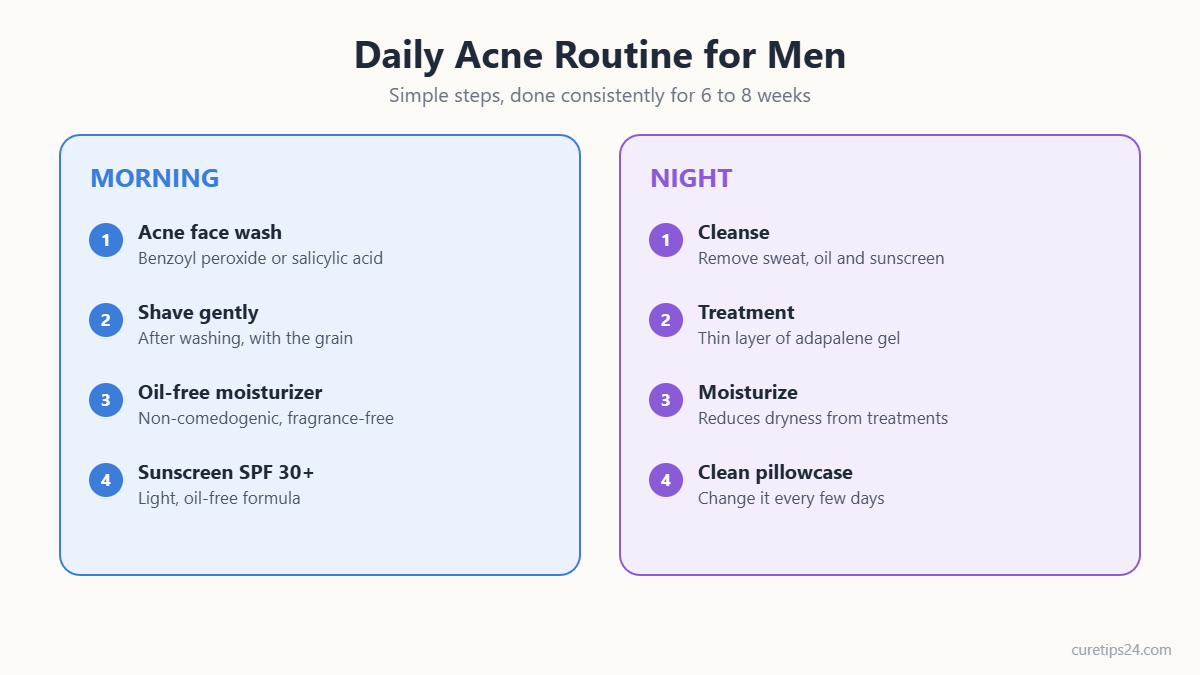
| Step | Morning | Night |
|---|---|---|
| 1 | Wash with a benzoyl peroxide or salicylic acid face wash | Cleanse to remove sweat, oil and sunscreen |
| 2 | Shave after washing, with the grain | Apply a thin layer of adapalene gel to the whole area |
| 3 | Light, oil-free, non-comedogenic moisturizer | Moisturizer if skin feels dry |
| 4 | Oil-free broad-spectrum SPF 30 sunscreen | Change your pillowcase every few days |
Use lukewarm water, wash with your fingertips and pat dry; scrubbing and harsh astringents only irritate acne. For product ideas, see our guide to the best face wash for men, and for an all-round routine read how to glow skin for male naturally.
How to Shave With Acne
The American Academy of Dermatology’s shaving tips recommend softening the hair first with a warm shower, using shaving cream or gel, shaving in the direction of hair growth, rinsing the blade after every stroke and replacing blades every five to seven shaves. If you have acne, shave lightly, try an electric or disposable razor, and avoid shaving directly over inflamed spots. Bumps that appear only in the beard area and look like small red pimples may be razor bumps or ingrown hairs rather than acne; see our guide on ingrown hairs.
Body Acne: Back and Chest
Back and chest acne is common in men because these areas have many oil glands and trap sweat under clothing. Shower soon after exercise, use a benzoyl peroxide or salicylic acid body wash (leave it on for a minute or two before rinsing), wear loose, breathable cotton, and wash gym clothes and towels after every use.
Habits to Avoid
- Picking, squeezing or popping spots, which leads to scars and dark marks.
- Scrubbing hard or washing more than twice a day.
- Toothpaste, lemon juice, baking soda or garlic on spots; they irritate and can burn the skin.
- Tanning to hide acne; UV damage darkens marks and harms skin.
- Using several new acne products at once, which causes irritation.
Read our article on common myths about acne to separate fact from fiction.
When to See a Dermatologist
See a doctor or dermatologist if you have deep, painful lumps or cysts, acne that is leaving scars or dark marks, acne on the back and chest that will not clear, breakouts that have not improved after two to three months of good care, or acne that affects your confidence or mood. Early treatment prevents permanent scarring. The NHS guide to acne also explains which symptoms need medical help.
Frequently Asked Questions
What is the best acne treatment for men?
For mild to moderate acne, a combination of a benzoyl peroxide or salicylic acid face wash in the morning and adapalene gel at night works well for most men. Severe or scarring acne needs a dermatologist.
Why do men get acne in their 20s and 30s?
Androgen hormones, genetics, sweat, friction from gear, shaving irritation, heavy hair products, stress and sometimes supplements or steroids can all keep acne going into adulthood.
Is men’s acne different from women’s acne?
The causes are similar, but men usually have oilier skin and more breakouts on the back and chest, and hormonal pill treatments used by women are not suitable for men.
How long does it take to clear acne?
Most treatments show improvement in six to eight weeks and work best after about three months of daily use.
This article is general information only and is not medical advice. Please consult a doctor, pharmacist or dermatologist before starting acne treatment.

1 thought on “Best Acne Treatment for Men: What Works, From Face Wash to Dermatologist”