
Table of Contents
Quick Summary / At A Glance
- The original article lists 10 eco-friendly loofah alternatives, from natural luffa sponges to a recycled EcoTools EcoPouf.
- Natural loofahs are made from the dried fibrous material of the luffa gourd, a renewable plant that can be composted at the end of its use.
- Other options named include konjac sponges, silicone exfoliating brushes, organic cotton washcloths, sea sponges and sisal shower sponges.
- Keep any loofah, sponge or pouf hygienic: bacteria can build up on a damp scrubber, so replace it regularly, do not share it, and do not use it on broken skin.
- Product names below are mentioned for information only, using only facts from the original article — no prices or purchase links are included.
Eco-friendly loofahs are presented in the original article as a way to reduce environmental impact while still enjoying a shower. Many alternatives to traditional plastic loofahs are made from natural materials.
This rewrite keeps only the items and facts already named in the original article. It removes shopping links, badges and first-person recommendations, and keeps the hygiene cautions in full.
Why Switch Away From a Plastic Loofah?
The original article says sustainable alternatives help reduce microplastic pollution. It also describes them as gentle on the skin.
Loofahs themselves are a natural sponge made from the dried, fibrous material of the luffa gourd. The luffa gourd is a tropical vine plant related to cucumbers and melons.
The article gives the luffa plant’s renewable nature as the main reason loofahs are considered eco-friendly. The plant grows quickly and abundantly, and loofahs can be composted when they reach the end of their usefulness.
By contrast, the article notes that synthetic sponges are made from petroleum products, which come from non-renewable fossil fuels. That comparison is the basis for the article’s view that loofahs are more eco-friendly than synthetic sponges.
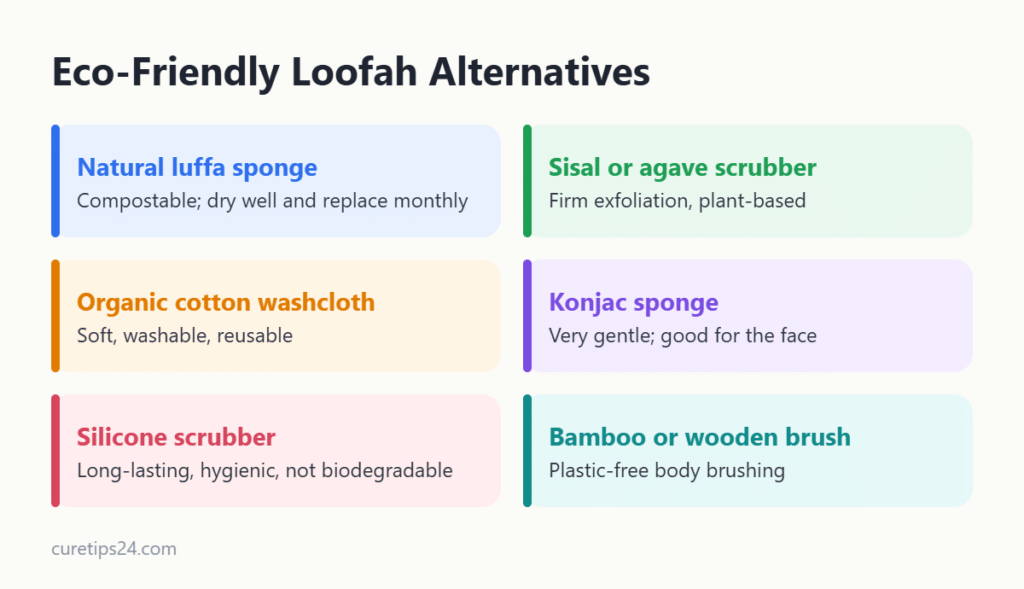
Natural luffa sponges come from the fruit of the luffa plant and can be composted, unlike plastic mesh puffs that shed microplastics.
The 10 Alternatives at a Glance: Comparison Table
The table below summarises only what the original article said about each item.
| Item, as named in the original article | Material or type, as described | Main use, as described |
|---|---|---|
| ECOBOO Bamboo Paper Towels, washable and reusable, 2 rolls | Natural, sustainable bamboo; machine-washable | Reusable towels that can be used multiple times |
| H-BDAY Natural Sponges for Dishes, Loofah Dish Sponges | Loofah; eco-friendly and biodegradable | Cleaning dishes and removing dirt and grime |
| EcoTools Loofah Body Sponge | Mesh netting and natural loofah | Exfoliating body scrubber |
| MainBasics Bath Shower Loofah Sponge Pouf, set of 3 | Natural materials, as described in the original article | Body washing and exfoliating in the bath or shower |
| The Loofah Shop Bath Loofah Sponge | Natural materials; biodegradable | Exfoliating body scrubber for the shower |
| YIQINGJIE Natural Loofah Sponge Exfoliating Body Scrubber, 3 pack | Eco-friendly, sustainable materials | Gentle, effective exfoliating in the shower or bath |
| ALMOONI Natural Real Egyptian Shower Loofah Sponge | Natural loofah | Shower body scrubber for exfoliating |
| EKOH Loofah Sponge | Natural, compostable loofah | Multipurpose cleansing for face, body or dishes |
| Revelook Organic Natural Loofah Sponge, unbleached, 6 pcs | Organic, natural, unbleached luffa | Scrubbing away dead skin cells |
| EcoTools Delicate EcoPouf Bath Sponge | Recycled materials | Delicate exfoliating bath sponge, including for sensitive skin |
Reusable Bamboo Towels and Dish Sponges
1. ECOBOO Bamboo Paper Towels
The first item in the original list is a pack of washable, reusable bamboo paper towels, in 2 rolls and in white. They are described as made of natural and sustainable bamboo, as more absorbent than traditional paper towels, and as machine-washable.
Because they can be reused multiple times, they are presented as cutting down on waste. This item is a reusable towel, rather than a body scrubber.
2. H-BDAY Natural Loofah Dish Sponges
These natural sponges are made from loofah, which the article describes as biodegradable. They are described as effective at cleaning dishes and removing dirt and grime, including stuck-on food.
The article also describes natural sponges as softer than synthetic sponges, making them gentle on delicate surfaces. It says natural sponge loofahs can also exfoliate skin while washing dishes.
Natural Loofah Body Sponges and Poufs
3. EcoTools Loofah Body Sponge and 4. MainBasics Loofah Pouf
The EcoTools Loofah Body Sponge is made with mesh netting and natural loofah. It is described as an exfoliating body scrubber that removes dead skin cells, and as easy to use and store.
The MainBasics Bath Shower Loofah Sponge Pouf is listed as a set of 3, in white, pink and blue. The original article describes it as made with natural materials, gentle on the skin, and as exfoliating and removing dead skin cells.
5. The Loofah Shop Bath Loofah and 6. YIQINGJIE Natural Loofah Sponge
The Loofah Shop Bath Loofah Sponge is described as made of natural materials and as biodegradable. It is presented as exfoliating and scrubbing the body gently and effectively, removing dead skin cells and impurities.
The YIQINGJIE Natural Loofah Sponge Exfoliating Body Scrubber comes in a pack of three, in beige. It is described as made with eco-friendly, sustainable materials, as gentle and effective for exfoliating, and as large enough to cover a good portion of the body.
7. ALMOONI Natural Real Egyptian Shower Loofah
This shower loofah sponge, in tan, is described as made from natural materials and as gentle on the skin. Its listed uses are exfoliating and removing dead skin cells, and gently massaging.
The original article describes natural loofah itself as eco-friendly and sustainable. No stronger performance claim is needed to understand what this item is for.
Compostable, Bulk and Recycled Options
8. EKOH Loofah Sponge and 9. Revelook Organic Natural Loofah
The EKOH Loofah Sponge is described as made of natural and compostable materials. It is presented as multipurpose, for cleansing the face, body or even dishes, and as exfoliating the skin.
The Revelook Organic Natural Loofah Sponge is described as organic, natural and unbleached, in a bulk pack of 6 pieces. The article describes it as gentle on the skin and for scrubbing away dead skin cells.
10. EcoTools Delicate EcoPouf Bath Sponge
The final item is made from recycled materials, which the article gives as the reason it is eco-friendly. It is described as suitable for sensitive skin and as gently exfoliating.
It is also described as lathering up soap quickly and easily. The article says it rinses clean with no residue.
Other Alternatives Named in the Original Article
Beyond the 10 listed items, the introduction names konjac sponges, silicone exfoliating brushes and organic cotton washcloths. It also names sea sponges, sisal shower sponges and plant-based loofahs.
Those plant-based options are described as vegan-friendly, cruelty-free, chemical-free and biodegradable, and as compatible with a zero-waste lifestyle. The FAQ also mentions an exfoliating glove or mitt made from sustainable materials such as bamboo or hemp, and using a washcloth in the shower.
Hygiene Cautions: Bacteria, Replacement, Sharing and Broken Skin
Whichever scrubber you use, hygiene matters as much as material. A loofah, sponge or pouf that stays damp between uses can allow bacteria to build up on it.
Replace your loofah or sponge regularly, and do not keep using one that has reached the end of its usefulness. Natural loofahs can be composted at that point, as the original article notes.
Do not share a loofah, sponge or pouf with anyone else. Sharing a damp scrubber passes whatever has built up on it from one person’s skin to another’s.
Do not scrub broken skin with a loofah or exfoliating sponge, and stop using one on skin that is sore, cut or otherwise broken. Exfoliating is for intact skin only, and broken or worsening skin needs medical advice, not scrubbing.
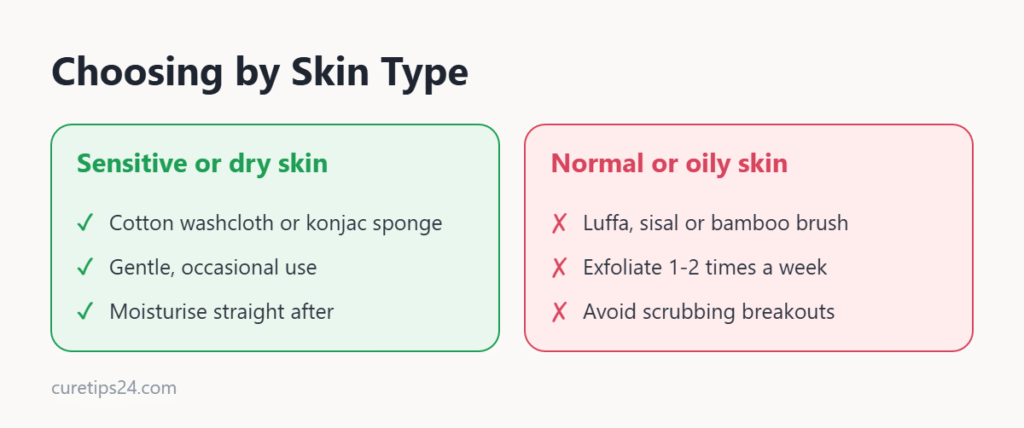
The American Academy of Dermatology recommends gentle cleansing and moisturising after bathing, and the NHS advises against harsh scrubbing for eczema. Compare with silicone scrubber vs loofah.
How to Choose an Alternative
The original buying guide advises reading customer reviews to judge a product’s quality before buying. It also advises comparing prices in different shops and marketplaces, while remembering that some alternatives cost more than others.
It advises researching the customer service of the shop or marketplace, so help is available if needed. It also advises researching the reputation of the brand, to find a product described as high quality and long-lasting.
Quick Questions
What can I use instead of a loofah, eco-friendly?
The FAQ lists an exfoliating glove or mitt made from sustainable materials such as bamboo or hemp, a natural loofah from the luffa plant, and a washcloth. The introduction adds konjac sponges, silicone brushes, cotton washcloths, sea sponges and sisal sponges.
Are loofahs eco-friendly?
The FAQ says loofahs are made from a renewable resource, the luffa gourd, which grows quickly and abundantly. It adds that loofahs can be composted, unlike synthetic sponges made from petroleum products.
What is the best item to wash your body with?
The FAQ answers water and your favourite soap or body wash, noting that water washes off sweat and dust while soap pulls oils out of the skin. For specific skin concerns, it suggests considering a natural loofah or a silicone exfoliating brush.
If your skin is easily irritated, read our fragrance-free skincare guide and skin barrier repair routine.
Conclusion: Pick a Material You Will Replace on Time
The original conclusion points to bamboo as a sustainable material that is gentle on the skin. More broadly, the article’s own list offers natural luffa, compostable, bulk and recycled options, so the practical choice is the type you prefer to wash with.
Whichever you choose, keep the hygiene rules in full: replace it regularly, do not share it, and do not use it on broken skin.
This article is general information only and is not medical advice. Please consult a healthcare professional for personal advice.

1 thought on “10 Best Eco-Friendly Loofah Alternatives You Can Scrub Sustainably With”