As an Amazon Associate, CureTips24 earns from qualifying purchases. We did not test these pillowcases in person; this guide is based on maker specifications, published reviews and expert commentary. It is general information, not medical advice.
You spend about a third of your life with your face and hair pressed against a pillowcase. Cotton is soft, but it is also absorbent and slightly rough at a microscopic level, so as you turn during the night it can rub against hair strands and tug at skin. A silk pillowcase is a simple swap that many people with curly, frizzy, fragile or color-treated hair swear by.
This guide compares the best silk pillowcases for hair and skin, explains what momme weight and silk grade mean, and is honest about what silk can and cannot do.
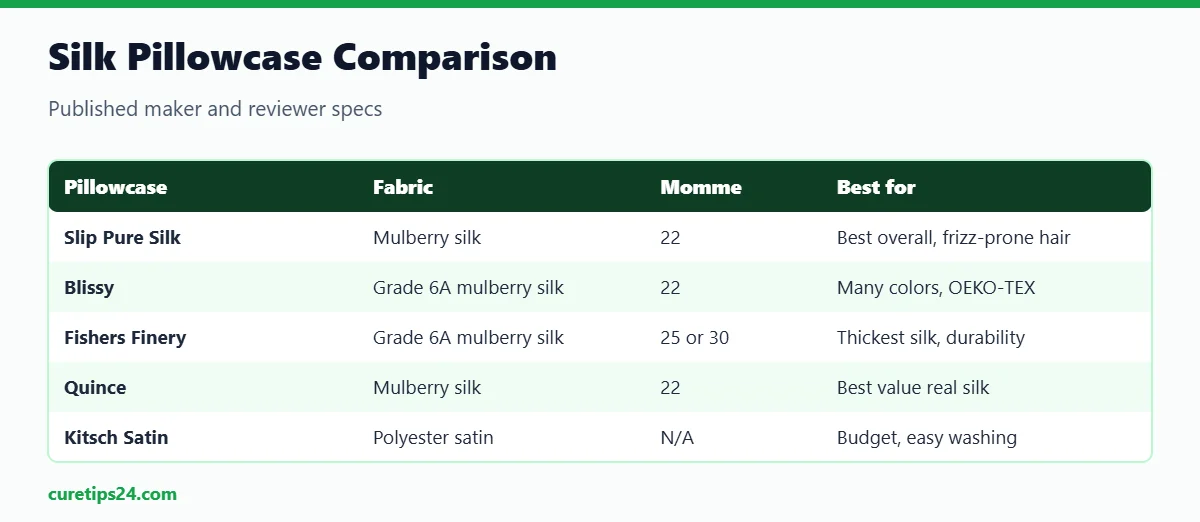
Table of Contents
Quick Picks
- Best overall: Slip Pure Silk Pillowcase
- Best for color choice: Blissy Mulberry Silk Pillowcase
- Thickest silk: Fishers Finery 25 Momme (or 30 Momme)
- Best value real silk: Quince 100% Mulberry Silk Pillowcase
- Best budget alternative: Kitsch Satin Pillowcase
What a Silk Pillowcase Can (and Cannot) Do
The best-supported benefit is for hair. Experts quoted by Consumer Reports say the benefits are most noticeable for hair, because silk’s smooth surface reduces friction and breakage, especially for people who toss and turn or have curly hair. The same article notes that lab testing by one silk brand found silk created about 43% less friction than cotton, though this has not been studied extensively in clinical settings.
Silk is also less absorbent than cotton. Dermatologists quoted by GoodRx explain that this can leave more of your hair’s natural oils and your skin care products where you put them, rather than soaking into the pillowcase, and that smoother fabric is less likely to snag or kink hair overnight.
For skin, the claims are more modest. Less friction may mean fewer sleep creases in the morning, and some people with sensitive skin find silk more comfortable. But a pillowcase does not treat acne, eczema or wrinkles. If you have a skin condition, a dermatologist is the right person to see; think of silk as a comfort upgrade that supports a good routine, not a replacement for one.
1. Slip Pure Silk Pillowcase
Best overall. Slip is one of the best-known silk pillowcase brands and is often named best overall in editors’ roundups. Its pillowcases use 22 momme mulberry silk with an invisible zipper closure that keeps the pillow from slipping out. Reviewers highlight its smooth, cool feel and its wide range of colors and sizes. It is one of the more expensive options, but it has a long track record.
Pros: trusted brand, 22 momme silk, zipper closure, many colors.
Cons: premium price.
Check the Slip Pure Silk Pillowcase on Amazon
2. Blissy Mulberry Silk Pillowcase
Best for color choice. Blissy is another hugely popular brand. It lists its pillowcases as 22 momme, Grade 6A mulberry silk with OEKO-TEX certification, which means the fabric has been tested for harmful substances. It comes in a very wide range of colors and patterns, and it is frequently on sale.
Pros: OEKO-TEX certified, Grade 6A silk, huge color range.
Cons: full price is high; watch for sales.
Check the Blissy Silk Pillowcase on Amazon
3. Fishers Finery 25 Momme Silk Pillowcase
Thickest silk. Fishers Finery stands out for weight. Its standard pillowcase uses 25 momme Grade 6A mulberry silk, and a 30 momme version is also available. Higher momme means more silk per square meter, which generally makes the fabric feel denser and last longer. It has been a top pick in several editors’ tests, including HGTV’s silk pillowcase review, which named Fishers Finery its best overall pick for its 30 momme thickness, and it is one of the most popular silk pillowcases on Amazon.
Pros: thick, durable silk; good price for 25 momme; many colors.
Cons: envelope closure can let the pillow shift for some sleepers.
Check the Fishers Finery Silk Pillowcase on Amazon
4. Quince 100% Mulberry Silk Pillowcase
Best value real silk. Quince sells 22 momme mulberry silk pillowcases for much less than many premium brands, and editors regularly name it a best-value pick. If you want to try real silk without paying top prices, it is a strong place to start.
Pros: real 22 momme silk at a lower price.
Cons: fewer colors and sizes than the big brands; sold mainly through Quince’s own site.
5. Kitsch Satin Pillowcase
Best budget alternative. Satin is a weave, not a fiber, and most budget satin pillowcases are polyester. They are not silk and do not breathe as well, but they are smooth, cheap and easy to machine-wash. Kitsch’s satin pillowcases are a popular low-cost option for anyone who wants a smoother surface for hair on a tight budget, or who wants several to rotate.
Pros: very affordable, easy care, many colors.
Cons: polyester can feel warmer; not as breathable as silk.
Check the Kitsch Satin Pillowcase on Amazon
How to Choose a Silk Pillowcase
Silk vs satin
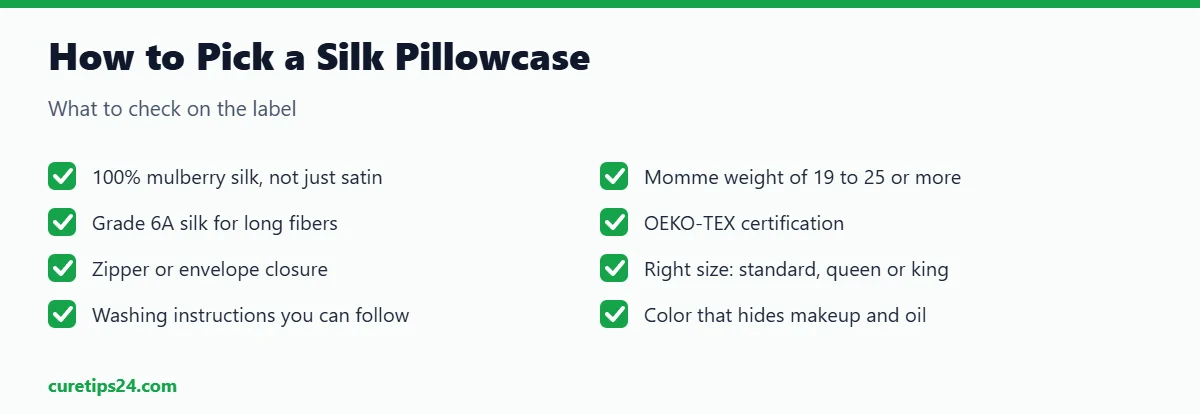
Silk is a natural protein fiber made by silkworms. Satin is a glossy weave that can be made from silk, polyester or other fibers. A “satin pillowcase” is usually polyester. Both are smoother than cotton; silk breathes better and is a natural fiber, while polyester satin costs less and tolerates rougher washing.
Momme weight
Momme (mm) measures silk fabric weight. Most good pillowcases are between 19 and 25 momme. Higher momme fabric uses more silk, so it usually feels denser and lasts longer, but costs more. A 22 momme pillowcase is a good middle ground; 25 momme or more is a luxury choice.
Silk grade
Silk is graded A to C, with numbers for finer distinctions. Grade 6A is the top grade, made from long, uniform fibers that give a smooth, even fabric.
Closure type
A hidden zipper keeps the pillow firmly inside the case. An envelope closure has no hardware but can let the pillow slide. Both work well; it comes down to preference.
Certifications
OEKO-TEX Standard 100 certification means the fabric has been tested for harmful substances. It is a helpful extra if you have sensitive skin.
Who Benefits Most from a Silk Pillowcase?
- Curly and coily hair: less friction helps keep curl patterns defined and reduces frizz. Pair it with a good curly hair care routine.
- Fragile or color-treated hair: smoother fabric reduces snagging on strands that already break easily. See our tips on preventing hair breakage.
- Dry hair and skin: silk absorbs less moisture than cotton, so oils and products stay on you.
- Blowouts and protective styles: sleek styles tend to last longer when there is less friction.
- Side and stomach sleepers: people who press their face into the pillow may notice fewer morning creases.
Silk Pillowcase vs Silk or Satin Bonnet
A bonnet covers all of your hair, so it protects your hair no matter how much you move. A pillowcase protects your face as well as your hair, but only the parts that touch it. Many people with curly or long hair use both: a bonnet for hair and a silk pillowcase for skin comfort. If a bonnet suits you, see our guide to the best satin bonnet for curly hair.
How to Wash a Silk Pillowcase
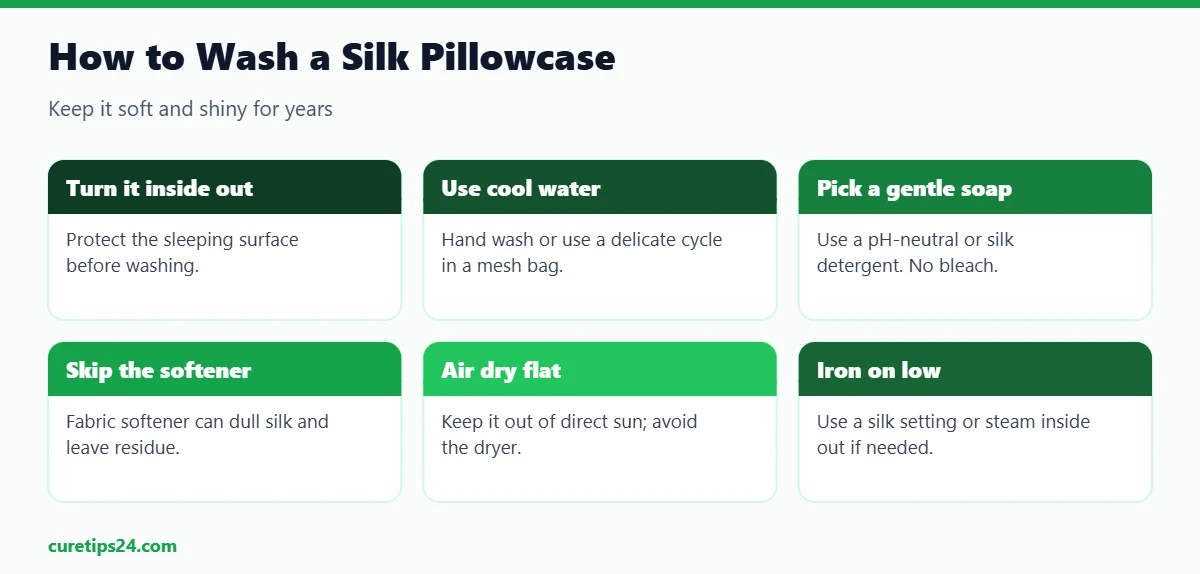
- Turn it inside out to protect the side you sleep on.
- Use cool water and wash by hand or on a delicate cycle in a mesh laundry bag.
- Choose a gentle detergent that is pH-neutral or made for silk. Never use bleach.
- Skip fabric softener, which can leave residue and dull the shine.
- Air dry flat or hanging, out of direct sunlight. Avoid the tumble dryer.
- Iron on low or steam inside out if needed.
Wash your pillowcase regularly; many dermatologists suggest at least once a week, or more often if you have oily or acne-prone skin, use heavy hair products or have pets. Always follow the maker’s care label.
Tips to Get More from Your Silk Pillowcase
- Go to bed with dry hair when you can. Wet hair is weaker and more prone to damage.
- Use a loose hairstyle, like a loose braid or a pineapple on top of your head for curls. Avoid tight elastics.
- Apply products earlier in the evening so they absorb before bed and do not stain the silk.
- Rotate two pillowcases so one is always clean.
- Keep up your skin routine: silk works best alongside cleansing and moisturizing. See our winter skin care tips for dry seasons.
Other Smooth Pillowcase Fabrics
Silk and satin are not the only options. If you are vegan, prefer plant-based fabrics or want something easier to wash, these alternatives are worth knowing about.
- TENCEL (lyocell) and eucalyptus: made from wood pulp, these fabrics feel smooth and cool and are often machine-washable. They are a popular vegan alternative to silk.
- Bamboo viscose: soft and breathable, often marketed as cooling. Texture varies a lot by brand and weave.
- Cotton sateen: a sateen weave makes cotton feel smoother than standard percale, though it is still more absorbent than silk.
- Washable silk: some brands treat silk so it can go in the washing machine more easily. It costs more but saves time.
See TENCEL and eucalyptus pillowcases if you want a silk alternative.
Common Silk Pillowcase Mistakes
- Buying “silky” polyester by mistake: read the fabric label. If it does not say 100% mulberry silk, it is probably polyester satin.
- Choosing the wrong size: a pillowcase that is too large lets the pillow shift and bunches up; one that is too small stretches seams.
- Washing in hot water: heat can weaken silk fibers and fade colors.
- Using harsh detergents: enzyme and bleach-based detergents break down protein fibers like silk.
- Putting it in the dryer: tumble drying can shrink and roughen silk.
- Expecting overnight miracles: many people notice smoother hair within a few nights, but skin changes, if any, are subtle.
How Long Does a Silk Pillowcase Last?
With gentle care, a good silk pillowcase can last for years. Thicker fabrics (higher momme) generally hold up better to regular washing. Signs it is time to replace yours include thinning patches, snags, a rough feel or seams that have started to fray. Because silk needs gentle care, buying two and rotating them helps each last longer.
Choosing a Color
Lighter colors show makeup, hair oil and self-tanner more easily, while darker shades and patterns hide marks between washes. If you use heavy hair oils or overnight treatments, a mid-tone or dark color is often the more practical choice. Learn more about using oils in our guide on the best time to apply hair oil.
Frequently Asked Questions
Is a silk pillowcase worth it?
If you have curly, frizzy or fragile hair, many people find it is. For skin, the benefits are more modest. A silk pillowcase is a comfort upgrade, not a treatment.
Is satin as good as silk?
Polyester satin is smooth and cheaper, so it can reduce friction for hair. Silk breathes better and is a natural fiber. If budget matters, satin is a reasonable alternative.
What momme is best for a silk pillowcase?
Between 19 and 25 momme works for most people. 22 momme is a popular balance of feel, durability and price.
Can a silk pillowcase stop hair loss?
No. It may reduce breakage from friction, but it does not treat hair loss. See a doctor or dermatologist if you notice sudden or heavy shedding.
Does silk help acne?
Silk itself does not treat acne. Clean pillowcases matter more than the fabric, so wash often and see a dermatologist for persistent breakouts.
Silk Pillowcases for Travel
Hotel pillowcases are almost always cotton, so many people with curly or fragile hair pack their own silk pillowcase when they travel. Silk is light and folds small, so it takes up almost no space in a suitcase. A travel-size silk pillowcase also fits small travel pillows. Bring a zip pouch to keep it clean, and hand wash it in the sink with a little gentle soap if you are away for a long trip.
Final Verdict
The Slip Pure Silk Pillowcase is our top pick for its trusted 22 momme silk and secure zipper closure. Choose Blissy for OEKO-TEX certified silk in many colors, Fishers Finery for the thickest silk, Quince for the best value real silk, and a Kitsch satin pillowcase if you want a smoother surface on a budget.
Browse mulberry silk pillowcases on Amazon