Table of Contents
Quick Summary / At A Glance
- The butterfly haircut keeps most of your length while adding short face-framing layers on top and longer layers underneath.
- It suits medium to thick hair best and works well for people who want movement and volume without a short cut.
- Very fine, very thin or heavily damaged hair may look wispy rather than full with this cut, so caution helps.
- Bring clear front, side and back reference photos and tell your stylist how you normally wear and style your hair.
- It needs light daily styling to show the layers at their best, plus trims to keep the shape tidy.
The butterfly haircut is popular for one simple reason. It promises the feeling of a fresh, bouncy cut without asking you to give up long hair.
Done well, it gives soft movement around the face and lighter ends, while the back still looks long. Done badly, or on the wrong hair, it can look thin and uneven.
This guide explains who it genuinely suits, who should pause, and what to show your stylist so you leave with the cut you pictured.
What Is a Butterfly Haircut, Exactly?
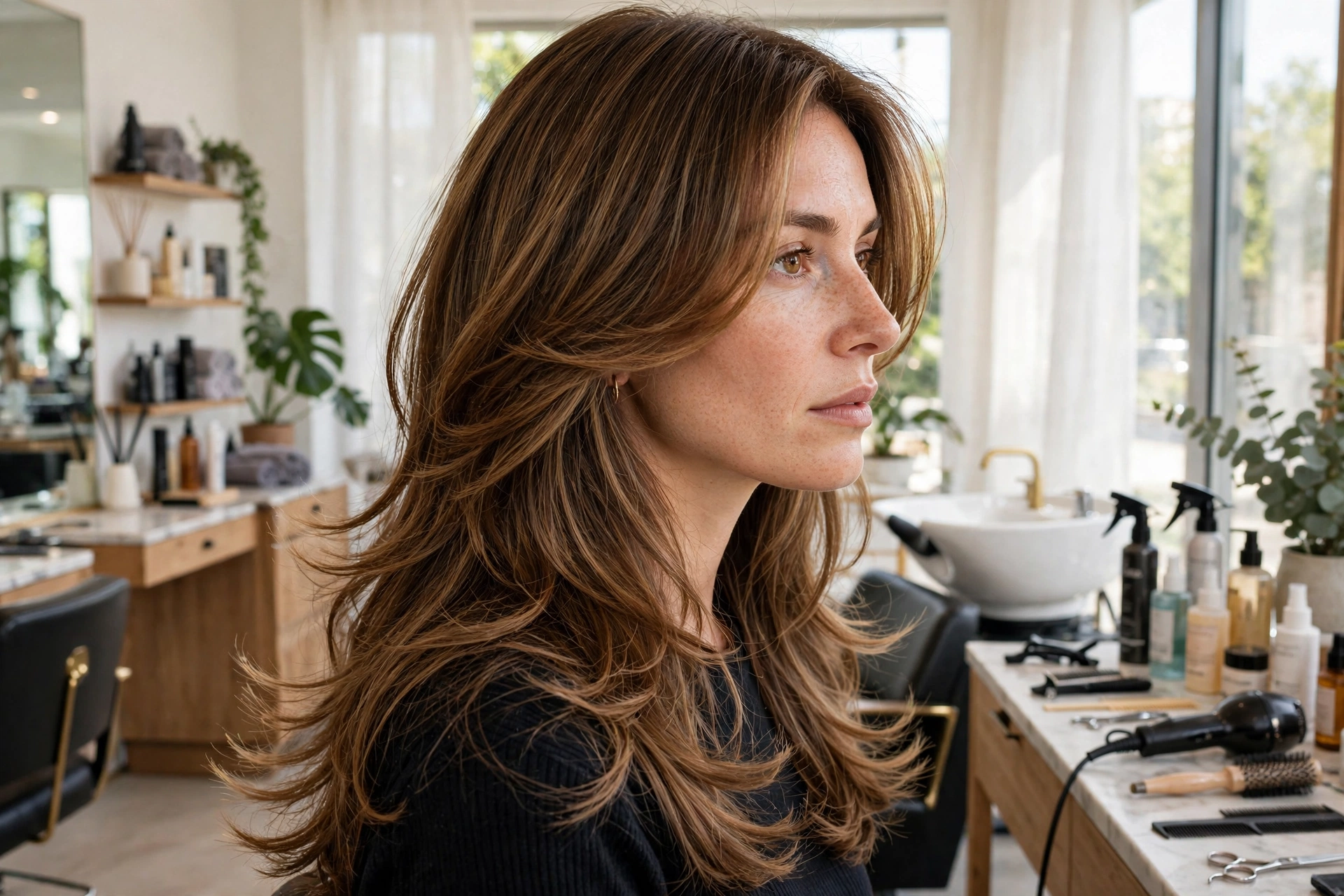
The name comes from the two distinct layer sections that are meant to resemble wings. Shorter layers frame the face and crown, while longer layers continue through the back.
The shortest face-framing pieces often start around the chin or cheek area, depending on your preference. From there, the layers blend gradually into the remaining length.
That contrast is the whole point. The top looks light and lifted, and the bottom keeps the length many people have spent years growing.
It is not the same as a heavily layered cut all over. A good butterfly cut keeps enough weight in the back so the hair still feels like long hair.
Who the Butterfly Haircut Suits Best
This cut tends to shine on medium to thick hair that can hold separate layer levels without disappearing. Straight, wavy and loosely curly hair can all wear it, with adjustments.
People who like volume around the face usually enjoy it. The short front layers open up the face and can soften a strong jaw or add interest to a long face shape.
It also suits anyone caught between two wishes: wanting a change and wanting to keep length. Because the back stays long, the commitment feels smaller than a bob or a lob.
If you often wear your hair up, ask how the face layers will fall. Many people like that softer, loose framing, but it is worth knowing before the first cut.
Face Shapes and Hair Types at a Glance
| Hair or face type | How the butterfly cut usually works | Useful adjustment |
|---|---|---|
| Medium to thick, straight or wavy | Usually the easiest fit, with clear layer separation | Keep ends lightly textured, not thinned out |
| Round face | Front layers can add length and movement around the face | Start layers a little lower, around the chin |
| Long or oval face | Cheek-level layers can add width and softness | Start layers slightly higher for more face framing |
| Curly hair | Can work well when cut for the curl pattern | Ask for a stylist experienced with curly cutting |
| Very fine or thin hair | Layers can make ends look thinner | Use fewer, longer layers or choose a blunter cut |
Use this table as a starting conversation, not a verdict. A good stylist will look at your actual hair density, texture and growth patterns before agreeing on the shape.
Who Should Skip It, or Pause First
If your hair is very fine and you already worry about see-through ends, heavy layering can make that concern worse. In that case, a softer, longer-layer version is safer than the full butterfly shape.
Pause if your ends are heavily split or damaged from bleaching and heat. Layers expose more ends, so damaged sections can look more obvious rather than hidden.
Also pause if you dislike styling your hair at all. The butterfly cut looks best with at least a quick blow-dry or heatless shaping, and it can fall flat if left completely untouched on some hair types.
If you are experiencing noticeable thinning or increased shedding, deal with that question first. Our guide to why hair falls out explains how to tell shedding from breakage, and when to see a doctor.
What to Show Your Stylist
Reference photos do more work than descriptions for this cut. Bring at least three clear images: one from the front, one from the side and one from the back.
Choose photos of people with a hair type and colour close to yours where possible. A butterfly cut on very thick, dark, wavy hair will not fall the same way on fine, straight hair.
Point to the exact details you like, not just the overall photo. Say where you want the shortest layer to start, how much length you want to keep, and whether you want a fringe or curtain-style front.
It also helps to show one photo of what you do not want. That prevents the common mix-up between soft butterfly layers and a much shorter, choppy layered cut.
What to Tell Your Stylist Before the Scissors Come Out
Tell your stylist how you wear your hair on a normal day, not only on special occasions. Mention whether you air-dry, blow-dry, straighten, curl, or tie it up for work or exercise.
Mention cowlicks, a strong natural parting, or a hairline that tends to split. Face-framing layers interact with all of these, and small adjustments can save daily frustration.
Be honest about your maintenance limit. If you will only spend five minutes on your hair, say so, and ask for a version that still looks tidy with minimal effort.
Finally, agree on the length to be removed in plain terms before cutting starts. Showing a point on your own body, such as just below the shoulder blades, is clearer than vague words.
How to Style a Butterfly Haircut at Home
The signature look is bouncy, feathered movement, especially in the front layers. A blow-dry with a round brush, lifting at the roots and flicking the ends outward, is the classic method.
If you prefer less heat, large rollers or a heatless curl method overnight can give a softer version of the same shape. The front pieces matter most, so focus your effort there.
Use styling products lightly, particularly on fine hair. Too much heavy cream or oil can weigh down the layers you just paid to create.
A clean, comfortable scalp also helps any cut sit better, because greasy roots flatten volume quickly. A basic wash routine and the right shampoo for your scalp are worth more than extra styling sprays, and our look at hair growth shampoo claims explains what shampoo can and cannot do.
Maintenance, Grow-Out and Honest Expectations
Like most layered cuts, this one grows out fairly gracefully because there is no hard, blunt line. Most people book a tidy-up trim after a couple of months, depending on how fast their hair grows.
Between appointments, the front layers will lengthen and blend more into the back. That softer stage still looks attractive, which is part of the cut’s appeal.
Keep expectations realistic about volume. The cut can release weight and create movement, but it cannot change your natural hair density or texture.
If you leave the salon unsure, live with the cut for a week and style it yourself at least twice. Many layered cuts make sense only once you have handled them with your own tools and routine.
Chosen for the right hair, and explained clearly to your stylist, the butterfly cut is a low-regret way to refresh long hair. Bring good photos, protect thin or damaged ends, and keep the shortest layer at a level you will enjoy every day.
This article is general information only and is not medical advice. Please consult a healthcare professional for personal advice.