Table of Contents
Quick Summary / At A Glance
- Astaxanthin is a pink-red carotenoid pigment from algae that gives salmon, trout and shrimp their colour.
- It is marketed heavily for skin, but a lab antioxidant effect does not prove a supplement improves skin.
- Human evidence for skin benefits is limited and not proof of younger-looking skin or anti-ageing effects.
- Supplement safety and interactions are not fully known, so medical advice matters before starting.
- A food-first approach, with astaxanthin-rich foods, is a sensible default for most people.
Searches for astaxanthin have climbed sharply, helped by social media posts calling it one of the strongest antioxidants in nature. The bright pink capsules and dramatic skin claims make it an easy product to market.
An astaxanthin supplement is usually made from algae grown for its pigment, although krill and yeast sources also exist. Before spending money, it is worth checking what is actually known and what is only suggested.
What Is Astaxanthin?
Astaxanthin is a carotenoid, the family of pigments that colours carrots orange and tomatoes red. Astaxanthin itself is pink-red, and it is made mainly by a freshwater alga called Haematococcus pluvialis.
The algae produce astaxanthin as protection when conditions become harsh, such as strong sunlight or low nutrients. Animals that eat the algae, or creatures that eat them, can take on the colour themselves.
That is why salmon flesh, trout, shrimp and lobster shells have their pink tones. Flamingos get their colour from a similar food chain, which shows how far the pigment travels in nature.
Food Sources Of Astaxanthin
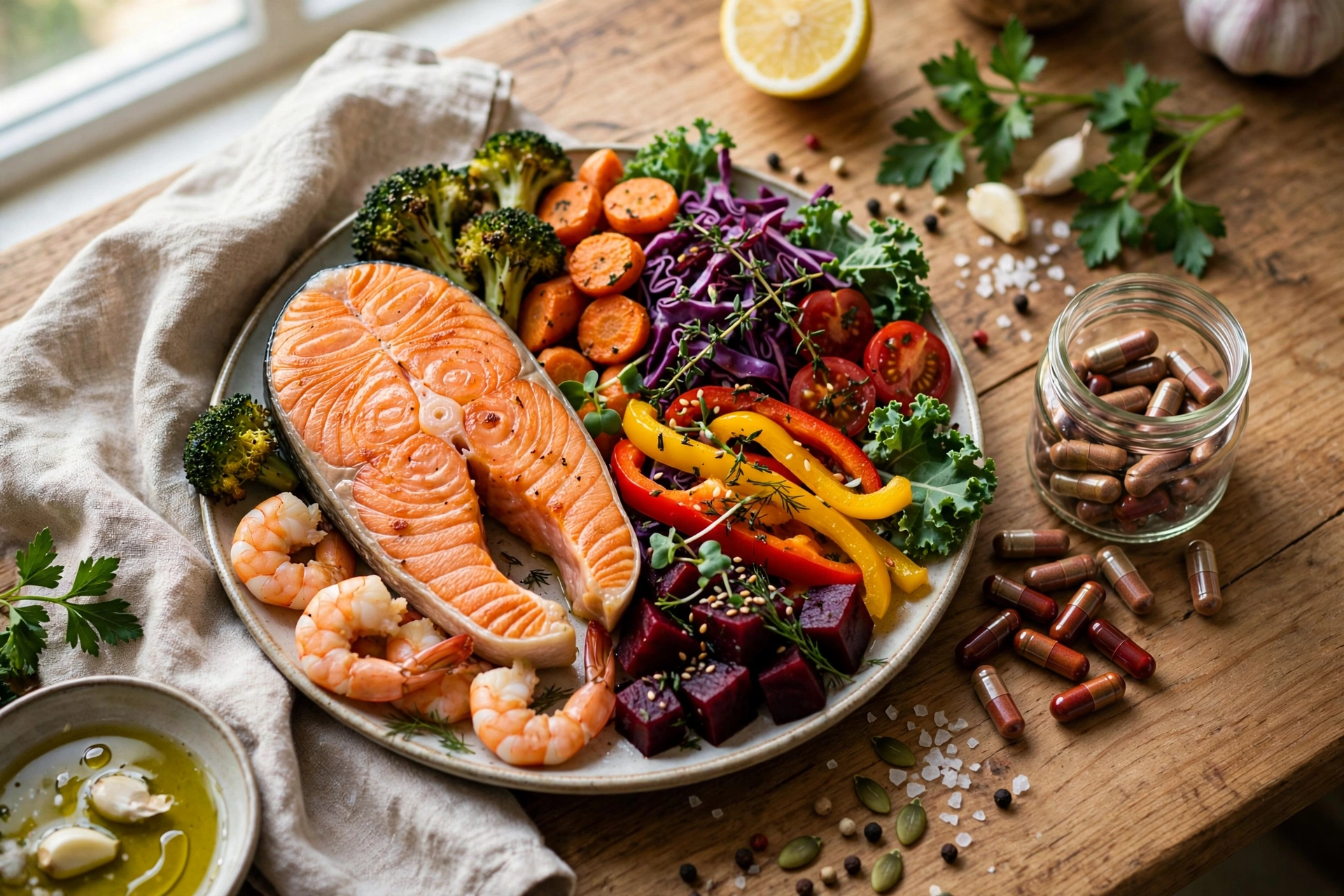
The best-known food sources are wild salmon, trout, red seabream and shellfish such as shrimp and crab. The amount varies with the species, its diet and whether the fish is wild or farmed.
Farmed salmon are often given astaxanthin in feed so their flesh has the colour buyers expect. That is a colouring and quality practice, not a promise of a health effect for the person eating it.
You do not need exotic products to eat astaxanthin-containing foods. Ordinary salmon portions, trout and prawns from a supermarket all contain it, in amounts that fit a normal varied diet.
If you are building a skin-friendly plate generally, our guide to best foods for dry skin shows how everyday foods fit into a wider pattern. No single food or pigment makes or breaks skin health on its own.
Why Astaxanthin Is Marketed For Skin
Astaxanthin is sold for skin because antioxidants are associated in marketing with protecting appearance from everyday stress. Sun exposure, pollution and smoking are all discussed as sources of oxidative stress on skin.
Small studies and early research add scientific-sounding support to that story. Many were short, small, industry-linked or measured subtle changes that do not automatically matter in the mirror.
Skin ageing also has strong drivers that no capsule can switch off, including genetics and lifetime sun exposure. That context is often missing from the confident claims used to sell supplements.
What Is Known Versus What Is Not Proven
It is reasonable to say astaxanthin behaves as an antioxidant in laboratory tests. It is not reasonable to leap from that fact to guaranteed improvements in wrinkles, spots or firmness.
Human studies so far are limited in size and length, and their results are mixed and modest at best. They do not prove that an astaxanthin supplement improves skin in a noticeable, lasting way.
Good evidence usually means larger, longer, independently funded studies with results people can actually see and feel. Until astaxanthin research reaches that standard more consistently, honest conclusions have to stay cautious.
The table below separates the claims from the honest position, using only points covered in this article.
| Claim | What marketing suggests | Honest position |
|---|---|---|
| Antioxidant power | One of the strongest antioxidants, so skin benefits follow | Antioxidant in the lab does not prove skin results |
| Skin appearance | Firmer, younger-looking skin | Not proven in strong human evidence |
| Ageing | Slows or prevents visible ageing | No proof a supplement prevents ageing |
| Safety | Natural, so automatically safe | Safety and interactions are not fully known |
Reading supplement marketing with that table in mind is a useful habit. It applies to almost every fashionable ingredient, not just astaxanthin.
How Astaxanthin Supplements Are Sold
Astaxanthin is sold as softgel capsules, gummies, powders and drinks, often combined with vitamin E, collagen or other carotenoids. Combination products make it even harder to know which ingredient, if any, is doing what.
Prices vary widely and higher cost usually reflects branding rather than proven extra benefit. Check that the label states the amount of astaxanthin per serving, because some products highlight the oil weight instead.
Look for independent quality testing where available, and be wary of products promising dramatic before-and-after results. In many places, supplements cannot legally claim to treat diseases, so wording is often suggestive rather than direct.
Astaxanthin Supplements: Safety Unknowns
Supplements are not tested and approved in the same way as medicines in many countries. The strength, purity and actual contents of a product can vary between brands and batches.
Reported side effects are usually described as mild, but long-term safety data are limited. Stools and skin can take on an orange tint at high intakes, and digestive upset has also been reported.
Interactions are a particular unknown, because supplements can affect how medicines work. Anyone taking regular medication should check with a pharmacist or doctor before adding an astaxanthin supplement.
Who Should Be Especially Careful?
Talk to a healthcare professional before taking astaxanthin if you are pregnant, planning a pregnancy or breastfeeding. Safety in pregnancy has not been established well enough for casual experimentation.
The same advice applies if you have a health condition, a shellfish or algae allergy, or surgery planned. A short conversation first is far cheaper than dealing with an avoidable problem later.
Children should not be given fashionable supplements aimed at adults. Their needs, doses and safety considerations are different, and marketing aimed at adults does not answer those questions.
Why A Food-First Approach Makes Sense
Eating salmon, trout or shellfish gives you protein, vitamin D and omega-3 fats alongside small amounts of astaxanthin. A varied diet provides many nutrients together, instead of betting on one fashionable molecule.
Food also comes with built-in limits that capsules do not have. It is hard to eat an extreme amount of a pigment at the table, while concentrated supplements make high intakes easy.
The same balanced thinking applies elsewhere in skincare, as our overview of the best collagen serum for face options explains for topical products. Chasing one hero ingredient rarely beats a consistent, sensible routine.
For skin specifically, sleep, not smoking and daily sun protection have far stronger support than any supplement. Those habits are unglamorous, but they are where the reliable returns are.
The Bottom Line On Astaxanthin
Astaxanthin is a genuinely interesting pigment with a clear role in nature and a plausible antioxidant story. That is not the same as proof that an astaxanthin supplement improves skin or slows ageing.
Eat the foods if you enjoy them, protect your skin from the sun and be sceptical of miracle language. If you still want a supplement, discuss it with a healthcare professional first, especially if you are pregnant, on medication or managing a condition.
This article is general information only and is not medical advice. Please consult a healthcare professional for personal advice.