
Eating well does not mean strict rules, expensive “superfoods” or cutting out everything you enjoy. The most effective tips for a healthy diet are simple habits you can keep for life: building meals around whole grains, vegetables and fruit, choosing healthier proteins and fats, and cutting back on sugar and salt. This guide brings together advice from the World Health Organization (WHO), the NHS and Harvard’s nutrition experts into 12 practical steps, with easy swaps that work in an everyday home kitchen.
Table of Contents
Quick Summary / At A Glance
- Base meals on high-fibre starchy foods such as brown rice, atta roti and oats.
- Eat at least 5 portions (400 g) of fruit and vegetables a day.
- Fill half your plate with vegetables and fruit, a quarter with whole grains and a quarter with protein.
- Eat fish twice a week, including one oily fish, and choose beans, lentils, eggs and poultry over processed meat.
- Keep added sugar under about 12 teaspoons a day and salt under 5 g (one teaspoon).
- Drink 6 to 8 glasses of fluid a day, mostly water, and stay active.
What Is a Healthy Diet?
A healthy diet gives your body the energy, protein, vitamins, minerals and fibre it needs while limiting the things that raise long-term health risks, such as excess sugar, salt, saturated fat and trans fat. According to the World Health Organization’s healthy diet fact sheet, a balanced diet helps protect against malnutrition and against noncommunicable diseases such as heart disease, stroke, type 2 diabetes and some cancers.
There is no single “perfect” diet. Healthy eating patterns differ by culture, budget and taste, but they share the same building blocks: plenty of plants, whole grains, healthy proteins and fats, and fewer ultra-processed foods. Small, steady changes work better than a drastic diet you cannot keep, and it is normal to slip up now and then. What matters is getting back on track.
12 Effective Tips for a Healthy Diet
1. Base Your Meals on High-Fibre Starchy Foods
Starchy foods such as rice, bread, roti, potatoes and oats should make up just over a third of what you eat, and the NHS eight tips for healthy eating advise including at least one at each main meal. Choose wholegrain or higher-fibre versions when you can: brown or red rice, whole wheat (atta) roti or bread, oats and quinoa. They release energy slowly, keep you full for longer and provide B vitamins, minerals and fibre.
Fibre slows how fast food leaves your stomach, helps steady blood sugar, keeps your digestion regular and feeds the good bacteria in your gut. Diets rich in whole grains are linked with a lower risk of obesity, heart disease and type 2 diabetes. Oats are an easy start; see our guide on whether Quaker oats are good for weight loss.
2. Eat Lots of Fruit and Vegetables
Fruit and vegetables provide vitamins, minerals, fibre and antioxidants, and eating a variety of them is linked with a lower risk of heart disease and some cancers. Aim for at least 5 portions a day (WHO recommends at least 400 g). One portion is 80 g of fresh, frozen or canned produce, such as a banana, a guava, a slice of papaya or three heaped tablespoons of cooked vegetables. A 150 ml glass of juice counts as one portion, but only once a day, because juice is high in free sugar.
Try to “eat a rainbow” across the week, since different colours provide different nutrients. Add vegetables to dal, curries, omelettes and soups, keep a bowl of seasonal fruit where you can see it, and always wash produce well before eating it. Canned fruit in juice and vegetables with no added salt count too.
3. Use the Healthy Plate Method
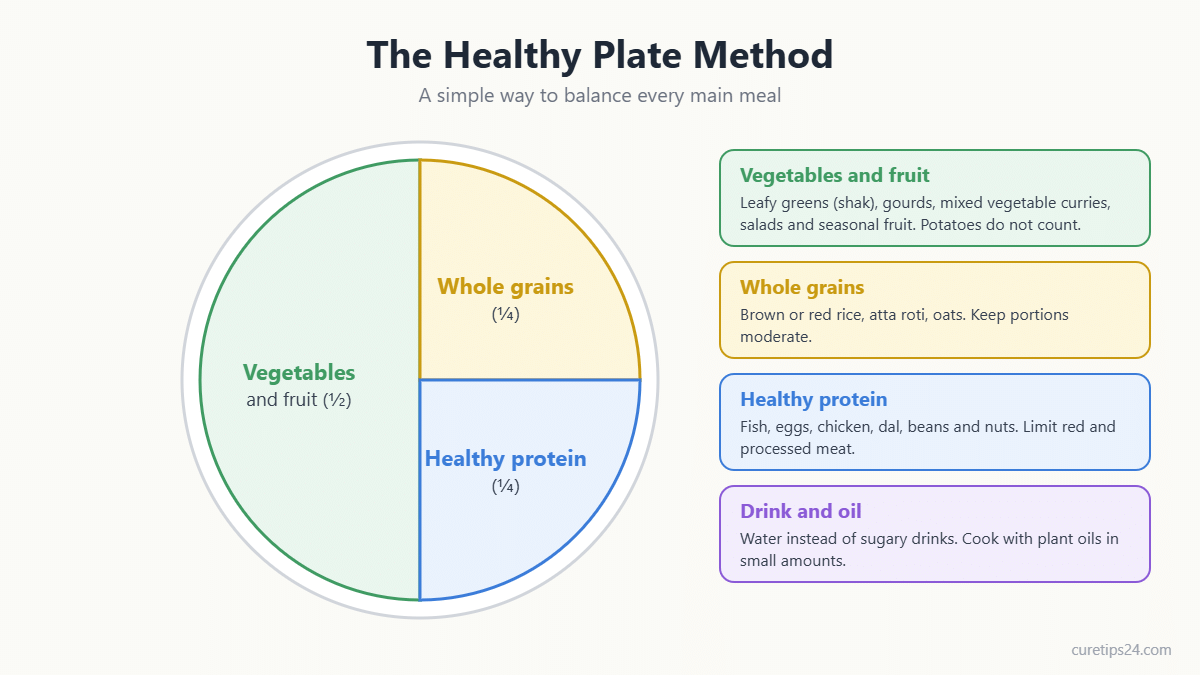
A simple way to balance a meal without counting calories is the Healthy Eating Plate from Harvard’s Nutrition Source: fill half your plate with vegetables and fruit, a quarter with whole grains and a quarter with healthy protein, use plant oils in moderation and drink water. For a typical rice-based meal, that means a smaller mound of rice, a generous serving of vegetables or shak, and a piece of fish, egg or a bowl of dal.
4. Eat More Fish, Including Oily Fish
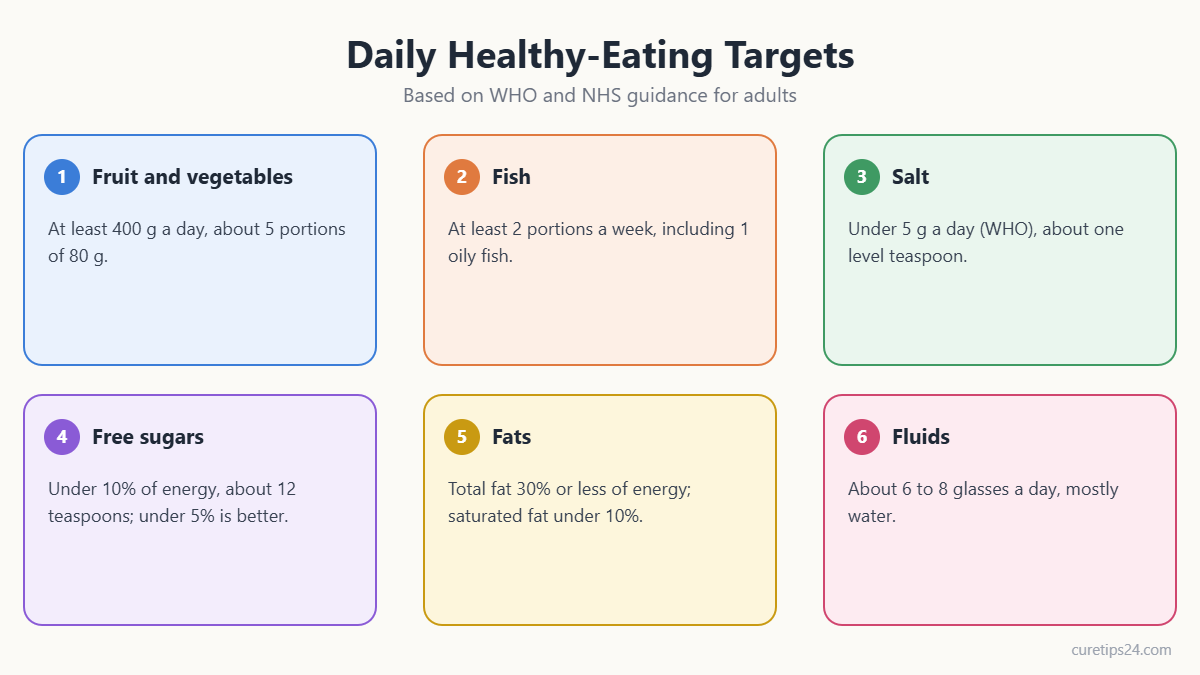
Fish is a good source of protein, vitamins and minerals, and oily fish such as salmon, sardines, mackerel, herring and hilsa provide omega-3 fatty acids that support heart health and may help keep blood pressure and triglycerides in a healthy range. Aim for at least two portions a week, including one portion of oily fish, as the NHS and the American Heart Association recommend. For most people, the benefits of eating fish outweigh concerns about mercury. Pregnant or breastfeeding women and young children should choose lower-mercury fish and ask a doctor how much is right for them.
5. Choose Healthier Proteins
Protein keeps you full, supports muscles and helps your body repair itself. Good choices include fish, eggs, chicken without the skin, beans, lentils (dal), chickpeas, nuts and seeds. Limit red meat, and keep processed meats such as sausages, salami and bacon to an occasional treat, as they are linked with a higher risk of bowel cancer and heart disease.
6. Swap Saturated Fat for Healthier Fats
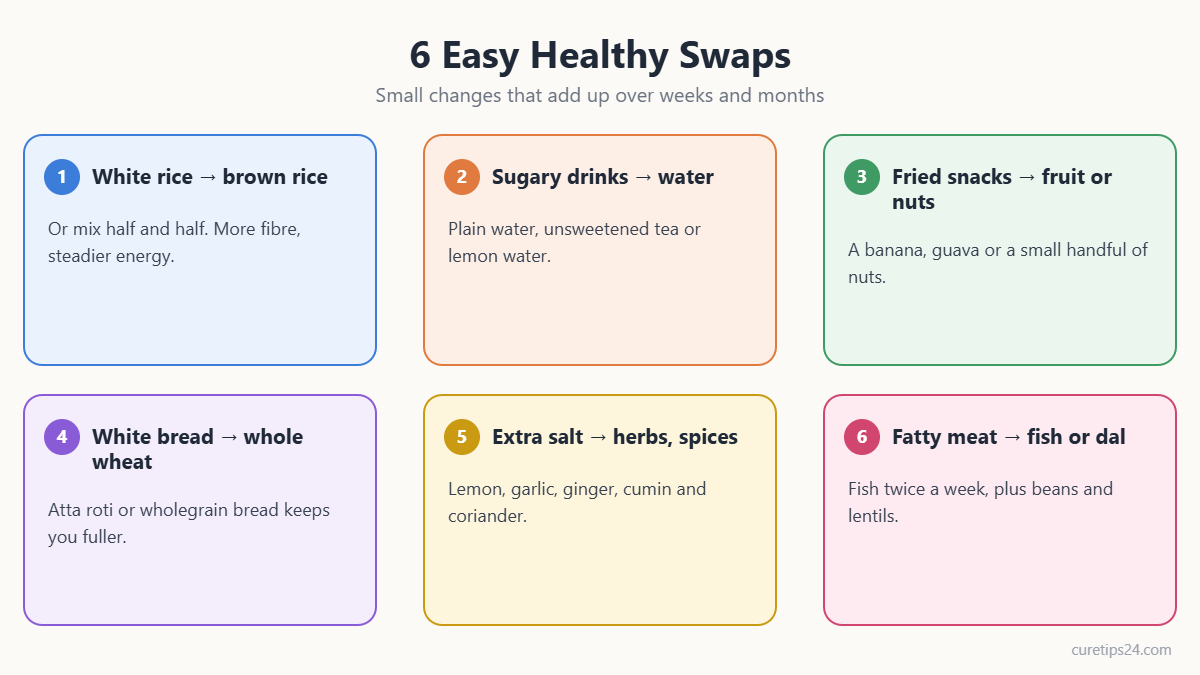
You need some fat in your diet, but the type matters. Too much saturated fat can raise LDL (“bad”) cholesterol. The WHO advises keeping total fat to 30% or less of your daily energy and saturated fat under 10%, and avoiding industrially produced trans fats completely. In practice, men should have no more than about 30 g of saturated fat a day and women no more than about 20 g. Cook with small amounts of plant oils such as mustard, soybean, sunflower or olive oil instead of large amounts of ghee, butter or palm-based vanaspati, and cut back on deep-fried snacks, biscuits, cakes and pastries.
7. Cut Down on Added Sugar
Too much added sugar raises the risk of weight gain, type 2 diabetes and tooth decay. The WHO recommends keeping “free sugars” (sugar added to food and drinks, plus sugar in honey, syrups and fruit juice) under 10% of your daily energy, about 50 g or 12 teaspoons, and suggests under 5% for extra benefit. Start with your tea, coffee and breakfast cereal: cutting even one spoonful a day helps. Swap soft drinks for water, choose plain cereals and add fruit for sweetness, and check labels for sucrose, glucose, fructose, maltose and syrups. A food with more than 22.5 g of total sugar per 100 g is high in sugar; 5 g or less is low.
8. Eat Less Salt
Eating too much salt raises blood pressure, a major risk factor for heart disease and stroke. The WHO advises adults to eat less than 5 g of salt a day, about one level teaspoon, and the NHS sets an upper limit of 6 g. Much of the salt we eat is already in foods such as pickles, chanachur, chips, instant noodles, processed meats, sauces and bread. Taste food before adding salt, flavour cooking with lemon, garlic, ginger, cumin, coriander and other spices, and look for labels with 1.5 g of salt or less per 100 g.
9. Drink Enough Water
Your body needs fluid to work well. The NHS recommends 6 to 8 glasses of fluid a day, more in hot weather or when you are active. Water, milk, and unsweetened tea or coffee all count. Keep fruit juice and smoothies to no more than 150 ml a day in total, and avoid sugary soft drinks and energy drinks, which add a lot of sugar but little nutrition.
10. Don’t Skip Breakfast, and Plan Ahead
A breakfast that is high in fibre and low in sugar, fat and salt, such as oats with fruit, an egg with atta roti, or plain yogurt with nuts, can keep you full and help you avoid unhealthy snacks later. Planning meals for the week, writing a shopping list and keeping healthy snacks such as fruit, nuts and roasted chickpeas at home make healthy choices easier when you are busy or hungry.
11. Get Enough Calcium and Vitamin D
Calcium and vitamin D keep bones strong and help your muscles and nerves work properly. Good sources of calcium include milk, yogurt, cheese, small fish eaten with their bones, leafy greens, tofu and fortified plant milks. Your skin makes vitamin D from sunlight, and oily fish and eggs provide some too. Daily needs vary by age, and some people, including those who get little sun or take certain medicines, may need a supplement. Ask your doctor before taking high doses, because there are safe upper limits. Vitamin D is important for bones, but current research does not support claims that it protects the heart.
12. Stay Active and Keep a Healthy Weight
Diet and activity work together. Adults are generally advised to do at least 150 minutes of moderate activity, such as brisk walking or cycling, each week. As a rough guide, the NHS says men need about 2,500 calories a day and women about 2,000, though needs vary with age, size and activity. If you want to lose weight, focus on filling, lower-calorie foods; our guide to the best foods for weight loss explains which ones help most.
How to Read Food Labels Quickly
Food labels help you compare products in seconds. Check the “per 100 g” column so you can compare like with like, then look at sugar, salt and saturated fat. Ingredients are listed in order of weight, so if sugar, oil or salt appears near the top, the food contains a lot of it. Many “healthy-looking” foods such as flavoured yogurts, cereal bars, granola and fruit drinks contain more sugar than you might expect.
Daily Healthy-Eating Targets at a Glance
| Food or nutrient | Daily or weekly target | Easy example |
|---|---|---|
| High-fibre starchy foods | Just over a third of what you eat; one at each meal | Brown rice or atta roti instead of white versions |
| Fruit and vegetables | At least 5 portions (400 g) a day | Shak with lunch, a guava as a snack |
| Fish | 2 portions a week, 1 oily | Hilsa, sardines or mackerel once a week |
| Free sugars | Under 10% of energy (about 12 teaspoons) | Unsweetened tea, water instead of soft drinks |
| Salt | Under 5 g a day (WHO) | Fewer pickles and salty snacks; use spices |
| Saturated fat | About 30 g (men) or 20 g (women) at most | Plant oils instead of ghee or vanaspati |
| Fluids | 6 to 8 glasses a day | Water with every meal |
| Activity | 150 minutes of moderate activity a week | A brisk 30-minute walk, 5 days a week |
Healthy Eating in Special Situations
General tips cannot replace personal advice. If you have diabetes, kidney disease, heart disease, high blood pressure, food allergies or an eating disorder, or if you are pregnant, breastfeeding or caring for a young child, talk to a doctor or registered dietitian before changing your diet. A balanced diet also supports the rest of your body, including your skin; see our health tips for vibrant skin for how food and lifestyle show on the outside.
Frequently Asked Questions
What are the 5 most important tips for a healthy diet?
Eat plenty of fruit and vegetables, choose whole grains, pick healthier proteins such as fish, beans and lentils, cut back on added sugar and salt, and drink water instead of sugary drinks.
How can I start eating healthy without dieting?
Change one habit at a time. For example, switch to brown rice for a week, then add a fruit snack, then cut sugar in your tea. Small swaps are easier to keep than a strict diet.
Is rice bad for a healthy diet?
No. Rice can be part of a healthy diet. Keep portions moderate, choose brown or red rice more often, and fill the rest of your plate with vegetables and protein.
How much water should I drink a day?
Most adults need about 6 to 8 glasses of fluid a day, more in hot weather or during exercise. Water is the best choice.
This article is general information only and is not medical advice. Please consult a doctor or registered dietitian for personal advice.

1 thought on “Effective Tips for a Healthy Diet: 12 Simple Habits That Work”