Hair vitamins are among the most marketed and least proven products in the hair-loss world. Gummies and capsules can be useful in one narrow situation: correcting a genuine nutrient deficiency. Outside that situation, no vitamin or supplement is proven to regrow hair or stop hair loss, and treating them as if they do can waste money and delay a real diagnosis.
Table of Contents
When nutrients genuinely matter
Hair growth can suffer when you are short of certain nutrients, for example iron or vitamin D, or when you are not eating enough overall. The catch is that you cannot tell a deficiency from an advertisement. A doctor can check with blood tests, ask about your diet, health and medicines, and tell you whether a supplement is likely to help at all. If tests are normal, extra vitamins are very unlikely to change your hair.
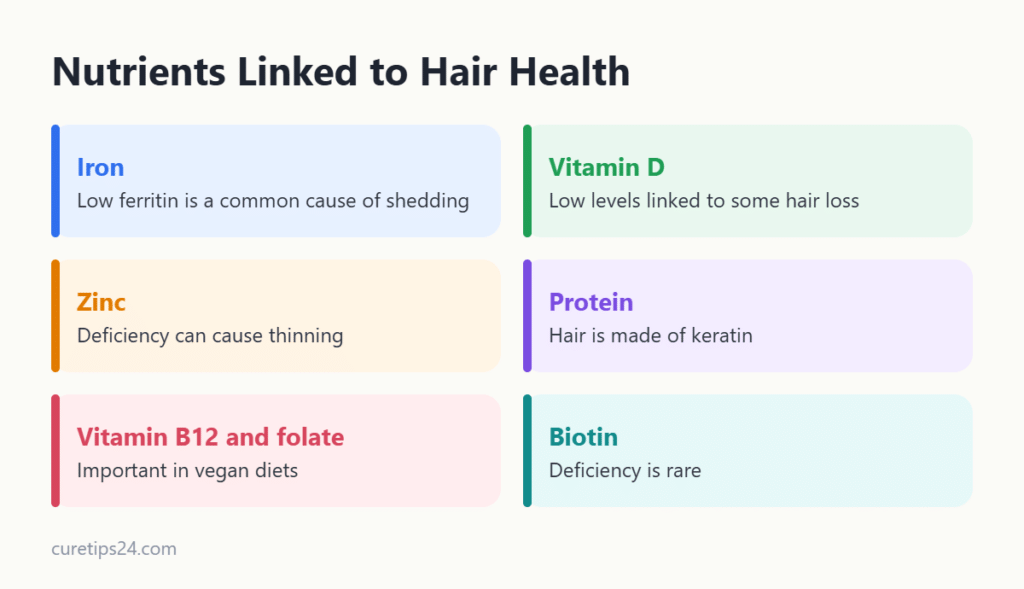
Supplements mainly help when they correct a deficiency. The NIH biotin fact sheet notes that true biotin deficiency is rare, while the NIH Office of Dietary Supplements lists groups at higher risk of low iron.
What supplements cannot do
Pattern hair loss is hormonal and inherited, not a vitamin shortage, so biotin, collagen, keratin drinks and DHT-blocker blends cannot reverse it. Claims built on testimonials, before-and-after photos or percentages are marketing, not evidence. Be especially wary of products that promise regrowth, quote success rates, or suggest one supplement works for everyone.
Side effects and interactions are real
Supplements are not free of side effects. They can cause side effects of their own and can interact with prescription medicines and with each other. Higher doses are not automatically better, and some nutrients are harmful in excess. How much to take, if anything, comes only from the product label and a doctor or pharmacist who knows what else you take. This site gives no dosing instructions.
The American Academy of Dermatology lists many causes of hair loss that vitamins cannot fix, such as genetics and hormones.
Choosing a Hair Vitamin Safely
- Check for third-party testing such as USP or NSF.
- Avoid products with hidden “proprietary blends” or extreme doses.
- Tell your doctor before blood tests if you take high-dose biotin.
- Give any supplement 3 to 6 months before judging results.
Read when to take hair vitamins, the best hair growth supplements and collagen supplements.
Food first
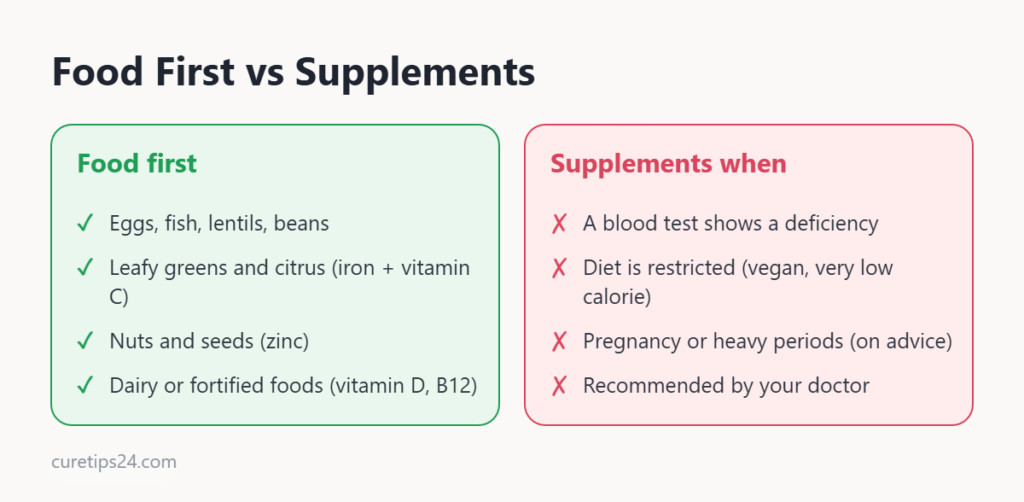
For most people, the sensible route is an adequate, varied diet rather than a shelf of bottles: enough protein, and regular sources of iron and other nutrients from ordinary food. If your diet is restricted, you are pregnant, you have a medical condition, or blood tests show a deficiency, a professional can advise what, if anything, to supplement.
When hair loss needs a doctor, not a vitamin
- Sudden or heavy shedding
- Bald patches, or scalp pain, redness, scaling or sores
- Thinning that begins after a new medicine or illness
- Shedding with fatigue, weight change or other new symptoms
These can signal conditions, including pattern hair loss, thyroid problems and scalp disorders, that vitamins will not fix.
Which Nutrients Matter Most?
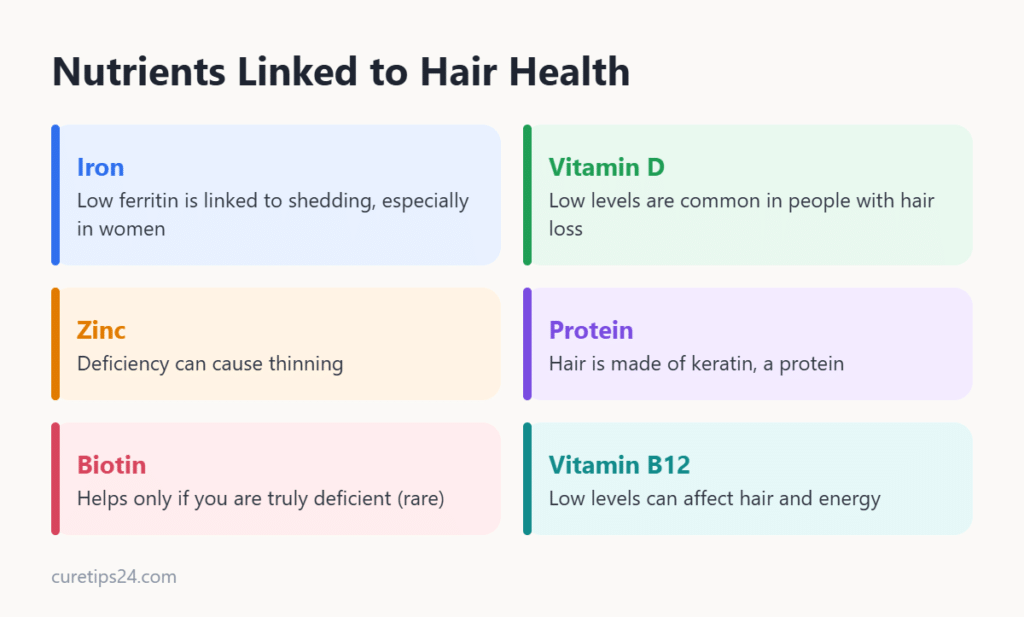
Hair follicles are among the fastest-growing cells in the body, so they are sensitive to shortages. A simple blood test can check iron (ferritin), vitamin D, B12 and thyroid levels, and treating a real deficiency often reduces shedding within a few months. The NIH Office of Dietary Supplements explains who is most at risk of low iron, and taking more than you need can cause side effects.
If your levels are normal, extra vitamins are unlikely to make hair grow faster. For more detail, see the best time to take hair vitamins, the best hair vitamins for women and what collagen supplements can and cannot do.
Signs Your Hair Loss Could Be Linked to Nutrition
Nutrition-related hair loss usually shows as diffuse shedding or thinning all over the scalp rather than a receding hairline or bald patches. It is more likely if you have recently lost a lot of weight quickly, follow a very restricted diet, have heavy periods, are pregnant or have recently given birth, or have a condition that affects how you absorb food. Tiredness, pale skin, brittle nails or feeling cold can be clues to low iron or other problems, but only a blood test can confirm a deficiency.
Too Much Can Also Cause Hair Loss
More is not better with hair vitamins. Taking very high amounts of some nutrients over time, such as vitamin A or selenium, has been linked to hair loss rather than hair growth. Many “hair, skin and nails” supplements also contain several vitamins that overlap with a multivitamin, so people can end up taking far more than they realise. Check the label of every supplement you take and add up the totals, or ask a pharmacist to do it with you.
Questions to Ask Before Buying a Hair Vitamin
- Have I had a blood test that shows a deficiency, or am I guessing?
- Does this product contain doses far above daily recommended amounts?
- Could it interact with my medicines or affect upcoming blood tests? (Biotin, for example, can interfere with some lab results.)
- Am I pregnant, breastfeeding or buying it for a child? If so, ask a doctor or pharmacist first.
- Is the brand clear about its ingredients, and is it tested by an independent quality programme where available?
How Long to Try a Supplement
If a doctor confirms a deficiency and recommends a supplement, hair improvement is slow because hair grows only around a centimetre a month. Shedding may settle within a few months, but visible thickness takes longer. If there is no improvement after the period your doctor suggests, go back for review rather than switching to another product, because the cause may be something other than nutrition. See our guides to hair growth products and collagen supplements for more on what supplements can and cannot do.
Food Sources of Hair-Friendly Nutrients
For most people, a varied diet supplies everything hair needs. These everyday foods are good sources of the nutrients most often linked to healthy hair:
| Nutrient | Good food sources |
|---|---|
| Protein | Eggs, fish, chicken, lentils, beans, dairy, tofu |
| Iron | Red meat, liver, lentils, chickpeas, spinach, fortified cereals (pair plant sources with vitamin C) |
| Zinc | Meat, shellfish, pumpkin seeds, cashews, whole grains |
| Vitamin D | Oily fish, egg yolks, fortified foods and safe sunlight exposure |
| B vitamins | Whole grains, eggs, dairy, leafy greens, meat and fish |
If you follow a vegetarian, vegan or restricted diet, a dietitian or doctor can check whether you need a specific supplement, such as vitamin B12 or iron, rather than a general hair vitamin.
The simplest rule for hair growth vitamins: test first, treat the deficiency you actually have, and give your hair months, not weeks, to respond. If blood tests come back normal, a hair vitamin is unlikely to help, and it is worth asking your doctor about other causes of thinning, such as pattern hair loss, thyroid problems or stress-related shedding, which need different treatment.
The bottom line
Think of hair vitamins as a possible correction for a proven deficiency, nothing more. Test before you buy, ignore regrowth percentages, expect months rather than weeks for any change, and put your money toward diagnosis first.
This article is general information only and is not medical advice. Please consult a healthcare professional for personal advice.