Choosing hair growth products for women is confusing, because shelves are full of oils, serums, shampoos, gummies and laser caps that promise thicker hair. The truth is that the best product depends on why your hair is thinning, whether that is female pattern hair loss, shedding after pregnancy or stress, hormonal changes around menopause, or tight hairstyles. This evidence check explains which hair growth products for women have real research behind them, which are mostly marketing, and when to see a dermatologist.
Table of Contents
Quick Summary
- Hair thinning has many possible causes, so finding the cause matters more than choosing any single product.
- Minoxidil is the most studied topical option for pattern hair loss, but it does not work for everyone and needs regular, long-term use.
- Hair oils and serums mainly condition hair and reduce breakage, while evidence for new hair growth is modest or early.
- Supplements may help only when a deficiency is present, and high doses can cause harm or affect laboratory tests.
- Seek a dermatologist or GP promptly if hair loss is sudden, patchy or painful, or comes with scalp changes.
Many women notice their hair becoming thinner, shedding more, or losing volume over time. This can happen gradually, and it can be upsetting even when the change is small. Hair is closely tied to confidence, so it is natural to look for a product that promises a simple answer.
The market is full of oils, serums, shampoos and supplements that claim to help. Some of these products are pleasant to use, and some contain ingredients that have been studied. The evidence, however, is mixed, and it is rarely as clear as an advert suggests. This guide looks at what the sources actually support, what remains uncertain, and when to seek professional advice.
Why hair thinning happens, and why the cause matters
Hair thinning has many possible causes, and the cause matters more than any single product. Hormonal changes, genetics, stress, illness, poor nutrition, and certain medicines can all play a part. Sometimes more than one factor is involved at the same time.
A dermatologist will often start by asking about health history, medicines, diet, and recent stress or illness. They may also examine the scalp and hair, and in some cases arrange blood tests or other checks. This step is important because a product aimed at one cause may not help another.
It is also important to have realistic expectations. Hair grows slowly, and any change, if it happens at all, takes time to notice. A product that promises fast or dramatic results should be treated with caution. If hair loss is sudden, patchy, painful, or comes with scalp changes, seek medical advice promptly rather than trying product after product.
The most common cause is female pattern hair loss (androgenetic alopecia), which usually shows as a widening part rather than bald patches. DermNet explains that it is often graded using the Ludwig scale and tends to progress slowly. Sudden diffuse shedding is more likely to be telogen effluvium, triggered by illness, childbirth, crash dieting or stress. The American Academy of Dermatology lists many other causes, including iron deficiency, thyroid disease and tight hairstyles (traction alopecia).

Minoxidil: The Most Studied of All Hair Growth Products for Women
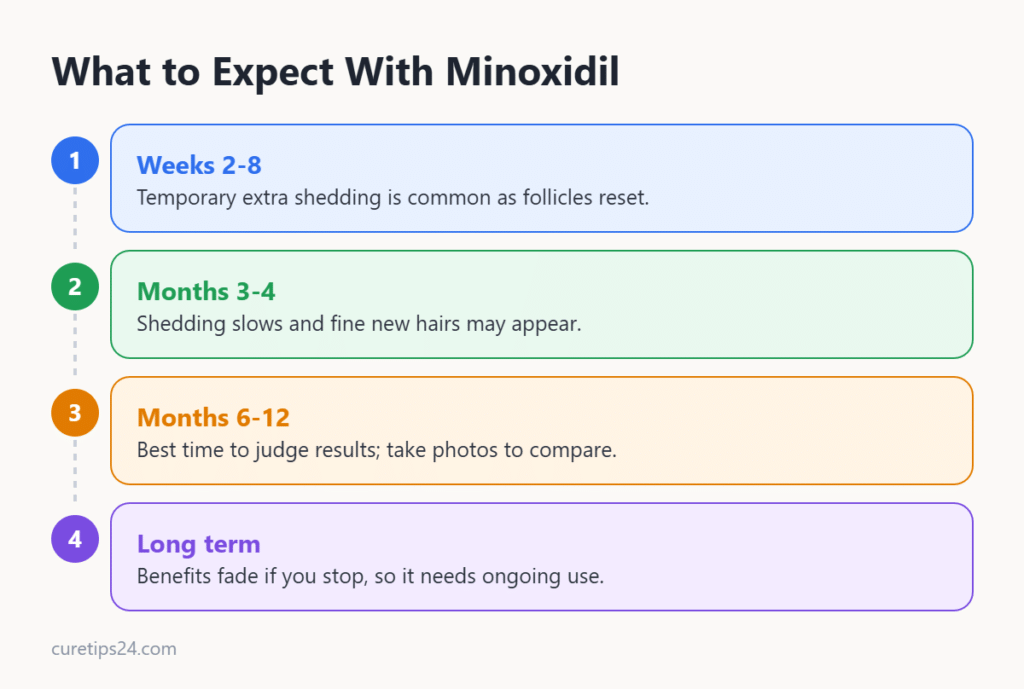
Minoxidil is the topical treatment with the most research behind it for pattern hair loss. It is available in different strengths and forms, and it is used on the scalp rather than taken as a tablet for this purpose. Guidance from health bodies stresses that it must be used regularly and as directed.
The evidence does not mean it works for everyone, and it does not mean it restores a full head of hair. Some people notice less shedding or slightly thicker-looking hair, while others notice little change. Side effects can include scalp irritation, dryness, or unwanted facial hair growth in some users. Anyone who is pregnant, breastfeeding, or taking other medicines should talk to a clinician or pharmacist before starting it.
It is also worth knowing that stopping minoxidil usually means any benefit is lost over time. That is a long-term commitment, not a short course. A dermatologist can explain whether it is suitable, how to apply it, and what to watch for.
Hair growth oils and serums: what the evidence can and cannot say
Hair oils and serums are popular because they feel nourishing and can make hair look smoother and shinier. Rosemary oil is one of the most discussed ingredients, and a small study has compared it with minoxidil for hair thinning. The results were modest, and a single small study cannot prove that an oil works for everyone.
Other oils, such as castor oil, argan oil and coconut oil, are mainly valued for conditioning the hair shaft. They can reduce breakage and improve appearance, which may make hair look fuller. That is different from growing new hair or treating the medical cause of thinning. A smoother look is still a real benefit for many people, but it should not be confused with a medical result.
Serums may also contain peptides, caffeine, or plant extracts. The evidence for these ingredients is often early, small-scale, or based on laboratory work rather than large trials in women with hair thinning. If a serum irritates the scalp, stop using it and seek advice. Patch testing a new product can help, and a dermatologist can advise on ingredients to avoid if the scalp is sensitive.
Supplements and nutraceuticals: promising, but not a shortcut
Supplements for hair thinning often contain biotin, zinc, iron, vitamin D, or blends of plant extracts. Some studies of nutraceutical products in women with thinning hair have reported improvements in measures such as hair counts or scalp coverage. These findings are encouraging, but the studies are often funded by product makers, short in length, or small in size. That does not make them worthless, but it does mean the results should be read with care.
Biotin deserves a special caution. It is an essential vitamin, and deficiency can affect hair, but most people get enough from food. Taking high doses of biotin can interfere with some laboratory tests and give misleading results. Anyone having blood tests should tell their clinician about all supplements they take.
Iron and vitamin D are also sometimes linked to hair health, but low levels should be confirmed before supplementing. Taking extra nutrients without a deficiency is unlikely to help and can cause harm. A balanced diet, adequate protein, and treatment of any underlying health problem matter more than adding one more capsule.
| Product type | What it may do | What it does not prove | Main caution |
|---|---|---|---|
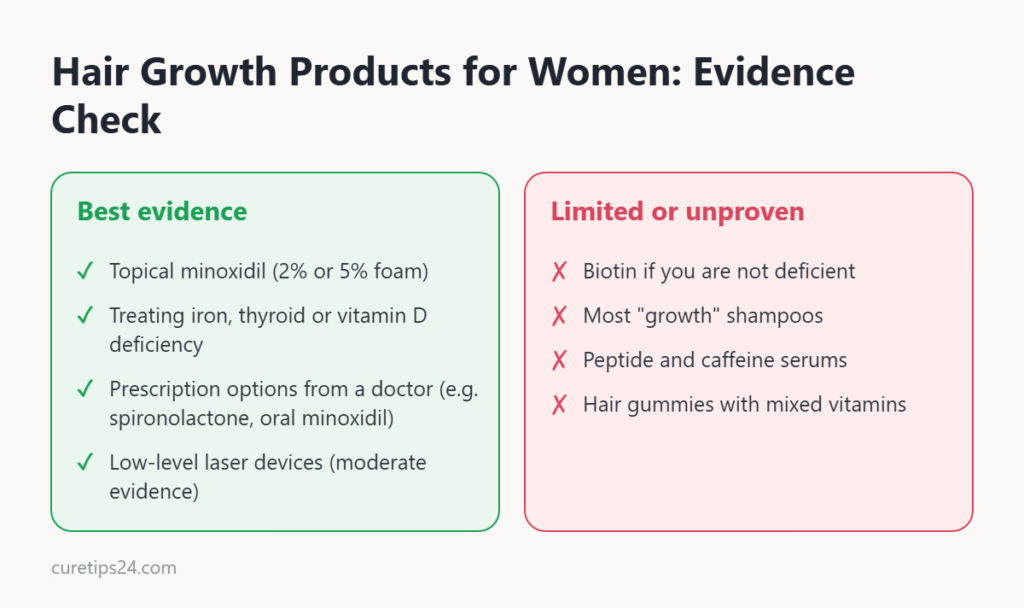
| Minoxidil | May reduce shedding or improve thickness for some people with pattern hair loss | Does not work for everyone or restore full hair | Scalp irritation; needs regular, long-term use; check suitability first |
| Hair oils | May condition hair, reduce breakage, and improve shine | Does not prove new hair growth or treat a medical cause | Scalp irritation or allergy; stop if irritation occurs |
| Serums | May improve the look and feel of hair | Evidence for many ingredients is early or small-scale | Check ingredients; seek advice for sensitive scalps |
| Supplements | May help if a deficiency is present | Do not prove regrowth for most people without a deficiency | Biotin can affect lab tests; excess nutrients can harm |
Shampoos, styling, and everyday hair care
Shampoos marketed for hair growth usually work on the scalp and hair surface. They can help remove build-up, improve scalp comfort, and make hair look thicker for a short time. They are unlikely, on their own, to change the medical course of hair thinning. A gentle shampoo and conditioner that suit the hair type are still worthwhile, because healthy hair breaks less.
Everyday habits also matter. Tight hairstyles, harsh brushing, and frequent heat styling can increase breakage. Using heat protection, avoiding very tight styles, and handling wet hair gently can help preserve the hair that is there. These steps will not cure thinning, but they can reduce further damage.
It is also sensible to keep a simple routine. Using many new products at once makes it hard to tell which one caused irritation or helped. Introduce one product at a time, note any reaction, and give a product a fair trial before judging it. If shedding worsens, or the scalp becomes sore, red, or flaky, stop and seek advice.
Before buying newer products, it helps to understand what they really offer: see our evidence reviews of peptide hair serums, pumpkin seed oil and saw palmetto and red light therapy for hair growth. Also note that high-dose biotin supplements can interfere with some blood tests, so tell your doctor if you take them. The NHS advises seeing a GP if hair loss is sudden, patchy or causing distress.
Hair Regrowth for Women: Habits and Cosmetic Options That Help
Whatever the cause of thinning, a few everyday habits protect the hair you still have and make regrowth easier to see. Handle wet hair gently, because it breaks more easily. Avoid tight ponytails, braids and extensions that pull at the hairline, which can cause traction hair loss over time. Keep heat styling low and use a heat protectant. Treat dandruff or an itchy scalp, and eat a balanced diet with enough protein and iron.
While you wait for a diagnosis or for treatment to work, cosmetic options can help you feel more confident:
- Changing your parting or haircut: a slightly shorter cut with soft layers or a zig-zag part can make thinning less obvious.
- Root sprays, powders and hair fibres: they reduce the contrast between hair and scalp and wash out with shampoo.
- Volumising products: lightweight mousses and dry shampoo at the roots add lift without weighing hair down.
- Toppers and wigs: modern options look natural and can be a helpful choice for more advanced thinning.
Important: finasteride is not for women of childbearing age
Finasteride is a prescription medicine used for male pattern hair loss. It is not licensed for women in many countries, and it must not be used by women who are pregnant or could become pregnant, because it can harm the development of a male baby. Do not buy or share finasteride without a doctor’s advice. If you see a “women’s hair growth” product that contains it, speak to a pharmacist or doctor first.
When to see a dermatologist
See a dermatologist or GP if hair loss is sudden, severe, patchy, or accompanied by scalp pain, redness, scaling, or scarring. Also seek advice if hair loss follows illness, major stress, a new medicine, or a change in periods or other health symptoms. These patterns may point to a cause that needs medical assessment rather than a cosmetic product.
A dermatologist can also advise on the safety of combining products, especially if minoxidil, prescription medicines, or supplements are involved. Bring a list of all products and medicines used, including over-the-counter items. That helps avoid interactions and unnecessary duplication.
Finally, be wary of adverts that rank “top” products, use before-and-after photos without context, or claim a cure. Reliable sources explain limits, side effects, and the need for professional assessment. A product that sounds too good to be true usually is, and the safest choice is one made with good information and, where needed, professional guidance.
This article is general information only and is not medical advice. Please consult a healthcare professional for personal advice.
Hair Growth Products for Women Compared
| Product type | Strength of evidence | Best for | Time to judge |
|---|---|---|---|
| Topical minoxidil 2% solution or 5% foam | Strong (approved for female pattern hair loss) | Widening part, diffuse thinning | 4 to 6 months |
| Oral minoxidil or spironolactone (prescription) | Growing evidence; doctor-supervised | Women who cannot tolerate topicals | 4 to 6 months |
| Low-level laser (red light) caps | Moderate, mixed study quality | Add-on for pattern thinning | About 6 months |
| Supplements (iron, vitamin D, blends) | Helpful only if you are deficient | Shedding linked to low ferritin or diet | 3 to 6 months |
| Rosemary oil, peptide and caffeine serums | Limited, small studies | Low-risk extras for scalp care | 3 to 6 months |
| Thickening or ketoconazole shampoos | Cosmetic; ketoconazole has small studies | Volume, flaky or oily scalp | Immediate look; months for scalp |
How to Choose Hair Growth Products for Women by Cause
Female pattern hair loss
A widening centre part or thinning at the crown is usually female pattern hair loss (androgenetic alopecia). Minoxidil is the first-line option, and a dermatologist may add prescription treatment. Oils and shampoos alone are unlikely to be enough.
Shedding after pregnancy, illness or stress
Sudden all-over shedding two to three months after childbirth, a fever, surgery or major stress is often telogen effluvium. It usually settles on its own within six to nine months. Gentle hair care and checking iron and thyroid levels matter more than buying hair growth products for women in this situation.
Menopause and hormonal changes
Falling oestrogen around menopause can shorten the hair growth cycle and make hair finer. Speak to your GP or dermatologist, as treatment may combine minoxidil with hormonal or other prescription options.
Tight hairstyles and breakage
Thinning along the hairline from braids, extensions or tight ponytails is traction alopecia. Loosening styles is the main treatment; no serum can fix ongoing pulling.
How Long Before Hair Growth Products Work?
Hair grows roughly a centimetre a month, so even the most effective hair growth products for women need patience. Expect to use a product consistently for at least four to six months before deciding if it works. Some women notice extra shedding in the first weeks of minoxidil, which is usually temporary as older hairs make way for new growth. Taking monthly photos in the same light helps you judge progress honestly.
FAQs About Hair Growth Products for Women
What is the most effective hair growth product for women?
Topical minoxidil has the strongest evidence for female pattern hair loss. Other hair growth products for women, such as oils, serums and supplements, have weaker or more limited research.
Do hair growth supplements work for women?
They mainly help if you have a deficiency, such as low iron, vitamin D or protein. Too much biotin is unnecessary for most people and can interfere with some blood tests, so tell your doctor if you take it.
Is rosemary oil as good as minoxidil?
One small study compared them, but the evidence is limited. Rosemary oil may be a gentle add-on, not a proven replacement for minoxidil.
When should I see a doctor about hair thinning?
See a dermatologist if hair loss is sudden, patchy, comes with scalp pain, itching or scaling, or appears with other symptoms such as tiredness, irregular periods or weight change.
Bottom line: the best hair growth products for women are the ones matched to the cause of thinning. Start with a diagnosis, give any treatment at least four to six months, and be wary of products that promise fast results.

1 thought on “Hair Growth Products for Women: What the Evidence Actually Shows”