Table of Contents
Quick Summary / At A Glance
- “Chemical-free” is a marketing label: products sold this way are mineral sunscreens using zinc oxide or titanium dioxide.
- Mineral sunscreens sit on the skin and reflect and scatter UV rays, while chemical absorbers soak up UV and release it as heat.
- Look for broad-spectrum protection against UVA and UVB, and an SPF of 30 or higher, as the original article advises.
- Apply generously and reapply every two hours, and more often after swimming or sweating.
- No sunscreen blocks all UV, so shade, clothing and covering up remain essential parts of sun safety.
The best sunscreen is the one you will actually use. For many people, that means a product labelled chemical-free. Some prefer to avoid certain absorber ingredients, and others find them irritating to their skin.
That label needs explaining honestly. No sunscreen is literally free of chemicals, because zinc oxide and titanium dioxide are substances with their own chemistry too.
In everyday use, chemical-free is the label used for mineral, or physical, sunscreens. This article explains how the two types differ, what SPF and broad spectrum mean, and how to use sunscreen well.
What “Chemical-Free” Really Means
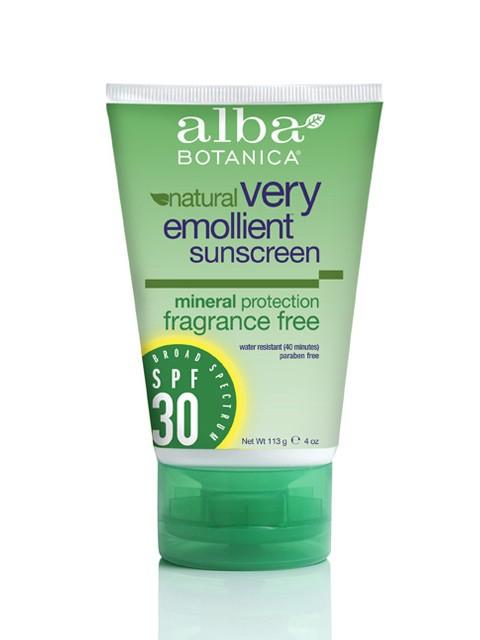
Products sold as chemical-free are mineral sunscreens. Their active ingredients are zinc oxide or titanium dioxide, and those minerals create a physical barrier between your skin and the sun. Look for one of those two names as the active ingredient if you want this type.
Chemical sunscreens work differently. Their active ingredients are absorbers, and the original article names oxybenzone as the most common one. It also lists avobenzone, homosalate, octisalate, octocrylene and ensulizole. These ingredients absorb ultraviolet light and release the energy as heat.
Both types are described in the original as effective at protecting skin from UV radiation. That matters, because choosing a mineral product is a preference about ingredients and feel, not a guarantee of stronger protection. This article does not claim that mineral sunscreen is proven safer or better overall.
How Mineral Sunscreens Work
Zinc oxide sits on top of the skin instead of being used as an absorber. It reflects UV light away from the skin, and the original describes it as providing good protection against both UVA and UVB rays. It is also described as gentle enough for sensitive skin types.
Titanium dioxide works in a similar physical way, reflecting UV rays away from the skin. The original describes it as gentle for sensitive skin as well. It also notes a practical drawback: titanium dioxide can sometimes leave a white cast on darker skin tones.
Because mineral ingredients sit on the surface, the original describes them as creating a barrier rather than soaking in to absorb UV first. Physical sunscreens reflect and scatter UV rays away from the skin. That simple difference in method explains most of the language used on mineral labels.
| Feature | Mineral (physical) sunscreens | Chemical (absorber) sunscreens |
|---|---|---|
| Active ingredients named in the original | Zinc oxide and titanium dioxide | Oxybenzone, avobenzone, homosalate, octisalate, octocrylene and ensulizole |
| How they work | Sit on top of the skin and reflect and scatter UV rays | Absorb UV light and release the energy as heat |
| Protection described | Zinc oxide gives good protection against both UVA and UVB rays | Oxybenzone absorbs both UVA and UVB light |
| Points from the original | Titanium dioxide can sometimes leave a white cast on darker skin tones | Chemical sunscreens can be irritating to some people’s skin |
UVA, UVB and What SPF Measures
Sunscreen is designed to protect skin from the sun’s harmful ultraviolet rays. The original links UV rays with sunburn, premature aging of the skin and skin cancer. Protection therefore matters even though no sunscreen can block all UV radiation.
UVA rays penetrate deep into the skin and can contribute to premature aging. UVB rays are responsible for causing sunburn. A useful sunscreen therefore needs broad-spectrum protection, which means protection against both UVA and UVB rays.
SPF, or sun protection factor, is a measure of how well a sunscreen will protect your skin from UVB rays. The higher the SPF, the more protection you will get, in the original’s description. Choose an SPF level appropriate for your activity level and your time in the sun.
Choosing a Sunscreen by Its Label
Start with the active ingredient list. For a mineral product, check that zinc oxide or titanium dioxide is listed, because those are the physical blockers this article is about. Then check that the product offers broad-spectrum protection against both types of ray.
The original’s shopping advice for natural sunscreen is simple. Look for an SPF of 30 or higher, and check the label for ingredients you wish to avoid, such as synthetic fragrances. The original also lists parabens, phthalates and sulfates among the label items some shoppers look out for.
Higher SPF options, including SPF 50, are discussed in the original as mineral products too. An SPF 50 mineral sunscreen still uses zinc oxide and titanium dioxide rather than absorber ingredients. It also provides broad-spectrum protection, which is why the SPF number should be read alongside the broad-spectrum claim.
Face, Children and Different Formats
We should be wearing sunscreen every day, in the original’s view, but some people dislike putting absorber products on their face. Mineral face products in the original are made with zinc oxide and titanium dioxide. Some are tinted, and some combine sun protection with moisturising ingredients such as hyaluronic acid.
For children, the original gives three checks. First, choose an SPF of at least 30, which it says helps block out 97% of the sun’s harmful UV rays. Second, choose a water resistant sunscreen if children will be swimming or sweating. Third, avoid synthetic fragrances or colors, which can often irritate sensitive skin.
The original mentions sprays, lotions and even a lip balm with SPF among the forms these products take. The form matters mainly because people use a product they find comfortable more reliably. The best sunscreen, as the opening line puts it, is the one you will actually use.
If You Want to Avoid Zinc Oxide and Titanium Dioxide
Some readers look for the opposite: a sunscreen without zinc oxide or titanium dioxide. The original says some people are concerned about these ingredients, and that zinc oxide can be irritating to the skin for some users. Those concerns are part of why absorber products remain an option.
A sunscreen without those minerals will normally be an absorber sunscreen. Chemical sunscreens usually rely on organic compounds like avobenzone to absorb UV light instead of reflecting it. Reading labels carefully is therefore the practical step, whichever type you prefer.
Applying Enough and Reapplying on Time
Apply sunscreen generously. The original warns that most people do not use enough sunscreen, so the amount matters as much as the type you choose. Read the product instructions and follow them for the amount and timing they state.
Reapply regularly as needed, per the instructions on the label. The clear timing in the original is every two hours. Reapply more often if you are sweating or swimming, and after swimming or sweating rather than waiting for the two hours to pass.
Water resistance matters for days spent swimming or sweating. It was one of the original’s main checks for children, and the same logic applies to adults who will be in the water. A water resistant label does not remove the need to reapply after swimming.
Sun-Safety Habits Beyond the Bottle
No sunscreen can block all UV radiation. That is why the original says it is important to also seek shade and cover up when possible. Sunscreen is one layer of protection, not the whole plan for a day outdoors.
Covering up with clothing adds protection on skin sunscreen may miss, or where it was applied too thinly. Shade helps during the parts of the day you spend outdoors between activities. Used together, shade, clothing and sunscreen give broader cover than sunscreen alone.
A Note on Safety Claims
The original raised concerns about oxybenzone, saying it has been shown to be a hormone disruptor and can potentially cause allergic reactions. This rewrite keeps that as a concern raised in the original, at no stronger strength. It is a reason some readers prefer mineral products, not a verdict on every absorber sunscreen.
Mineral ingredients have had questions raised about them too, including irritation for some users of zinc oxide. The honest position from the original is therefore a balanced one. People choose between absorber and physical products for comfort, skin response and preference, while still using sun protection either way.
While the FDA works to finalize regulations for over-the-counter sunscreen products, the original notes, consumers are becoming more aware of natural, chemical-free options. That awareness is best served by clear labels. Mineral means zinc oxide or titanium dioxide; it does not mean a product contains no chemicals at all.
Conclusion
Chemical-free sunscreen is best understood as a label for mineral sunscreen. Zinc oxide and titanium dioxide sit on the skin and reflect and scatter UV rays, while absorber sunscreens soak up UV and release it as heat. Either way, broad-spectrum protection, enough product and regular reapplication do the real work.
Add shade and covering up, and you have the original article’s core guidance in full. If you have sensitive skin or are prone to breakouts, the original suggests this type is worth considering. Choose the product you will use generously, and use it as directed.
This article is general information only and is not medical advice. Please consult a healthcare professional for personal advice.