
Derma Progenix is an anti-aging serum and eye cream sold online with big promises: fewer wrinkles, firmer skin and a “younger” look without injections. Search for the name and you will find dozens of glowing reviews, many with countdown timers, “exclusive discount” banners and links to an “official website.” That pattern alone is a good reason to slow down before you buy.
This review takes a neutral, evidence-first look at Derma Progenix. It covers what the product claims to do, what is actually known about its ingredients, the red flags in how it is marketed, how online “free trial” skin cream offers can go wrong, and which proven alternatives dermatologists recommend for aging skin.
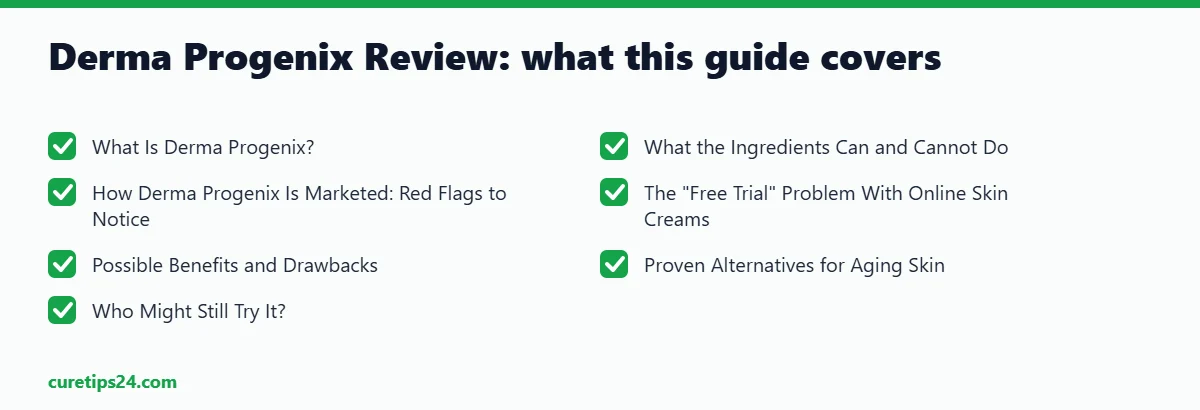
Table of Contents
Quick Summary
- What it is: an anti-aging serum and eye cream sold mainly through its own website and affiliate review pages.
- Main claims: boosts collagen, reduces wrinkles and fine lines, firms and hydrates skin.
- Evidence: we were unable to find any published, independent clinical trials on the finished product.
- Marketing: many online “reviews” read like adverts and link straight to the sales page.
- Bottom line: it may moisturise like many creams, but there is no strong reason to choose it over proven, widely available anti-aging basics.
What Is Derma Progenix?
Derma Progenix is promoted as an “advanced anti-aging” formula. Promotional pages describe it as a serum and eye cream that works by delivering collagen, peptides and moisturisers to the skin. Some pages also claim the formula is made in ISO- and GMP-certified facilities and is “clinically proven” to rejuvenate skin.
The difficulty is that these claims are rarely backed by details. There is usually no named clinical study, no link to published data and little clear information about the company behind the product. Without that, buyers cannot check whether the claims are true.
What the Ingredients Can and Cannot Do
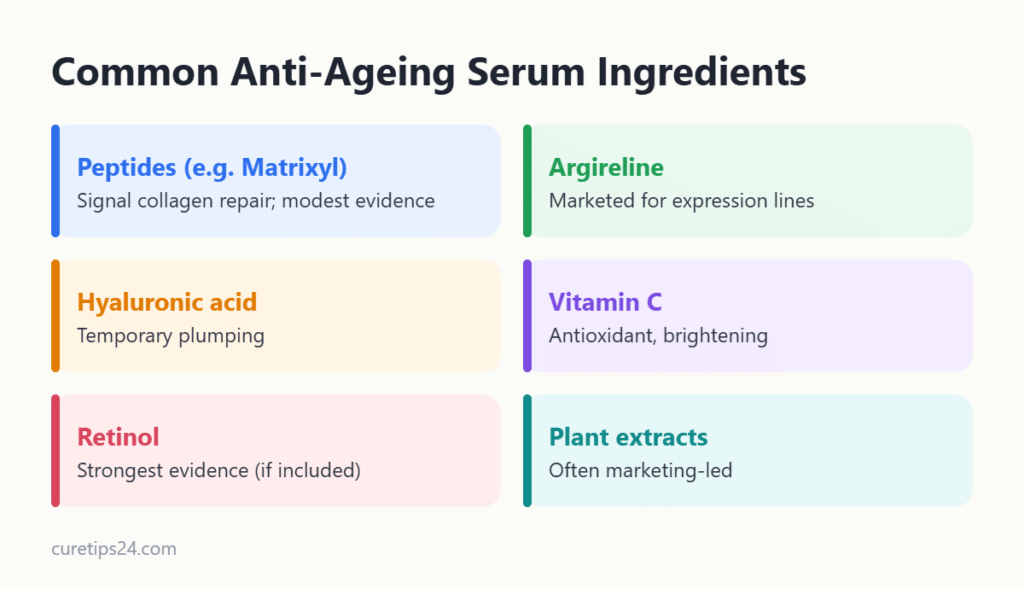
Ingredient lists on promotional pages vary, but they usually focus on collagen, peptides, vitamins and general skin-conditioning agents. Here is what is known about those ingredient types in general.
| Ingredient type | What it can do | Realistic limits |
|---|---|---|
| Collagen (topical) | Acts as a moisturiser and can leave skin feeling softer and smoother | Collagen molecules are large, so topical collagen is not shown to rebuild collagen deep in the skin |
| Peptides | Some peptides show modest improvements in fine lines in small studies | Results vary by peptide, and many studies are small or funded by manufacturers |
| Vitamins (such as C or E) | Antioxidant support; vitamin C may help brightness | Effectiveness depends on the form, strength and packaging |
| Humectants and emollients | Hydrate the skin so fine lines look less obvious | The effect is temporary and fades when you stop using the product |
For a deeper look at the collagen question, see our guide to what collagen supplements can and cannot do for skin and hair. In short, a moisturising serum can make skin look plumper for a while, but that is not the same as reversing aging.
How Derma Progenix Is Marketed: Red Flags to Notice
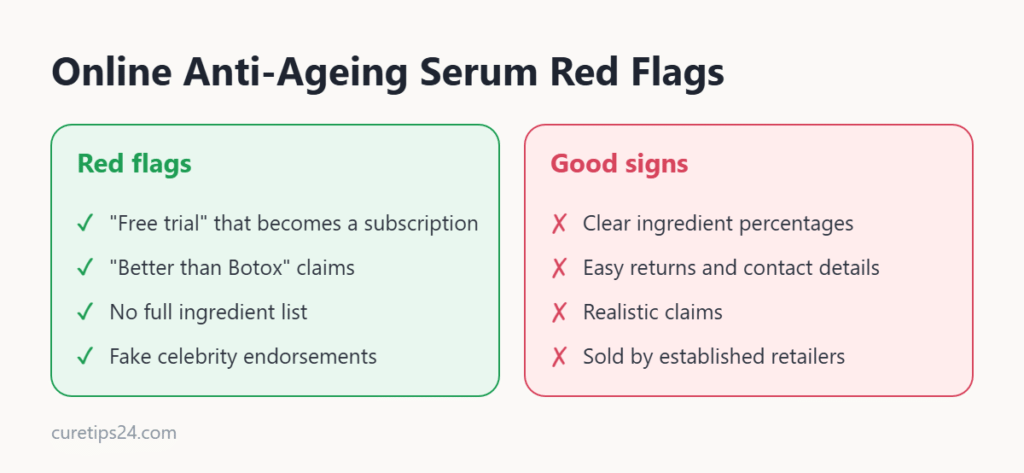
The way a product is sold tells you a lot about it. Several common features of Derma Progenix promotion are worth noticing.
- Advertorial “reviews”: many articles share the same wording, praise the product without any downsides, and end with a link to buy.
- Vague clinical claims: phrases like “clinically proven” appear without a study name, journal or results.
- Urgency tactics: limited-time discounts and stock warnings push buyers to order quickly.
- Celebrity or TV hints: some skin cream promotions hint at TV appearances or celebrity endorsements. Treat these with caution unless you can confirm them with the show or person directly.
- “Official website only”: limiting sales to one site makes it harder to compare prices or read independent reviews.
None of this proves the product is harmful or useless. It does mean the marketing gives you very little reliable information to judge it by.
The “Free Trial” Problem With Online Skin Creams
Many online anti-aging creams are sold through “free trial” offers. You pay a small shipping fee, but the fine print may enrol you in an automatic monthly subscription. Consumer agencies have warned about this for years. The US Federal Trade Commission has taken action against several skin care marketers that advertised “risk-free” trials for a few dollars and then charged customers more than $90 and enrolled them in auto-ship plans.
The FTC’s guide to how free trial offers can cost you explains what to watch for. If you are considering any online skin cream, including Derma Progenix:
- Read the full terms and conditions before entering card details.
- Look for pre-ticked boxes and untick them.
- Note the trial length and exactly how to cancel.
- Search the product name with “complaint” or “scam” to see other buyers’ experiences.
- Check your card statements and dispute unexpected charges quickly.
Possible Benefits and Drawbacks
Possible benefits:
- May hydrate dry skin and soften the look of fine lines for a short time.
- A serum and eye cream format is easy to fit into a routine.
Drawbacks:
- No independent clinical evidence that we could find for the finished product.
- Limited, inconsistent information about the manufacturer.
- Sold mainly through promotional pages, which makes honest reviews hard to find.
- Possible subscription or billing issues if bought through a trial offer.
- Likely to cost more over time than proven drugstore alternatives.
Proven Alternatives for Aging Skin
If your goal is smoother, firmer-looking skin, dermatologists point to a short list of approaches with strong evidence. The American Academy of Dermatology says sunscreen and moisturiser are the two most effective anti-aging products you can buy, and that exaggerated promises such as looking years younger overnight are too good to be true. Its guide to selecting anti-aging products is a good starting point.
- Daily broad-spectrum sunscreen, SPF 30 or higher. Sun exposure is the biggest cause of visible skin aging.
- A moisturiser for your skin type. Hydrated skin shows fine lines less.
- A retinoid. Over-the-counter retinol or prescription tretinoin has the strongest evidence for improving fine lines over time. Our CeraVe Resurfacing Retinol Serum review covers one widely available option.
- Gentle cleansing and a healthy skin barrier. Irritated skin looks older, so avoid stacking too many active products.
- Healthy habits. Not smoking, sleeping well and eating a balanced diet all support skin health.
For a full routine by age, read our guide to anti-aging skincare in your 30s, and our overview of what actually works in anti-wrinkle products.
It also helps to know that in the US, cosmetics are not approved by the FDA before they go on sale. The FDA’s cosmetics section explains that a product claiming to change the structure of the skin may be treated as a drug, which is one reason many creams use soft words such as “the appearance of” wrinkles.
Who Might Still Try It?
If you are curious about Derma Progenix, treat it as a moisturiser rather than a treatment. Patch test it on a small area first, buy a single unit rather than a subscription, keep your receipt and track your skin with photos in the same light for eight to twelve weeks. If you see no difference, or your skin becomes red or irritated, stop using it.
Anyone with sensitive skin, rosacea, eczema or a history of reactions to skincare should check the full ingredient list with a pharmacist or dermatologist before trying it.
Frequently Asked Questions
Is Derma Progenix a scam?
There is not enough independent information to call it a scam. However, its marketing shares many features of aggressive online skin cream promotion, so buyers should be careful, especially with trial offers.
Does Derma Progenix really remove wrinkles?
No published, independent evidence that we could find shows that it removes wrinkles. Like other moisturisers, it may temporarily soften the appearance of fine lines.
Where can I buy Derma Progenix?
It is mainly sold through its own website and affiliate pages. If you buy it, read the terms carefully and avoid automatic subscriptions you do not want.
What works better for wrinkles?
Daily sunscreen, a good moisturiser and a retinoid are the best-supported options. A dermatologist can also discuss in-clinic treatments for deeper lines.
Final Verdict
Derma Progenix promises a lot but gives buyers very little reliable information to check those promises. It may work as a basic moisturiser, but there is no independent evidence that it does more than that. For real, lasting results, put your money into proven basics: sunscreen every day, a moisturiser that suits your skin and a retinoid used consistently. And whichever cream you choose, read the fine print before you hand over your card details.
This article is for general information only and is not medical advice. Talk to a doctor, dermatologist or other qualified health professional about your own skin, hair or health concerns before starting a new product, diet or treatment.

1 thought on “Derma Progenix Review: Ingredients, Claims, Red Flags and Better Alternatives”