Table of Contents
Quick Summary / At A Glance
- No product can be guaranteed safe for everyone with eczema, because individual skin differs and what works for one person may not work for another.
- Look for gentle, fragrance-free, hypoallergenic cleansers and moisturizers, and check with a dermatologist before trying a new product.
- Ingredients mentioned in the article include ceramides, glycerin and petroleum jelly, and products with oatmeal or aloe vera were also mentioned.
- Avoid scented products, harsh or drying cleansers, hot water, and fabrics or household cleaners that irritate your skin.
- Moisturize regularly, especially straight after a short lukewarm bath or shower, and seek medical advice for children, broken skin or infected-looking patches.
Why “Safe” Cannot Be a Guarantee
Many products claim to be safe for people with eczema, but the article stressed that every individual’s skin is different. A product described as gentle or supportive for sensitive skin may still irritate one person’s eczema.
That is why this article is information only, not a recommendation for your own skin. It is always best to consult a dermatologist before trying any new product, as the original article said.
Ingredients and Product Types Mentioned in the Article
Some ingredients that were described as helpful for people with eczema were ceramides, glycerin and petroleum jelly. Creams and lotions that are fragrance-free and hypoallergenic were presented as a starting point, because they are least likely to irritate skin.
Products with oatmeal or aloe vera were also mentioned. For cleansing, the article suggested a mild cleanser without harsh chemicals or fragrances, and rinsing well afterwards.
Try any new product on a small patch of skin first and wait to see how your skin reacts before using it more widely. Stop using it if it stings, burns or makes itching or redness worse, and ask a dermatologist for advice.
Gentle Choices at a Glance: What to Look For and What to Avoid
This table summarises only points made in the article itself. It does not promise that a product in the left column will suit every person with eczema.
| Product or habit | Gentler direction from the article | Avoid or use with caution |
|---|---|---|
| Cleanser | Mild, fragrance-free; rinse well | Harsh, drying soaps and cleansers |
| Moisturizer | Fragrance-free, hypoallergenic cream or lotion, used regularly | Scented lotions and creams |
| Bathing | Short baths or showers in lukewarm water | Hot showers and baths, which can strip natural oils |
| Fabrics next to skin | Soft cotton fabrics | Wool or synthetic fabrics that irritate skin |
| At home | Cool home in summer, humidifier in winter; regular dusting and vacuuming | Temperature extremes and dust mite build-up where these are triggers for you |
| Sunscreen | SPF 30 or higher every day, even on cloudy days | Skipping sunscreen when sun exposure can make eczema worse |
Common Triggers Named in the Article
Potential triggers vary from person to person, and knowing your own triggers matters as much as choosing products. Soaps and detergents were named first, because they can strip natural oils and leave skin dry and irritated.
Wool or synthetic fabrics were named next, with soft cotton suggested next to the skin instead. Temperature changes — both hot and cold weather — were also named as triggers for flare-ups.
Dust mites were named too, because they thrive in warm, moist environments. Regular dusting and vacuuming were suggested to help reduce dust mite numbers at home.
What to Avoid, in the Article’s Own List
Scented lotions and creams were listed first, because fragrances can irritate skin. Harsh soaps and cleansers were listed next, because they can strip natural oils and lead to increased dryness, itching and irritation.
Hot showers and baths were listed because hot water can make eczema worse in the same way. Wool or synthetic fabrics, and household cleaners such as bleach or ammonia, completed the article’s avoid list.
Product Examples Named in the Article
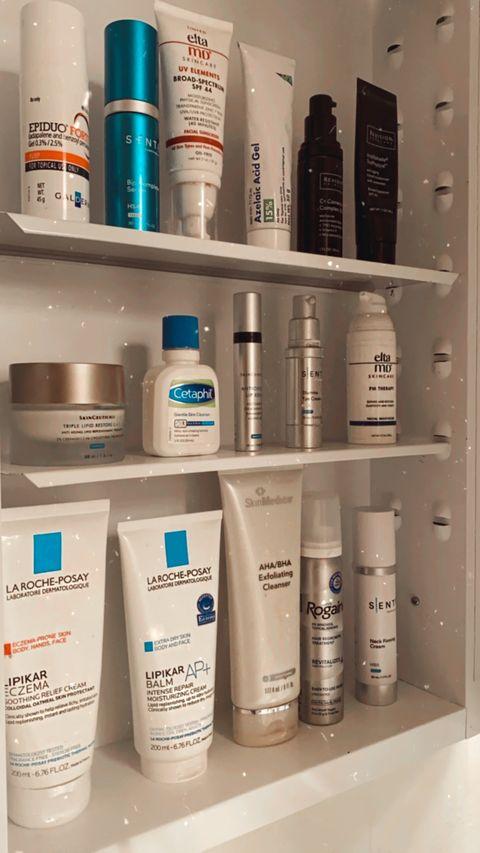
The article named the examples below in its face and general product sections. They are examples mentioned in the article, not guarantees, and a product that suits one person may irritate another.
- CeraVe Hydrating Facial Cleanser — described as a gentle cleanser formulated with ceramides.
- Vanicream Moisturizing Cream — described as a rich cream containing petrolatum.
- EltaMD UV Daily Broad-Spectrum SPF 40 — described as an oil-free sunscreen containing zinc oxide and titanium dioxide.
- Cetaphil Gentle Skin Cleanser — described as soap-free and designed for sensitive skin.
- Aveeno Eczema Therapy Moisturizing Cream — described as containing colloidal oatmeal.
- Cetaphil Restoraderm Body Moisturizer, Eucerin Eczema Relief Body Cream and Vanicream Skin Cream — named together in the article’s National Eczema Association list.
- Avene XeraCalm A.D Lipid-Replenishing Cream — described as a rich cream that helps replenish lipids in dry skin.
Product names that include words such as “therapy” or “relief” are brand names only. In this article they are not a promise that a product will treat, cure or prevent eczema or flare-ups.
A Gentle Daily Routine for Eczema-Prone Skin
Use gentle, fragrance-free cleansers, and avoid soap, which can be drying and irritating. Moisturize regularly — the article called this one of the most important steps — and moisturize immediately after bathing, while skin is still damp, to help lock in moisture.
Take short baths or showers in lukewarm water, because hot water can dry skin and make eczema worse. The article also suggested keeping skin hydrated by drinking plenty of water during the day and applying moisturizer regularly.
Apply a sunscreen with SPF 30 or higher every day, even on cloudy days. The article said sun exposure can make eczema worse, and advised applying sunscreen generously.
Avoid your own triggers where you can, including stress and the product and fabric triggers listed above. The article also mentioned showering immediately after exercise as a good hygiene habit.
Face Care, and the “Natural” Product Question
For the face, the article said any cleanser should be gentle and non-drying, and sunscreen should not be forgotten. It gave the CeraVe cleanser, Vanicream cream and EltaMD sunscreen above as its three face examples.
Some natural ingredients often used in products for eczema, such as aloe vera and oatmeal, were mentioned in the article. “Natural” does not automatically mean suitable for eczema-prone skin, so the same patch-test and dermatologist cautions apply.
Goat milk soap was mentioned as a natural cleansing option in the article. Treat it like any other new product: rinse well, patch test first, and stop if it irritates your skin.
What Dermatologists May Discuss, and Why There Is No Single Best Brand
There is no one best brand for eczema, as the article stated in its brand section. Eczema is a chronic condition that can cause skin to become itchy, dry and cracked, and what helps one person may not help another.
For diagnosis and a treatment plan, the article said to consult a dermatologist. Treatments a dermatologist may discuss, depending on severity, included topical corticosteroids in different strengths and formulations, and other options such as antihistamines, phototherapy, immunosuppressants and biologic drugs — all medical decisions, not self-treatment choices in this article.
Bathing Additions and the Air at Home
The routine section mentioned adding colloidal oatmeal or baking soda to bath water as an option some people use. Treat that as an article suggestion to discuss or test cautiously, not as a treatment, and stop if it irritates your skin.
The article also suggested keeping your home cool in summer and using a humidifier in winter to help skin stay hydrated. Those are comfort and environment steps, and they sit alongside — not instead of — gentle cleansing and moisturizing.
Why Moisturizing and Gentle Habits Were Repeated So Often
Proper skin care was described as essential in the article’s dermatologist section, not as an optional extra. That section covered gentle cleansers, avoiding harsh soaps and detergents, and applying moisturizers regularly.
Regular moisturizing was described as helping to keep skin hydrated. Keeping skin hydrated, avoiding triggers and practising gentle habits were presented together, rather than any single product being presented as the answer.
When to Get Medical Advice Promptly
Get medical advice promptly for a child with eczema, for broken or cracked skin that is not settling, and for any patch that looks infected. Do not rely on a new skin care product in those situations, and do not wait for a product to work.
Also seek advice if itching, dryness or irritation keeps getting worse, or if you are unsure which product to choose. A doctor or dermatologist can help you find a routine that suits your skin, as the article’s conclusion advised.
Conclusion: Gentle, Simple and Checked With a Professional
Eczema can cause skin to become dry, irritated and inflamed, and choosing products carefully is only one part of caring for it. Look for fragrance-free, hypoallergenic and non-irritating options, keep moisturizing, and avoid the triggers you know affect you.
If you are not sure which product to choose, talk to your doctor or dermatologist before you buy or apply it. No product in this article is presented as a treatment or cure for eczema.
This article is general information only and is not medical advice. Please consult a healthcare professional for personal advice.