Table of Contents
Quick Summary / At A Glance
- Most ingrown hairs settle on their own; gentle cleansing and warm compresses are comfort measures while you wait.
- Do not squeeze, pop, dig out, or lance a bump at home — that can worsen irritation and lead to infection.
- Gentle exfoliation and moisturizing may help dead skin clear, but stop scrubbing sore, broken, or infected skin.
- Prevention focuses on shaving technique: a sharp razor, shaving in the direction of growth, and avoiding shaving irritated skin.
- See a doctor for spreading redness, pain, pus, or fever, for recurrent ingrowns, or if you have diabetes or weak immunity.
What an Ingrown Hair Is and Why It Happens
An ingrown hair is a hair that has grown back into the skin instead of rising up from it. This can happen after you shave, wax, or pluck hair, when the hair curls back on itself and penetrates the skin.
It can also happen when dead skin cells block the opening of a hair follicle, or when shaving cuts the hair at an angle. The trapped hair may then grow sideways or backwards into the skin.
Ingrown hairs are most commonly found on the face, neck, armpits, and pubic area. They can also occur on the legs and arms, and in other areas where hair is shaved, waxed, or plucked.
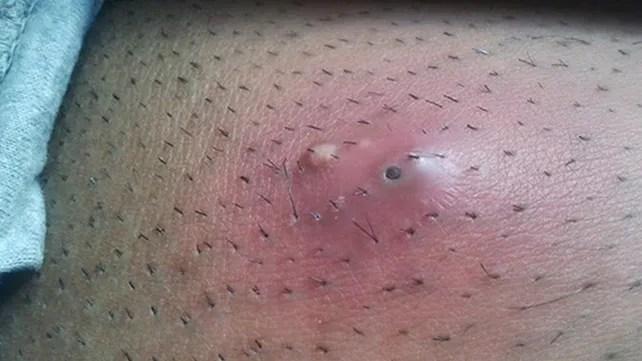
The bump might be red, white, or flesh-colored, and it might be sore or itchy. You may notice inflammation, pain, and swelling around the hair follicle, especially when the area becomes irritated.
Will an Ingrown Hair Go Away by Itself?
Most ingrown hairs will go away on their own with time. Gentle home care may help reduce discomfort while you wait, but not every ingrown hair settles without help.
If an ingrown hair is causing discomfort or pain, or if it does not improve, you may need further care. If you are constantly dealing with ingrown hairs, see a doctor so they can look for an underlying cause.
Gentle Self-Care: Cleansing, Warm Compresses, and Comfort
Gently cleanse the area with warm water and soap two to three times per day, as the original guidance described. Wash with mild soap, rinse, and pat the skin dry rather than rubbing it.
Do not scrub the skin around an ingrown hair, because scrubbing can irritate it further. Keep the area clean and dry where possible, especially if the bump is tender or looks infected.
Apply a warm compress to the area for five to ten minutes, two to three times per day, to help reduce inflammation and pain. Soak a clean washcloth in warm water, apply it gently, and repeat as a comfort measure.
Stop touching the bump as much as you can. It is tempting to squeeze an ingrown hair, but touching and squeezing can make it worse and can also lead to infection.
Gentle Exfoliation and Moisturizing, Within Limits
Gentle exfoliation around an ingrown hair may help remove dead skin cells and allow the hair to grow out more easily. Use a gentle scrub or a loofah lightly, and do not scrub too hard.
The original guidance also described gentle exfoliation for a pubic cyst area with a loofah or exfoliating glove. Treat exfoliation as a gentle comfort measure only, and stop if the skin becomes more sore.
Moisturize regularly as part of prevention and aftercare. Dry skin is more susceptible to ingrown hairs, so keeping skin hydrated may help reduce your risk of developing them.
Options named in the original article include tea tree oil or aloe vera gel to help soothe inflammation, and an over-the-counter hydrocortisone cream to help reduce inflammation and itchiness. Stop using a product if it causes burning or further irritation.
Summary Table: Gentle Care, What to Avoid, and Next Steps
| Situation | Gentle approach | What to avoid / next step |
|---|---|---|
| Ordinary sore bump | Cleanse gently; use a warm compress for comfort | Do not squeeze, pop, or dig at it at home |
| Dead skin around the hair | Exfoliate very gently with a scrub or loofah | Do not scrub hard or exfoliate broken skin |
| Face, legs, or pubic area | Keep the area clean; avoid tight clothing rubbing the skin | Do not shave over irritated skin or open wounds |
| Larger, painful cyst or hard lump | Keep it clean; use a warm compress for comfort | See a doctor; do not try to drain or lance it at home |
| Spreading redness, pus, pain, or fever | Do not rely on home care alone | See a doctor promptly |
Care by Area: Face, Legs, and Pubic Hair
On the face, stop touching the area and exfoliate gently around it, as above. If home remedies do not work, a dermatologist may prescribe a stronger medication, such as corticosteroids or antibiotics, in the original article’s description.
On the legs, exfoliate regularly to help keep skin smooth and free of dead skin cells that can trap hairs. Avoid tight pants or shorts for long periods, because fabric rubbing against skin can irritate it and contribute to ingrown hairs.
If you must wear tight clothing, choosing a fabric less likely to irritate skin, such as cotton, was suggested in the original article. Give irritated legs a break from friction where you can.
In the pubic area, use the same gentle approach: cleansing, a warm compress for ten to fifteen minutes to soothe pain and reduce inflammation, and gentle exfoliation only. Do not use drastic measures on this sensitive area, and seek care if a bump is painful or filled with pus.
Cysts, Hard Lumps, and Possible Infection
An ingrown hair cyst is a small, raised bump that develops when a hair follicle becomes clogged with sebum and dead skin cells, after shaving, waxing, or plucking. The cyst may be filled with pus and can be painful.
If a cyst is small and not too painful, the original guidance described home care with a warm compress and cleaning the area well before applying it. A topical antibiotic ointment was also mentioned to help prevent infection.
If a cyst is larger or more painful, see a doctor. They may prescribe antibiotics or recommend draining the cyst, and in some cases surgery may be necessary to remove the entire cyst, as the original article described — those are professional treatments, not home steps.
Sometimes an ingrown hair can turn into a hard lump under the skin, described in the original article as a furuncle, a small infection around the hair follicle. Furuncles were described as more common in people with coarse or curly hair, because regrowing hair has a sharper edge.
A furuncle may be a small red bump that is tender to touch and may be filled with pus. If it is large or deep, it can even cause fever and chills, so keep the area clean and dry and seek medical care if it does not respond to home treatment within a few days.
Prevention: Shaving Technique and Everyday Habits
Exfoliating is one of the steps described to help prevent ingrown hairs, by gently removing dead skin cells and other debris that can clog a follicle. This step is particularly important if you shave regularly, because shaving can further irritate already sensitive skin.
Shave properly: use a sharp razor and shave in the direction of hair growth. This will help minimize irritation and the risk of nicking the skin, which can lead to ingrown hairs.
Avoid shaving over areas that are already irritated or have open wounds. Wash the area with warm water and soap first to soften skin and hair, and apply an aftershave lotion or cream afterward to soothe skin and prevent further irritation, as the original opening guidance described.
The original article also mentioned an aftershave lotion with salicylic acid or tea tree oil, describing both as having antibacterial properties that can help prevent infection if an ingrown hair occurs. Treat that as an option named in the article, not a guarantee, and stop using a product that irritates your skin.
Moisturize regularly, avoid tight clothing rubbing sore areas, and do not shave in the wrong direction where you can avoid it. Those habits address causes named in the article: shaving direction, dead skin, and friction from clothing.
When to See a Doctor
See a doctor if you notice spreading redness, increasing pain, pus, or fever, or if a bump looks infected. A doctor may prescribe antibiotics if there is any sign of infection, or a corticosteroid cream to reduce inflammation, as described in the original article.
Get medical advice for recurrent ingrowns, ingrowns that do not improve, or a hair you cannot see — do not probe for an unseen hair at home. People with diabetes or weak immunity should route ingrown hairs to a doctor rather than relying on home care, and anyone unsure about a lump or cyst should be examined in person.
Professional care may also be appropriate for a larger or more painful cyst, a hard lump that does not respond within a few days, or ingrowns in the pubic area that keep returning. A dermatologist can determine the underlying cause when ingrowns are constant.
The Bottom Line on Gentle Care
Most ingrown hairs clear up on their own with proper care, and gentle cleansing, warmth, and patience are the core of home care. Prevention — gentle exfoliation, moisturizing, and careful shaving technique — may help reduce how often they return.
This article is general information only and is not medical advice. Please consult a healthcare professional for personal advice.