
Level 6 hair color is dark blonde on the standard 1 to 10 hair color level system. Because it sits right between light brown (level 5) and medium blonde (level 7), many people see it as a light brown, which is why it causes so much confusion. This guide explains what level 6 looks like, its underlying pigment, ash vs warm tones, how to get level 6 from lighter or darker hair, and how to cover gray and keep it from turning brassy.

Table of Contents
Quick Summary / At A Glance
- Level 6 = dark blonde on the 1 (black) to 10 (lightest blonde) scale.
- To most people it looks like a light, warm brown, especially indoors.
- Its underlying pigment is orange, so level 6 hair turns brassy when it fades or is lightened.
- Ash tones (6A, 6.1) cancel orange; gold and copper tones (6G, 6.3, 6R) make it warmer.
- You can reach level 6 easily from levels 5 to 8; from dark brown it needs lifting and toning.
What Is Level 6 Hair Color?
Hair color levels describe how light or dark hair is, from level 1 (black) to level 10 (lightest blonde). Level 6 is called dark blonde by colorists and box-dye brands. The number tells you the depth; any letters or decimals after it (6N, 6A, 6.3) describe the tone.

| Level | Name | Underlying pigment |
|---|---|---|
| 4 | Medium brown | Red-orange |
| 5 | Light brown | Red-orange |
| 6 | Dark blonde | Orange |
| 7 | Medium blonde | Orange-yellow |
| 8 | Light blonde | Yellow |
The Wikipedia overview of blond hair explains how natural blonde shades range from very pale to dark, with dark blonde often mistaken for light brown.
Is Level 6 Blonde or Brown?
Technically, level 6 is blonde. In real life it often reads as a light brown, especially in indoor light, and as a dark golden blonde in sunlight. That is why one person may call it “dirty blonde” and another “light brown.” For a closer comparison, read our article on the difference between level 6 blonde and brown hair.
Level 6 Underlying Pigment: Why It Turns Orange
Natural hair contains two kinds of melanin: eumelanin (brown-black) and pheomelanin (red-yellow). When hair is lightened, the darker eumelanin breaks down first, revealing warm pigment underneath. At level 6, that exposed pigment is orange. This is why lightened or faded level 6 hair often looks brassy, and why toners and ash shades are so common at this level.
Level 6 Tones: Ash, Natural and Warm
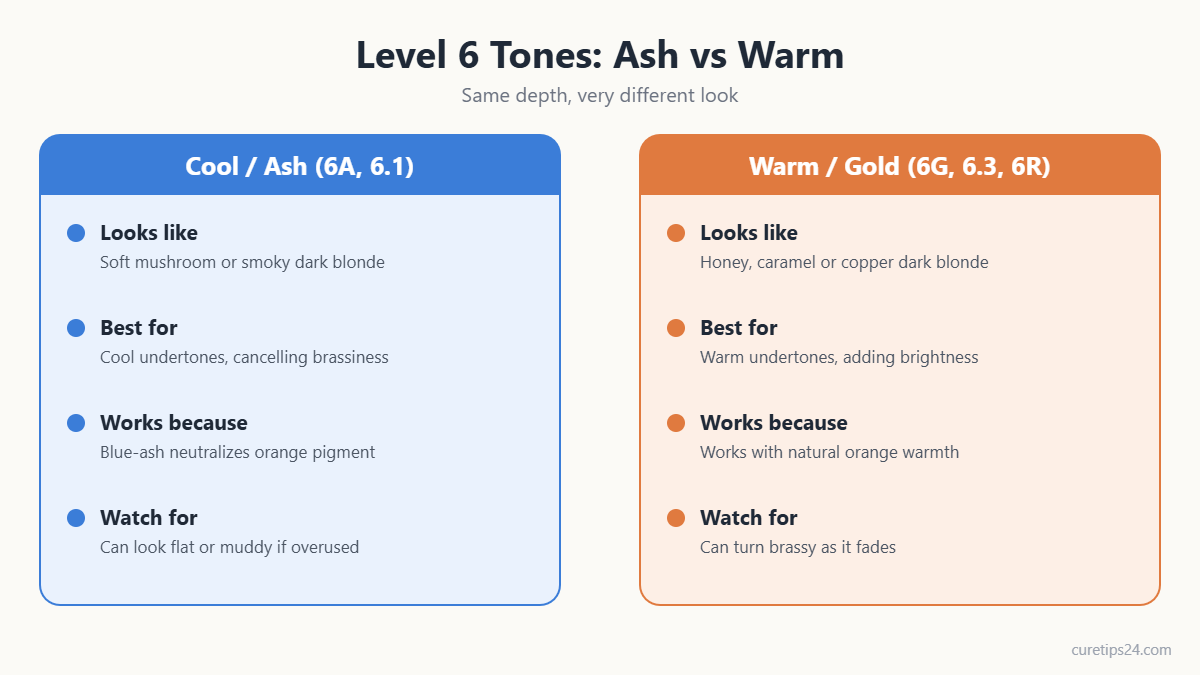
- 6N / 6NN (Natural): balanced dark blonde; NN adds extra pigment for gray coverage. See our guide to 6N vs 6NN hair color.
- 6A / 6.1 (Ash): cool, smoky dark blonde that cancels orange.
- 6G / 6.3 (Gold): warm, honey or caramel dark blonde.
- 6R / 6.4 (Red or Copper): rich, warm reddish dark blonde.
- 6S / 6B (Sand or Beige): soft, neutral-warm shades.
Box dye brands use different letters or decimals, so check the brand’s chart. Our argan oil hair color chart guide explains how to read level and tone codes.
Who Suits Level 6 Hair Color?
- Cool undertones: 6A or 6N for a soft, smoky look.
- Warm undertones: 6G, 6.3 or a copper 6R.
- Neutral undertones: almost any level 6 tone.
- Natural level 5 to 7: level 6 gives a subtle, low-maintenance change.
Use our hair color for skin tone chart to match tones to your complexion.
How to Get Level 6 Hair Color

From Lighter Hair (Level 7 to 10)
Going darker is easy and gentle. Use a level 6 permanent or demi-permanent dye with low-volume developer. If your hair is very light or bleached (level 9 to 10), a colorist may add a warm “filler” first so the result does not look green or muddy.
From Level 5
A permanent level 6 dye with 20-volume developer usually gives the one level of lift needed.
From Dark Brown (Level 3 to 4)
You need two to three levels of lift, which will expose orange pigment. Choose an ash or neutral level 6 shade, or have a colorist lift and tone the hair. The American Academy of Dermatology recommends staying within three shades of your natural color to limit damage.
Always Test First
Do a skin patch test 48 hours before coloring, as the U.S. FDA advises before every dye job, and a strand test to preview the shade.

Level 6 Hair Color and Gray Coverage
Level 6 can cover gray well, but gray hair has no pigment and is often coarser. For better coverage:
- Choose a natural (N or NN) level 6, or mix a fashion tone with an N shade.
- Use 20-volume developer and the full processing time on the box.
- Apply to gray areas first, such as the temples and part.
- Expect gray strands to look slightly lighter than the rest, which gives a soft, blended effect.
How to Keep Level 6 Hair From Turning Brassy
- Use a blue shampoo once a week to cancel orange.
- Book a gloss or toner every 6 to 8 weeks.
- Wash with sulfate-free, color-safe shampoo and cool water.
- Use heat protectant and limit hot tools.
- Wear a hat in strong sun; UV light brings out warmth.
Common Level 6 Mistakes to Avoid
- Choosing a warm 6G when your goal is a cool, non-brassy result.
- Skipping the strand test, especially on previously colored hair.
- Trying to lift very dark hair to level 6 with one box of permanent dye.
- Applying darker dye over bleached hair without a filler.
Frequently Asked Questions
Is level 6 hair color blonde or brown?
It is officially dark blonde, but it often looks like light brown, especially indoors.
What is the underlying pigment of level 6 hair?
Orange. That is why lightened or faded level 6 hair can look brassy.
What toner should I use on level 6 hair?
A blue-based or ash toner neutralizes orange at level 6. A violet toner is better for yellow tones at levels 8 to 10.
Can level 6 cover gray hair?
Yes. Natural (N or NN) level 6 shades give the best gray coverage.
What is the difference between level 6 and level 7?
Level 7 is one level lighter, a medium blonde with orange-yellow underlying pigment. Level 6 is darker and warmer.
Conclusion
Level 6 hair color is dark blonde: deep enough to look like light brown, light enough to show golden glints in the sun. Choose ash shades to cancel its orange pigment, warm shades to embrace it, strand test before coloring, and maintain it with blue shampoo and regular glosses for a fresh, non-brassy finish.
This article is for general information only. If you have a sensitive scalp or have reacted to hair dye before, talk to a dermatologist before coloring.

3 thoughts on “Level 6 Hair Color: Dark Blonde Explained, Tones, Pigment and How to Get It”