Table of Contents
Quick Summary / At A Glance
- This article gives neutral information about Make Up For Ever HD Skin Foundation, as the original post describes it: buildable coverage and a natural finish.
- The original post mentions several formats, including a pump-bottle foundation, a stick and a palette, and their stated details differ.
- Shade choice, as described, starts with skin type, the coverage you want and undertone: pink or red undertones for cool or neutral shades, yellow or olive for warm shades.
- The foundation can oxidise on some skin, the article says, and it suggests primer or setting powder for readers worried about that.
- Patch-test first, use any testers hygienically, check expiry, and stop if a product irritates; this article makes no recommendation to buy.
What This Foundation Is, As Described
Make Up For Ever HD Skin Foundation is presented in the original post as a high-definition foundation. It is described as lightweight and buildable, so the level of coverage can be built up rather than applied in one heavy layer. The post also says it comes in a pump bottle.
Older wording in the post repeated the same introduction twice and used strong promotional language. This version keeps only the factual descriptions the post itself gave — coverage, finish, format and shades — and leaves out prices, ratings and any suggestion about buying it.
Details in the original post are not identical in every section, because it covers more than one format. Where a detail belongs to the stick or the palette, this article says so, instead of treating it as true of every version. Checking the label of a specific product is the reliable way to confirm its own details.
Coverage, Finish and Wear, As Stated
The post describes the coverage as medium to full, with a natural finish. It also mentions light-reflecting pigments that are described as giving skin a soft, radiant look, and micro-fine pigments that are described as blurring imperfections and evening out the appearance of skin tone.
On wear, the post calls the foundation long-wearing and water-resistant. One section states that it can last up to 12 hours without touch-ups, and another describes a full day’s wear without transferring. Those are the post’s own claims, kept here at that strength, and individual wear will vary with skin, weather and application.
The Ultra HD section adds that the foundation was designed to work with high-definition cameras and to create a natural, skin-like finish. It mentions hyaluronic spheres, described as helping to hydrate skin and smooth out fine lines and wrinkles, and silicone elastomers, described as providing a soft-focus effect. A later section also mentions silicone technology in similar terms.
The Formats Mentioned, Side by Side
The table below summarises only what the original post stated about each format it covered. It is information for comparison, not a shopping guide, and it includes no prices.
| Format mentioned | What the original post states | Note from the same post |
|---|---|---|
| Pump-bottle foundation | Buildable medium-to-full coverage, natural finish, wide range of shades, water-resistant | One introduction describes it for dry skin; another describes a version with no parabens or fragrance |
| Ultra HD Skin Foundation | Hyaluronic spheres and silicone elastomers; lightweight yet buildable; designed for high-definition cameras | Described as water-resistant in heat |
| HD Skin Foundation Stick | Medium-to-full coverage in 40 shades; hyaluronic acid and vitamin E; no parabens, sulfates or phthalates, as stated | Stick format, described as easy to apply and blend |
| HD Skin Foundation Palette | Six shades; lightweight, buildable coverage for a natural or full-coverage look; SPF 15, as stated | Palette format, rather than a single shade |
| HD Skin Undetectable Foundation | Buildable medium-to-full coverage; micro-fine pigments; hyaluronic acid; pump bottle; light fragrance, as stated | The light-fragrance detail differs from the no-fragrance detail given for another version |
Finding a Shade, Step by Step
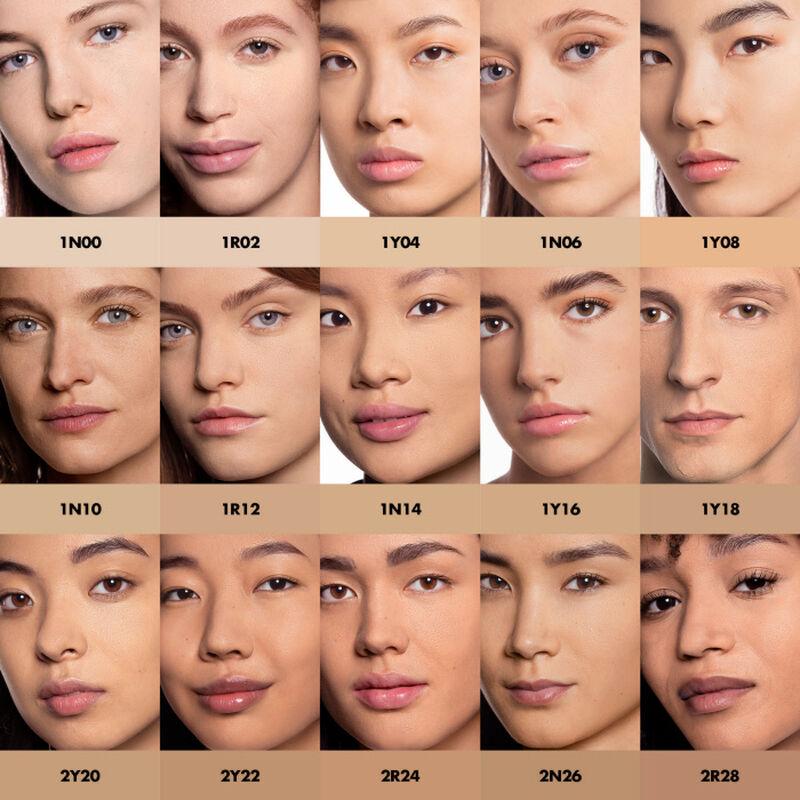
The shade-finder section of the original post lists three things to consider. First, decide which type of foundation is right for your skin type, and second, find the right shade. Third, find a formula that gives the coverage you desire.
That section describes this foundation as giving a natural-looking finish, with buildable coverage and a lightweight texture that is easy to apply and blend. It also says the formula contains ingredients described as helping to smooth and plump the skin. Those descriptions belong to the original post and are not a guarantee of how any shade will look on a particular person.
For undertone, the post advises starting there before choosing a shade. If you have pink or red undertones, it suggests shades with cool or neutral undertones. If your skin leans more yellow or olive, it suggests warm shades.
Once undertone is determined, the post advises choosing a shade that matches your natural skin tone as closely as possible. Its stated goal is a shade that blends into the skin without leaving a visible trace. The post also mentions a Shade Finder tool on the brand’s website, where a current foundation shade and undertone information can be entered for shade suggestions.
Sensitive and Acne-Prone Skin: Claims in Perspective
The original post made direct claims on this point, saying the foundation was suitable for sensitive skin and good for acne-prone skin. It described a water-based formula with no oils, fragrances or pore-clogging ingredients. Those claims should not be read as a promise that the product will suit every sensitive or acne-prone person.
Skin reactions are individual, and the post itself gives different fragrance details for different formats, which is another reason to read a specific product’s label. Patch-test a new foundation on a small area first, and wait to see how your skin responds before using it more widely. Stop using it if you notice irritation, itching, redness or new breakouts that concern you.
Foundation is makeup, not a treatment for acne or any other skin condition. If acne, redness or irritation persists or worsens, see a doctor or another qualified healthcare professional rather than relying on a cosmetic product. Keep that routing in mind however a product is described.
Oxidation, Primer and Setting Powder
The post says HD Skin can oxidise. It explains oxidation as the foundation interacting with the oils on your skin and causing the makeup to change colour. It also notes that this does not happen to everyone.
For readers worried about oxidation, the post suggests using a primer before applying foundation, describing it as creating a barrier between skin and makeup. It also suggests setting foundation with powder, which it says will help it stay in place. Test a shade in daylight and over time before judging the match, since colour change after application can affect how a shade appears.
Patch Tests, Tester Hygiene and Expiry
Patch testing matters for any new foundation, including one described as suitable for sensitive skin. Apply a small amount to a discreet area, follow the product’s own directions, and do not move to full use if burning, stinging or a rash develops. Reactions can happen even with products other people use without difficulty.
If you try a shade from a shared tester, keep hygiene in mind. Do not apply a shared tester directly to your face, and do not share your own makeup tools or products with others. Use a clean, single-use applicator where one is provided, and wash hands and brushes regularly.
Check expiry and condition before use, for testers and for products you already own. Do not use a foundation that is past its stated period after opening, or that has changed in smell, colour or texture, separated, or dried out. Old or contaminated makeup can irritate skin, so replacing it is the safer course.
A Note on Availability, and the Bottom Line
One question in the original post asked whether the Ultra HD Foundation was being discontinued. That post answered no, in the first person, as if from the brand. This article does not repeat that voice or its promotional comments; readers who need current availability information should check the brand’s own current information.
In summary, the post describes a buildable, medium-to-full coverage foundation with a natural finish, several formats, and a wide shade range organised in part by undertone. It also describes possible oxidation, and primer or powder as responses. Keep the cautions with the facts: patch-test first, use testers hygienically, respect expiry, and do not treat makeup as medical care.
This article is general information only and is not medical advice. Please consult a healthcare professional for personal advice.
Finally, remember that the same shade name may not look identical across every format described in the original post. Lighting, skin oils, primer, powder and the amount applied can all change the result you see. A careful test, in ordinary daylight, gives a clearer idea than a single quick application indoors.