Olive oil is often promoted as a natural way to treat acne scars, but the honest answer is simpler: there is no good evidence that olive oil can remove acne scars.
Table of Contents
Types of Acne Scars
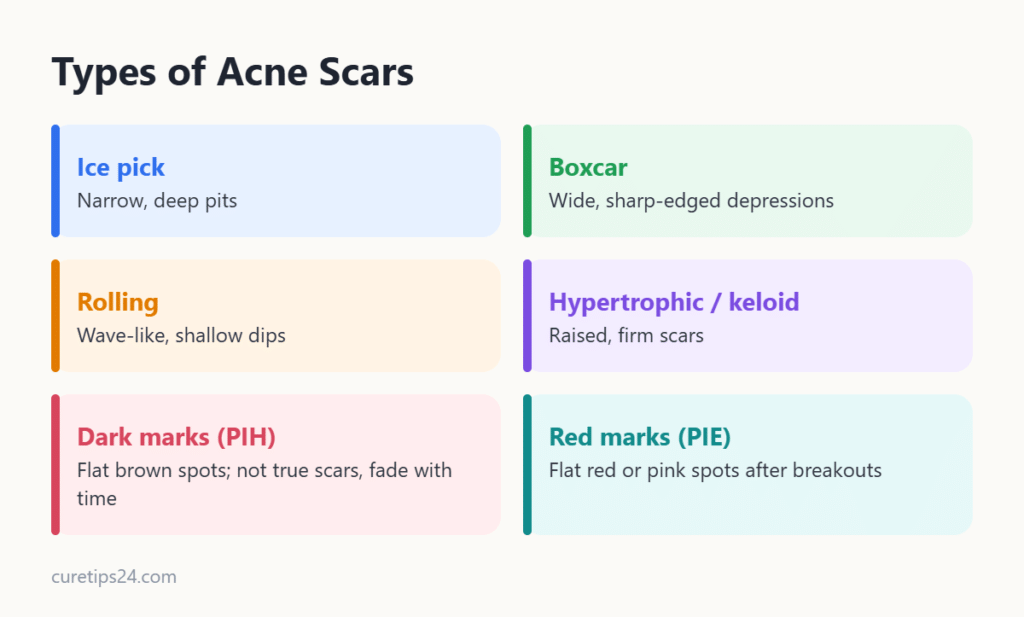
Not every mark left by acne is a true scar. Flat brown or red marks (post-inflammatory hyperpigmentation or erythema) usually fade on their own, while indented or raised scars are permanent changes in the skin’s collagen. DermNet describes the main types:
What olive oil can do
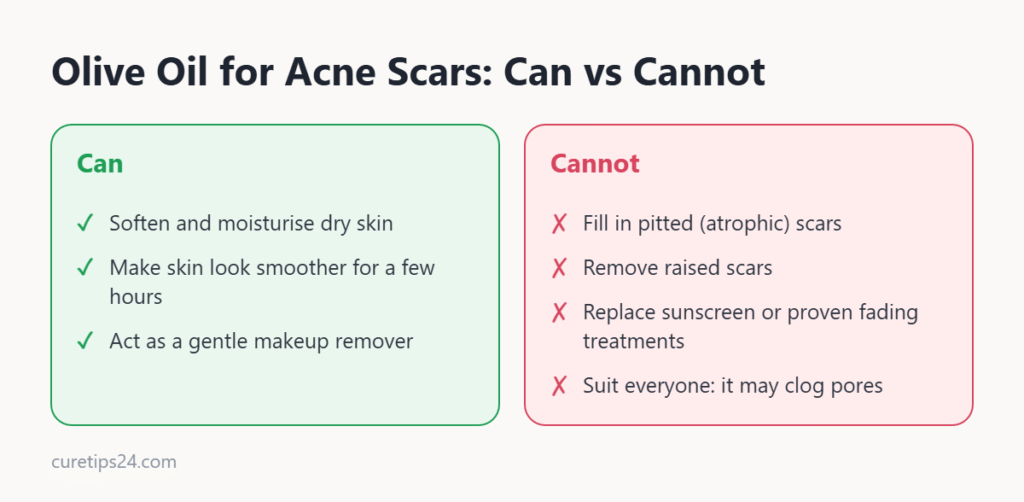
Olive oil is a moisturising oil. For some people, it can soften and moisturise the skin. That is all — moisturising is not the same as treating scars.
What olive oil cannot do
There is no good evidence that olive oil can remove acne scars. It can also clog pores and worsen breakouts for some people. If your skin reacts badly or your breakouts get worse, stop using it on your face.
Olive oil is rich in oleic acid, which some studies suggest can weaken the skin barrier and may clog pores in acne-prone skin. If you still want to try it, use it on the body rather than the face and patch test first. For gentler moisturising options, see our skin barrier repair routine and our review of coconut oil on skin.
A warning about lemon juice
Do not use lemon juice as a skin treatment. Lemon juice on skin can irritate it and make it more sensitive to sunlight, causing phototoxic reactions. It should not be recommended for acne scars or for any other skin concern.
What actually helps acne scars
- Use sunscreen daily to protect healing skin.
- Give scars time — they can fade slowly on their own.
- Ask a dermatologist about guided options, such as retinoids or professional procedures.
A dermatologist is the right person to advise on persistent scarring and on which option, if any, suits your skin.
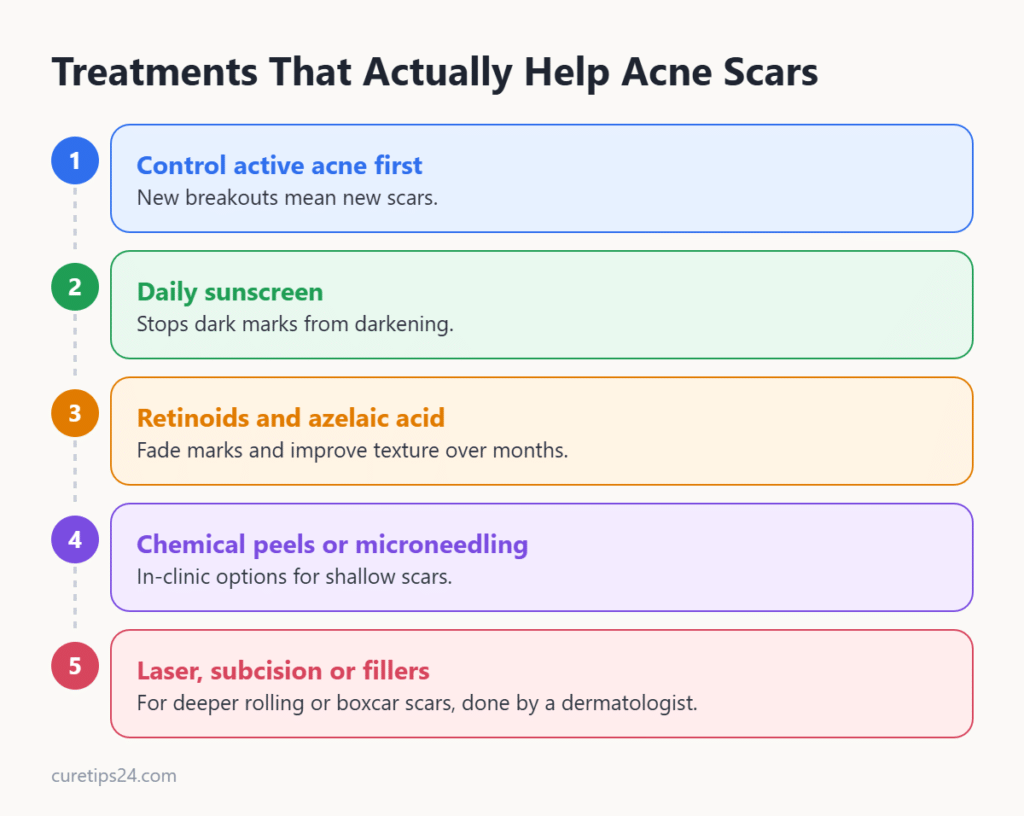
The American Academy of Dermatology explains that the best scar treatment depends on the scar type, and that treating active acne comes first; the NHS describes acne treatments available from pharmacies and GPs. For dark marks, azelaic acid and kojic acid are gentle options to discuss.
How to Prevent New Acne Scars
The most effective way to reduce scarring is to treat breakouts early, before deep, inflamed spots damage the collagen underneath. A few habits make a real difference:
- Do not squeeze, pick or pop spots, especially deep, painful ones.
- Start an acne treatment such as benzoyl peroxide, adapalene or azelaic acid as soon as breakouts become regular.
- See a doctor early for cysts and nodules, which are the type most likely to scar.
- Wear sunscreen every day so marks do not darken and linger.
- Be patient: most treatments take 8 to 12 weeks to show results.
If You Still Want to Try Olive Oil
Choose plain extra virgin olive oil, patch test on the jawline or inner arm for a few days, and use only a few drops on dry areas rather than over active breakouts. Wash it off if you notice new bumps, and never mix it with lemon juice, which can irritate and darken skin in the sun.
Matching the Treatment to the Type of Scar
Different acne scars respond to different treatments, which is one reason home remedies so often disappoint. The table below gives a general idea of the options a dermatologist may discuss. Suitability depends on your skin type, skin tone and how active your acne still is.
| Type of mark or scar | What it looks like | Options often used |
|---|---|---|
| Post-inflammatory hyperpigmentation | Flat brown or dark marks | Daily sunscreen, time, and ingredients such as azelaic acid or retinoids |
| Post-inflammatory erythema | Flat red or pink marks | Sunscreen, gentle care, time; vascular laser in some cases |
| Ice pick scars | Narrow, deep pits | Professional procedures such as targeted chemical treatment or punch techniques |
| Boxcar scars | Wider pits with sharp edges | Laser resurfacing, microneedling or chemical peels by a professional |
| Rolling scars | Soft, wave-like dips | Subcision, microneedling or fillers |
| Raised (hypertrophic) scars or keloids | Firm, raised scars | Steroid injections, silicone gels or sheets, specialist care |
At-Home Options With Better Evidence Than Olive Oil
- Sunscreen every day: UV light darkens marks and slows fading, so this is the single most useful step.
- Retinoids: over-the-counter retinol or prescription retinoids can improve texture and marks over months.
- Azelaic acid: helps both acne and dark marks, and is often well tolerated.
- Niacinamide: may help even out tone and support the skin barrier.
These won’t fill in deep pitted scars, but they can make flat marks fade faster and improve overall texture. Introduce one product at a time and patch test first. For a gentle way to start retinol, see our CeraVe retinol serum review.
Better Moisturisers for Acne-Prone Skin
If you like the idea of an oil because your skin feels dry, a lightweight, fragrance-free moisturiser labelled “non-comedogenic” is usually a safer choice for acne-prone faces. Look for ingredients such as glycerin, ceramides or hyaluronic acid, which hydrate without the heaviness of many plant oils. Keep heavier oils for dry areas of the body rather than the face.
How Long Do Acne Marks Take to Fade?
Flat marks often fade over several months, though dark marks on deeper skin tones can take longer, sometimes a year or more. Picking and squeezing spots, sun exposure and harsh scrubs all slow the process. True scars, with a change in skin texture, don’t fade on their own in the same way, which is when professional treatment is worth discussing.
Other “Natural” Scar Remedies: What to Know
- Aloe vera: can soothe skin and is generally gentle, but there is little evidence it fades acne scars.
- Honey: has wound-healing properties in medical-grade forms, but kitchen honey on the face is not a proven scar treatment.
- Coconut oil: like olive oil, it can clog pores for some acne-prone people.
- Baking soda, toothpaste and undiluted essential oils: these can irritate or burn the skin and should not be used on the face.
If a natural remedy causes stinging, redness or new spots, rinse it off and stop using it. Protecting the skin barrier is more helpful for fading marks than trying many remedies at once.
The kindest approach to acne scars is patience plus proven steps: clear active acne first, protect your skin from the sun every day, use one evidence-based product consistently, and ask a dermatologist about procedures for deeper scars. Olive oil can be a pleasant body moisturiser, but it should not be your scar plan.
Frequently asked questions
Can olive oil remove acne scars?
No. There is no good evidence that it can. Olive oil can moisturise and soften skin for some people, but that does not treat scars.
Can olive oil make acne worse?
It can for some people. Olive oil can clog pores and worsen breakouts.
Should I put lemon juice on my skin?
No. Lemon juice can irritate skin and make it more sensitive to sunlight, so it should not be used as a skin treatment.
When should I see a dermatologist?
See a dermatologist for persistent scarring. They can advise on options such as retinoids or professional procedures.
This article is general information only and is not medical advice. Please consult a healthcare professional for personal advice.