
A shiny forehead by noon, makeup that slides off and frequent breakouts are everyday problems for people with oily skin. You cannot permanently “remove” oily skin, because some oil (sebum) is a natural part of healthy skin, but you can control the shine and keep pores clearer. This guide explains how to remove oily skin naturally: what causes it, a simple dermatologist-style routine, nine natural home remedies that are safe to try, and the habits and foods that make a difference.
Table of Contents
Quick Summary / At A Glance
- Oily skin comes from overactive oil glands, driven by genes, hormones, heat and humidity.
- Wash twice a day and after sweating with a mild foaming cleanser; over-washing makes skin worse.
- Never skip moisturizer: use a light, oil-free gel and a mineral sunscreen.
- Natural helpers include multani mitti, aloe vera, green tea, besan, oatmeal and honey.
- Blot oil with blotting paper instead of washing again, and never sleep in makeup.
- Avoid lemon juice, baking soda and alcohol-based toners; see a doctor for severe acne.
What Is Oily Skin?
Your skin has tiny sebaceous glands that make sebum, an oily substance that keeps skin soft, waterproof and protected. When these glands are overactive, extra sebum sits on the surface, making skin look shiny or greasy, especially in the T-zone (forehead, nose and chin). Excess oil can mix with dead skin cells and block pores, leading to enlarged-looking pores, blackheads, whiteheads and pimples.
Oily skin is not all bad. People with oily skin often develop fewer fine lines and wrinkles, because the oil helps keep skin moisturized. The goal is balance: less shine and fewer breakouts without stripping the skin.
What Causes Oily Skin?
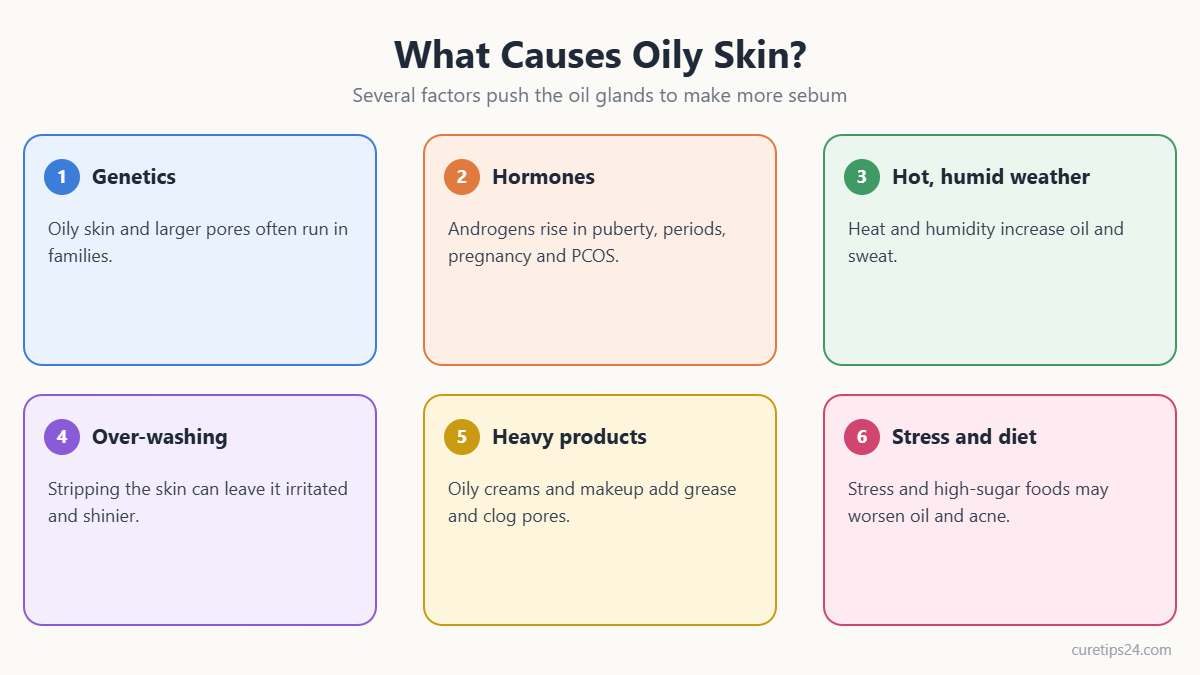
- Genetics: if your parents have oily skin and large pores, you are more likely to have them too.
- Hormones: androgens increase oil production during puberty, around periods, in pregnancy and in conditions such as polycystic ovary syndrome (PCOS).
- Climate: hot, humid weather, common in Bangladesh and South Asia, increases oil and sweat.
- Over-washing and harsh products: scrubbing, alcohol-based toners and strong soaps can irritate skin and leave it looking even oilier.
- Heavy skin care and makeup: greasy creams and oil-based foundations add shine and clog pores.
- Stress and diet: stress hormones and diets high in sugar and refined carbohydrates may worsen oiliness and acne in some people.
Daily Routine to Control Oily Skin
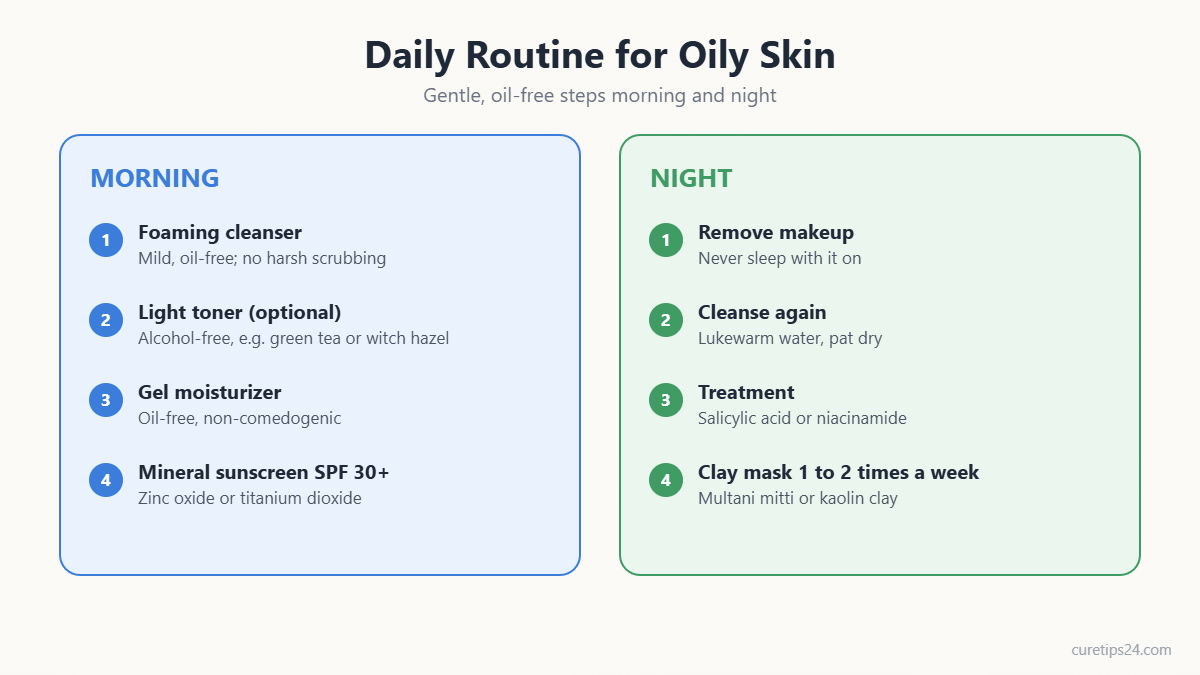
A gentle, consistent routine does more than any single remedy. The American Academy of Dermatology’s tips for controlling oily skin recommend washing up to twice a day and after sweating, choosing oil-free, non-comedogenic products and moisturizing after cleansing.
1. Wash Twice a Day With a Mild Foaming Cleanser
Use lukewarm water and a gentle, oil-free foaming or gel cleanser in the morning, at night and after exercise. Massage with your fingertips and pat dry. Avoid scrubbing, rough cloths and alcohol-based or oil-based cleansers. Cleansers with salicylic acid or niacinamide can help oily, acne-prone skin; see the ingredients in the best face wash for oily skin and acne.
2. Use a Gentle Toner (Optional)
An alcohol-free toner can remove leftover oil after cleansing. Cooled green tea or a gentle, alcohol-free witch hazel toner are natural options. Skip toners that sting or leave skin tight.
3. Never Skip Moisturizer
It is a myth that oily skin does not need moisture. When skin is dehydrated or stripped, it can look shinier and feel irritated. Choose a light, oil-free gel moisturizer with hyaluronic acid, glycerin or aloe vera.
4. Wear a Light Sunscreen Every Day
Sun damage and post-acne dark spots are common on oily skin. Choose an oil-free, fragrance-free, broad-spectrum SPF 30 sunscreen; mineral formulas with zinc oxide or titanium dioxide often feel less greasy and suit acne-prone skin.
5. Exfoliate Gently Once or Twice a Week
Removing dead skin cells helps keep pores clear. A salicylic acid (BHA) product or a soft, natural exfoliant like oatmeal once or twice a week is enough. Harsh scrubs irritate skin and can trigger more oil.
6. Blot, Don’t Wash Again
During the day, press a blotting paper on oily areas for a few seconds and lift it off without rubbing. Cleveland Clinic’s advice on oily skin also points out that rubbing simply spreads oil around. Blotting removes shine without stripping the skin; a translucent oil control powder can help if you wear makeup.
9 Natural Remedies for Oily Skin
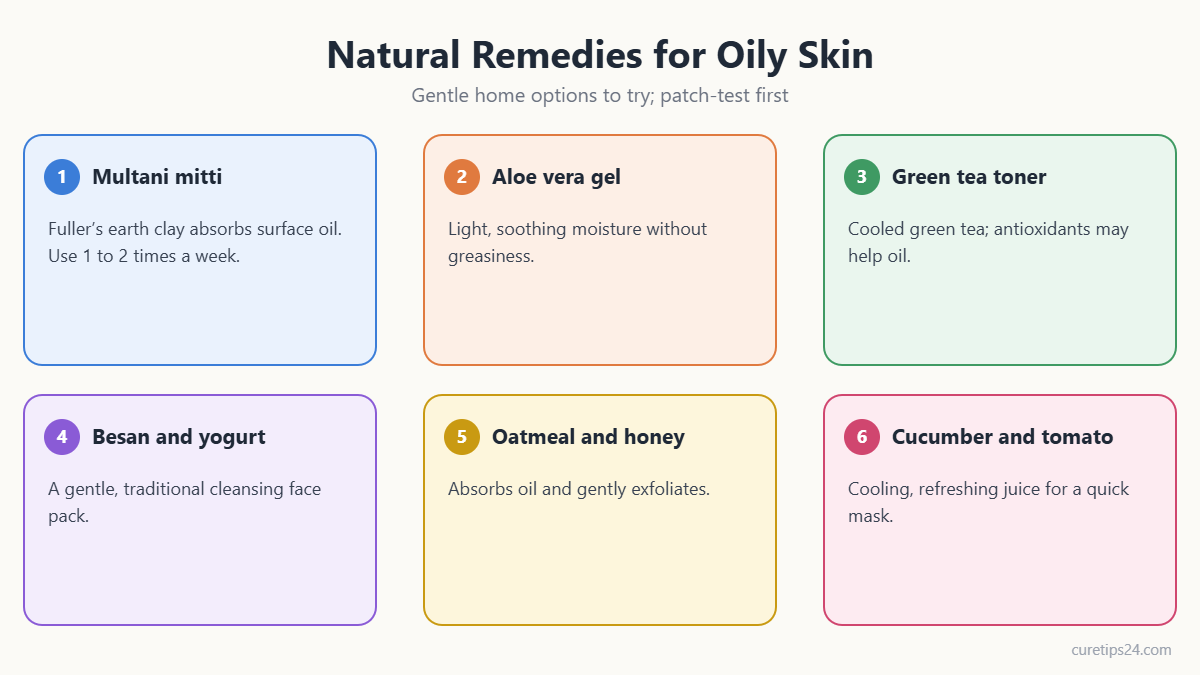
These home remedies can temporarily reduce shine and leave skin feeling fresh. They do not permanently change your skin type, so use them alongside a good routine. Always patch-test a small amount on your inner arm first, make fresh batches and stop if your skin stings or turns red.
1. Multani Mitti (Fuller’s Earth) Clay Mask
Clay absorbs excess oil from the skin’s surface. Mix 1 tablespoon of multani mitti with enough rose water or plain water to form a smooth paste. Apply a thin layer for 10 minutes and rinse before it dries completely, then moisturize. Use once or twice a week. Kaolin and bentonite clays work in a similar way.
2. Aloe Vera Gel
Fresh or pure aloe vera gel gives light, non-greasy moisture and soothes irritated or sun-exposed skin. Apply a thin layer at night or use it as your moisturizer if your skin is very oily.
3. Green Tea Toner
Green tea contains antioxidants called polyphenols that some studies suggest may help reduce oiliness when applied to the skin. Brew a cup, let it cool, pour into a clean spray bottle and mist over clean skin. Keep it in the fridge and use within three days.
4. Besan and Yogurt Face Pack
Mix 2 tablespoons of besan (gram flour) with 1 tablespoon of plain yogurt or rose water. Apply for 10 minutes and rinse with gentle circular movements. This traditional pack cleanses without stripping.
5. Oatmeal and Honey Mask
Mix 2 tablespoons of finely ground oats with 1 teaspoon of honey and a little warm water. Oats absorb oil and gently exfoliate, while honey is soothing. Leave on for 10 minutes and rinse.
6. Cucumber and Yogurt Mask
Blend a few cucumber slices with 1 tablespoon of yogurt. Apply for 10 to 15 minutes for a cooling, refreshing mask, especially good in hot weather.
7. Tomato Pulp
Rub the inside of a ripe tomato slice gently over oily areas or apply the pulp for 10 minutes, then rinse. Tomato is mildly acidic and refreshing; skip it if your skin is sensitive or broken.
8. Egg White and Oats (For Non-Sensitive Skin)
Some people use whipped egg white with a spoon of oats as a tightening mask. Patch-test first, avoid it if you have an egg allergy, and rinse thoroughly to prevent any risk from raw egg.
9. Jojoba Oil (Very Sparingly)
It sounds strange, but a few drops of jojoba oil, which is similar to sebum, can work as a light moisturizer for some oily skin types. Use only one or two drops and stop if you notice breakouts.
Remedies to Avoid
Avoid lemon juice, baking soda, toothpaste, vinegar and undiluted essential oils on your face. They can burn, irritate and darken skin, especially in the sun, and a damaged skin barrier often ends up looking oilier.
Lifestyle Habits That Help Control Oil
- Don’t touch your face: your hands transfer oil and bacteria.
- Remove makeup every night: choose oil-free, water-based or matte makeup.
- Change pillowcases and wipe your phone: both collect oil and bacteria.
- Eat a balanced diet: more vegetables, fruit, whole grains and fish, and less sugar and refined carbohydrates.
- Drink enough water and manage stress: both support healthier skin.
- Wash your hair regularly: oily hair touching the forehead can add to shine and breakouts.
If you live somewhere hot, our tips for glowing skin in summer explain how to adjust your routine for heat and humidity.
Natural Remedies at a Glance
| Remedy | How it helps | How often |
|---|---|---|
| Multani mitti mask | Absorbs surface oil | 1 to 2 times a week |
| Aloe vera gel | Light, soothing moisture | Daily |
| Green tea toner | Antioxidants; refreshing | Daily |
| Besan and yogurt | Gentle cleansing pack | 1 to 2 times a week |
| Oatmeal and honey | Absorbs oil, mild exfoliation | Once a week |
| Cucumber and yogurt | Cooling, refreshing | 1 to 2 times a week |
| Blotting paper | Removes shine without stripping | As needed |
When to See a Dermatologist
See a doctor or dermatologist if oily skin comes with painful, cystic or scarring acne, if breakouts do not improve after two to three months of good care, or if you also have irregular periods, excess hair growth or sudden weight change, which can point to a hormonal condition such as PCOS. A dermatologist can prescribe treatments such as topical retinoids, which can reduce oil and breakouts; the NHS guide to acne explains when spots need medical treatment. Read our article on common myths about acne to understand what really causes breakouts.
Frequently Asked Questions
How can I remove oil from my face naturally and quickly?
Press a blotting paper on oily areas for a few seconds, or splash with cool water and pat dry. For a deeper refresh, use a multani mitti or clay mask for 10 minutes.
Can oily skin be removed permanently?
No. Oily skin is mainly due to genes and hormones, so it cannot be removed permanently. A good routine controls shine and breakouts, and many people find their skin gets less oily with age.
Does drinking water reduce oily skin?
Drinking water supports overall health, but it does not directly stop oil production. A light moisturizer and gentle cleansing make more difference.
Is aloe vera good for oily skin?
Yes. Aloe vera gel is light, non-greasy and soothing, so it works well as a moisturizer for oily and acne-prone skin.
This article is general information only and is not medical advice. Please consult a doctor or dermatologist for advice about your own skin.

6 thoughts on “How to Remove Oily Skin Naturally: Causes, Routine and 9 Home Remedies”