
Is castile soap safe for sensitive skin? For many people, yes, as long as you choose an unscented formula, dilute it and moisturize afterward. But castile soap is a true soap with an alkaline pH, and scented versions contain essential oils, so it can dry out or irritate skin that has eczema, rosacea or a fragrance allergy. This guide explains who it suits, who should be careful and how to use it safely.
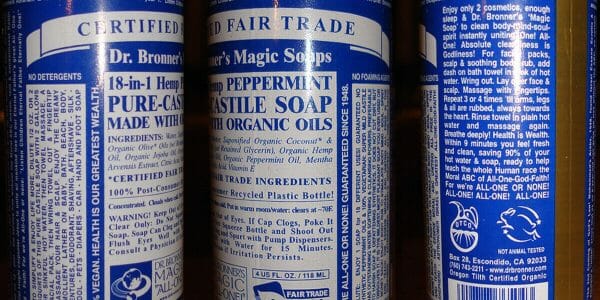
Table of Contents
Quick Summary / At A Glance
- Castile soap is a plant-oil soap, traditionally made from olive oil, now often blended with coconut, hemp or jojoba oil.
- It has a short ingredient list and no animal fats, which is why many people with sensitive skin try it.
- It is alkaline (around pH 9 to 10), while the skin surface is slightly acidic, so it can feel drying.
- Unscented, olive-oil-rich and well-diluted castile soap is the gentlest option.
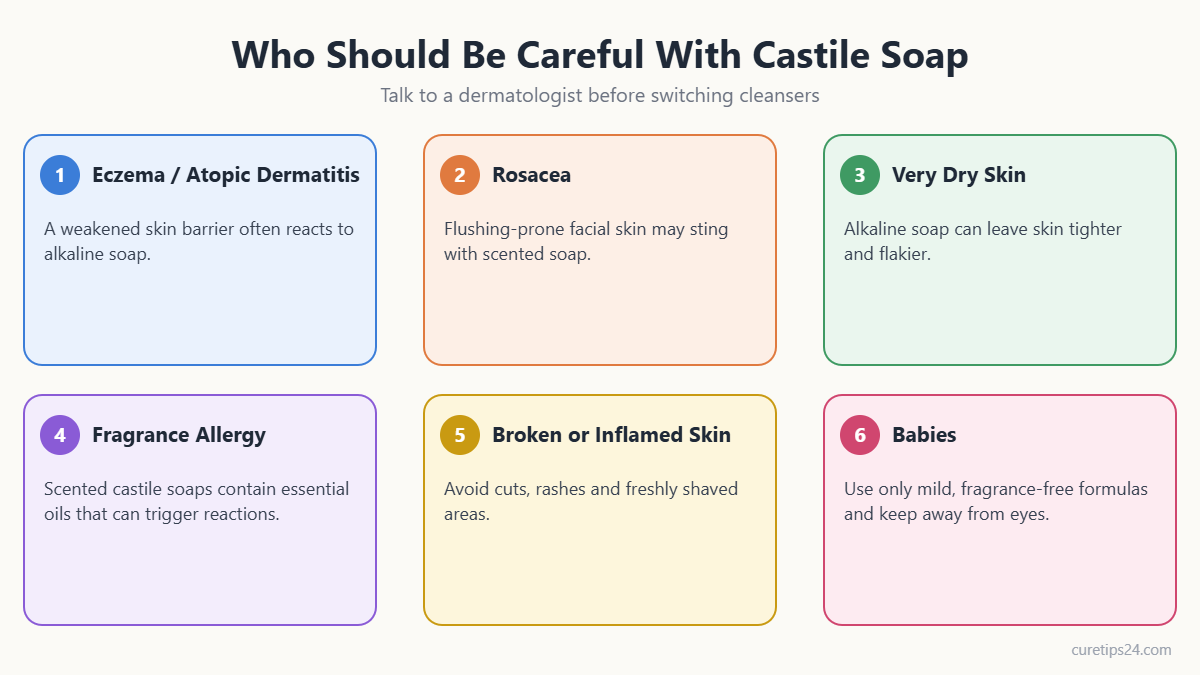
- People with eczema, rosacea, very dry skin or a fragrance allergy should patch test first or choose a mild, fragrance-free syndet cleanser.
What Is Castile Soap?
Castile soap takes its name from the Castile region of Spain, where soap makers used local olive oil instead of animal fat (tallow). Today the name is used for most vegetable-oil soaps, in both bar and liquid form. The history of castile soap goes back centuries around the Mediterranean.
It is made by saponification, the reaction between plant oils and an alkali: sodium hydroxide for bars and potassium hydroxide for liquid soap. The result is soap plus naturally formed glycerin. Popular brands such as Dr. Bronner’s add oils like coconut, olive, hemp and jojoba, and scented versions use essential oils such as peppermint, eucalyptus, tea tree, lavender and citrus.
Is Castile Soap Good for Sensitive Skin?
The honest answer is that it depends on your skin and on the product. Cleveland Clinic dermatologist Dr. Alok Vij notes that an olive oil-based soap may be easier on irritated or sensitive skin because it is less harsh, but also that everyone’s skin is different (Cleveland Clinic).
Other dermatologists are more cautious. Some report patients developing rashes after using castile soap straight from the bottle and advise people with eczema or atopic dermatitis to avoid it, because their outer skin layer is already compromised. In short, “natural” does not automatically mean non-irritating.
Why Castile Soap Can Suit Sensitive Skin
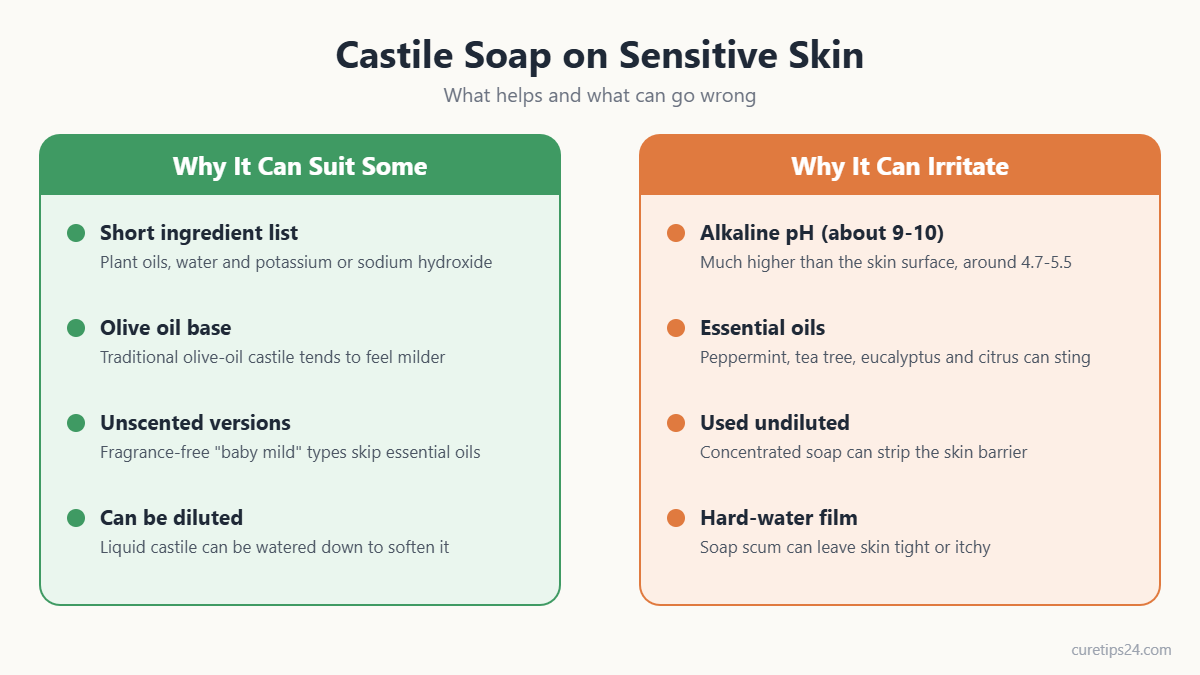
- Few ingredients: fewer chances to react to dyes, preservatives or synthetic fragrance.
- No sulfate detergents: it cleans with soap rather than SLS or SLES.
- Olive oil base: traditional high-olive-oil castile is often described as milder and less stripping.
- Natural glycerin: glycerin formed during soap making helps hold some moisture in the skin.
- Unscented options: fragrance-free or “baby mild” versions skip essential oils.
Why Castile Soap Can Irritate Sensitive Skin
- High pH: true soap is alkaline, while healthy skin sits at a slightly acidic pH of about 4.7 to 5.5. Washing often with alkaline soap can disturb the skin barrier and leave it tight.
- Essential oils: peppermint, tea tree, eucalyptus and citrus oils are common triggers for stinging, redness and allergic contact dermatitis.
- Concentration: liquid castile is very concentrated. Used neat, it can strip natural oils.
- Hard water: soap reacts with minerals to form soap scum, which can leave a film that feels itchy or dry.
- Eyes: it stings badly if it gets in the eyes.
Castile Soap vs Regular Soap vs Gentle Syndet Cleansers
| Cleanser | Typical pH | Good for | Watch out for |
|---|---|---|---|
| Unscented castile soap | About 9 to 10 | Normal, oily and mildly sensitive skin | Dryness if used neat or too often |
| Scented castile soap | About 9 to 10 | Normal and oily skin | Essential oils can trigger irritation |
| Regular bar soap | About 9 to 10 | Normal and oily skin | Fragrance, dyes, deodorant ingredients |
| Syndet bar or gentle cleanser | About 5.5 to 7 | Eczema-prone, very dry and sensitive skin | Check the label for fragrance |
If your skin is very sensitive, a pH-balanced, fragrance-free syndet cleanser is often the safer daily choice, and castile soap can be kept for occasional use. For dry-skin support from the inside too, see our list of the best foods for dry skin.
How to Use Castile Soap on Sensitive Skin
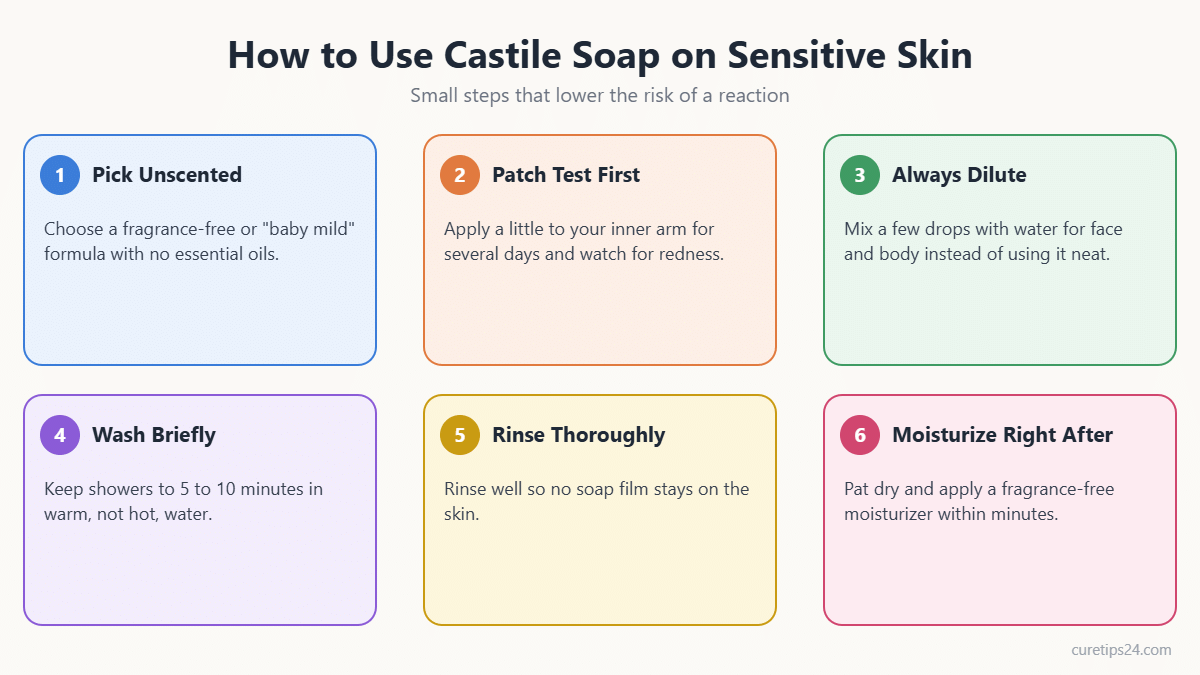
- Choose unscented. Pick a fragrance-free or baby-mild formula, ideally with olive oil high on the ingredient list.
- Patch test first. Apply a small amount to your inner forearm for several days. The American Academy of Dermatology explains how to test a new product before using it widely.
- Dilute it. For face and body, mix a few drops of liquid castile with water or lather a small amount in wet hands.
- Keep washing short. Use warm, not hot, water and limit showers to about 5 to 10 minutes.
- Rinse well. Make sure no soap film is left on the skin, especially in hard-water areas.
- Moisturize right away. Pat skin dry and apply a fragrance-free moisturizer within a few minutes.
These steps follow the AAD’s dermatologist tips for dry skin, which recommend gentle, fragrance-free cleansers used only where needed.
Can You Use Castile Soap on Your Face?
Yes, if it is diluted and unscented, and if your skin tolerates it. Oily and acne-prone skin often does well with a mild castile wash because it removes excess oil without heavy residue; for more ideas, read our guide on how to remove oily skin naturally. Dry, eczema-prone or rosacea-prone faces usually do better with a creamy, pH-balanced cleanser. Keep castile soap away from your eyes.
Is Castile Soap Good for Eczema?
Some people with mild eczema tolerate unscented castile soap, and a few castile brands now sell fragrance-free formulas tested for eczema-prone skin. Still, many dermatologists prefer non-soap, low-pH cleansers for eczema because alkaline soap can worsen dryness and itching. Look for products accepted by the National Eczema Association and follow your dermatologist’s advice. We explain the same issue for another popular bar in our article on whether Yardley soap is good for eczema.
Is Castile Soap Safe for Babies?
Mild, fragrance-free castile soap is used in many baby washes, but babies have thin, sensitive skin. Use a tiny diluted amount, avoid the eyes, rinse well and stop if you see redness or dryness. Babies with eczema should use a cleanser recommended by their pediatrician.
Common Mistakes to Avoid
- Using concentrated liquid castile soap straight from the bottle on your skin.
- Choosing peppermint, tea tree or citrus scents when your skin reacts easily.
- Mixing castile soap with vinegar or lemon juice, which makes it curdle and leaves an oily film.
- Using it on broken, inflamed or freshly shaved skin.
- Skipping moisturizer after washing.
Castile soap is also popular for cleaning around the home, but household dilutions are not meant for skin. Choosing products that suit your skin type matters more than any single ingredient, as we discuss in our skin care product reviews.
When to See a Dermatologist
Stop using castile soap and see a doctor or dermatologist if you notice a red, itchy or burning rash, swelling, blistering, cracked or bleeding skin, or dryness that does not improve after switching to a gentle, fragrance-free cleanser. These can be signs of contact dermatitis or eczema that need proper treatment.
Frequently Asked Questions
Is Dr. Bronner’s castile soap safe for sensitive skin?
The unscented Baby Mild version is the gentlest choice for sensitive skin. Scented versions such as peppermint, eucalyptus and tea tree are more likely to sting or irritate. Always dilute it and patch test first.
Which castile soap is best for sensitive skin?
An unscented, fragrance-free castile soap with olive oil high on the label is usually the gentlest. Avoid strong essential oils if your skin is reactive.
Can castile soap cause an allergic reaction?
Yes. Although the base ingredients are simple, essential oils and some plant oils can cause allergic contact dermatitis in sensitive people. A patch test lowers the risk.
Does castile soap dry out your skin?
It can, because it is alkaline and very effective at removing oil. Diluting it, washing briefly and moisturizing straight after helps prevent dryness.
Conclusion
Castile soap can be safe for sensitive skin when you pick an unscented, olive-oil-rich formula, dilute it, keep washing short and moisturize afterward. If you have eczema, rosacea, very dry skin or a fragrance allergy, patch test first or choose a pH-balanced, fragrance-free cleanser instead.
This article is for general information only and is not medical advice. Please consult a dermatologist or healthcare professional about your own skin.

3 thoughts on “Is Castile Soap Safe for Sensitive Skin? Benefits, Risks and How to Use It”