
If your face turns shiny a few hours after you put on makeup, the best oil control powder can keep you matte for longer. These mattifying face powders absorb surface oil, blur the look of pores and help foundation stay in place. This guide covers how oil control powders work, which ingredients to look for, popular powders worth comparing, and how to apply them so they never look cakey.
Table of Contents
Quick Summary / At A Glance
- Oil control powders absorb surface oil (sebum) and reduce shine for a few hours; they do not change how much oil your skin makes.
- Look for oil-absorbing ingredients such as silica, kaolin clay, rice or corn starch, talc and zinc oxide.
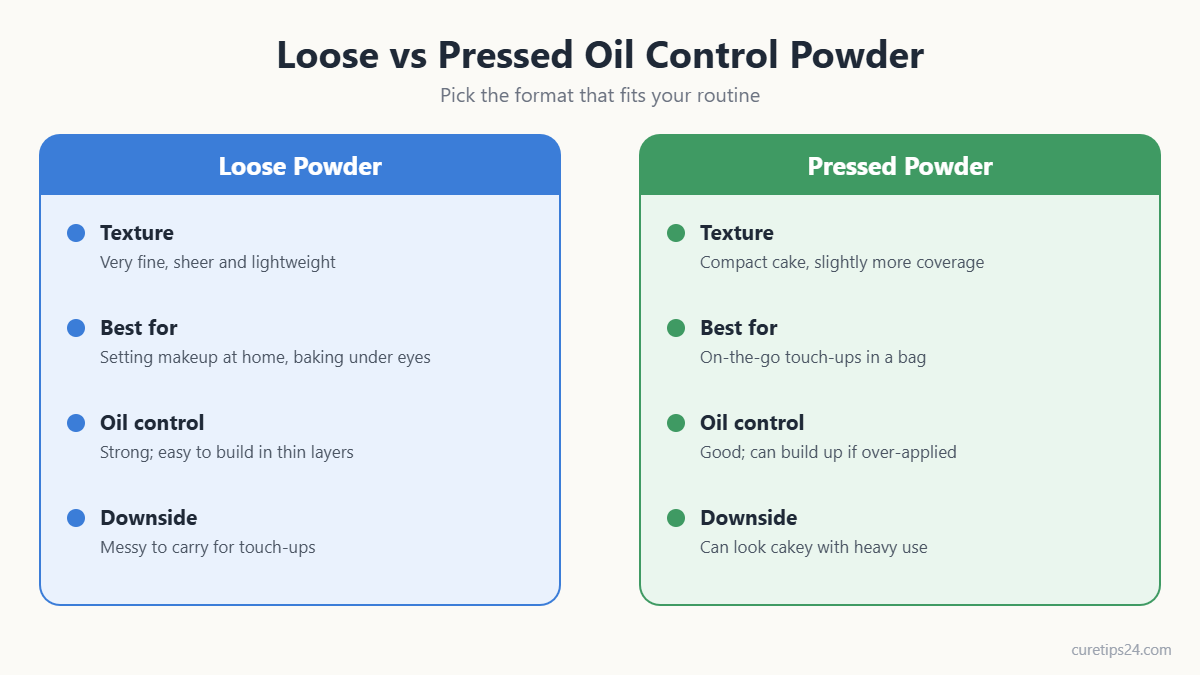
- Loose powder gives the strongest, sheerest finish; pressed powder is best for touch-ups on the go.
- Translucent powder suits most skin tones; tinted powder adds light coverage.
- Choose oil-free, non-comedogenic formulas if you are acne-prone, apply a thin layer and blot before touching up.
What Does an Oil Control Powder Do?
An oil control powder works on the surface of your skin. Its absorbent particles soak up sebum that has already appeared, which takes away shine and leaves a matte or soft-matte finish. It also helps set foundation and concealer so they slide less in heat and humidity.
The effect is cosmetic and temporary. Powder does not treat acne, shrink pores permanently or reduce oil production. For that, you need a good skin care routine; the American Academy of Dermatology recommends washing your face morning, evening and after exercise, using oil-free and non-comedogenic products, and blotting papers during the day.
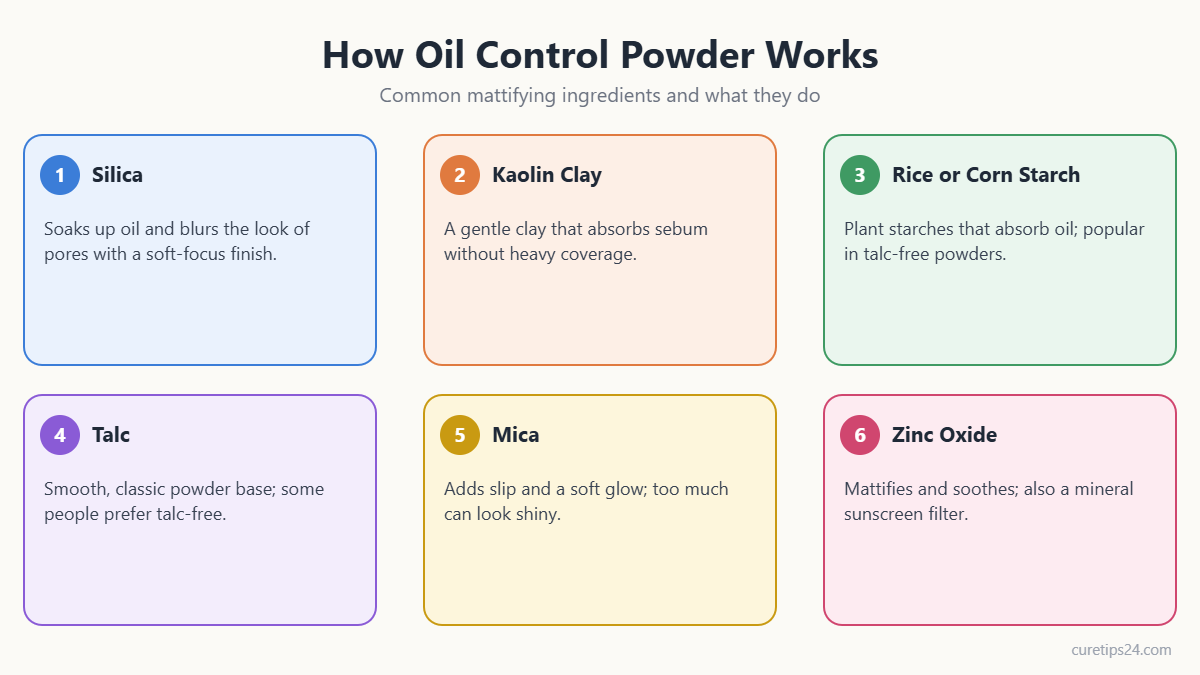
Ingredients to Look For in an Oil Control Powder
- Silica: highly absorbent and gives a soft-focus, pore-blurring finish. It is the base of many translucent setting powders.
- Kaolin clay: a mild clay that absorbs oil without heavy coverage.
- Rice powder or corn starch: plant starches used in many talc-free formulas.
- Talc: a smooth, traditional powder base. Some people prefer talc-free options, so read the label.
- Zinc oxide: mattifies and soothes; in some powders it also adds sun protection.
- Mica: adds slip and glow, but powders with a lot of mica can look shiny on oily skin.
Avoid powders with heavy oils, strong fragrance or a lot of shimmer if your main goal is a matte finish.
Types of Oil Control Powder
| Type | Finish | Coverage | Best for |
|---|---|---|---|
| Translucent loose setting powder | Matte, invisible | None | Setting makeup, very oily skin |
| Pressed setting powder | Matte to soft matte | Sheer to light | Touch-ups during the day |
| Tinted pressed powder | Matte | Light | Bare-skin days, evening out tone |
| Powder foundation | Matte | Medium to full | Oily skin that wants one step |
| Mineral powder | Natural matte | Light to medium | Sensitive, oily skin |
Popular Oil Control Powders to Compare
These are well-known powders that oily-skin shoppers and makeup artists often compare. Shades, prices and formulas change, so check the current label and reviews before you buy.
1. Laura Mercier Translucent Loose Setting Powder
A classic finely milled loose setting powder that many makeup artists use to set foundation without adding color. It is a top choice for a soft, blurred matte finish, though it is a splurge.
2. Maybelline Fit Me Matte + Poreless Pressed Powder
A budget-friendly drugstore compact made for normal to oily skin, available in many shades. It is popular for light coverage and quick touch-ups.
3. COVERGIRL Clean Matte Pressed Powder
An affordable pressed powder designed for oily skin, often recommended as a simple, lightweight everyday option.
4. L’Oréal Paris Infallible 24H Fresh Wear Powder
A long-wear pressed powder aimed at all-day wear, a good fit for long events or humid weather.
5. e.l.f. Camo Powder Foundation
A powder foundation that gives more coverage than a setting powder, useful if you want to even out skin tone and control shine in one step.
6. Charlotte Tilbury Airbrush Flawless Finish Setting Powder
A luxury pressed setting powder with a smooth, soft-focus finish. Makeup artists rank it among the best splurge powders for oily skin (Who What Wear).
How to Choose the Best Oil Control Powder for You
- Skin type: very oily skin does well with silica-based translucent powders; combination skin should powder only the T-zone. Read our guide to the best skin products for combination skin for a balanced routine.
- Acne-prone skin: choose oil-free, non-comedogenic formulas and clean your brushes and puffs weekly.
- Sensitive skin: fragrance-free mineral powders are usually gentler. Patch test a new product before using it on your whole face.
- Shade: translucent works for most tones, but some white powders can cause flashback in photos on deeper skin tones; try a tinted or banana-toned powder instead.
- Format: loose for setting at home, pressed for your bag.
How to Apply Oil Control Powder
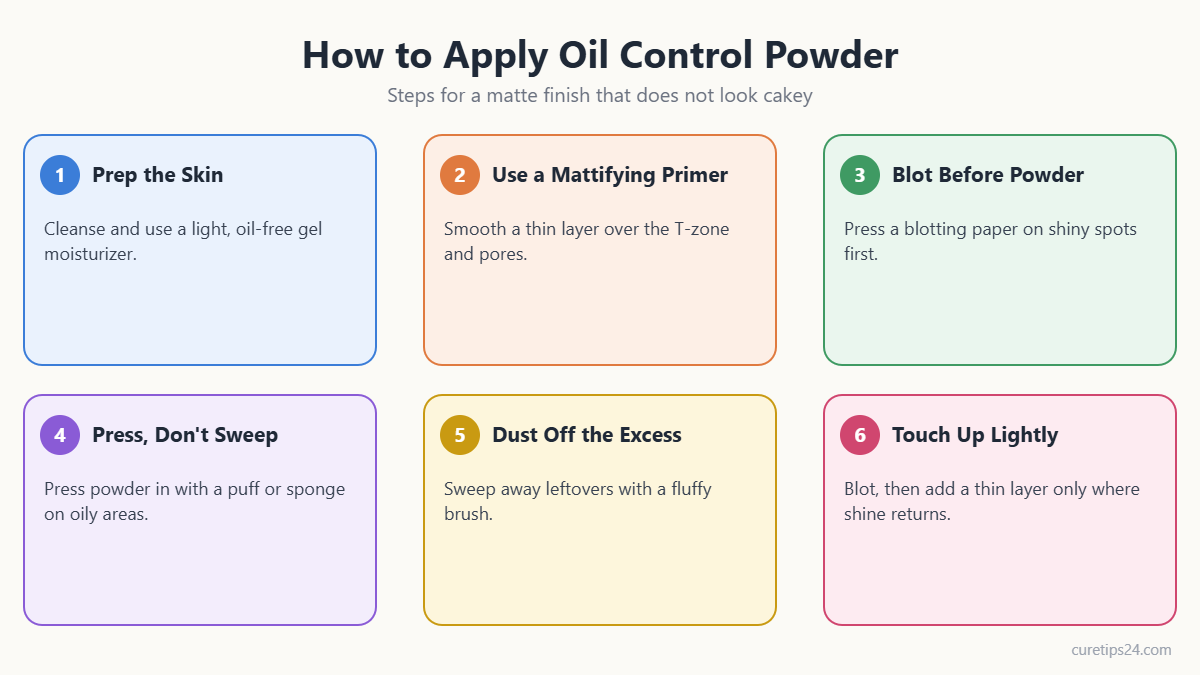
- Prep your skin. Cleanse and apply a light, oil-free gel moisturizer. Skipping moisturizer can make skin produce more oil and makes powder cling to dry patches.
- Prime. A mattifying primer on the T-zone helps powder last; see our list of the best primers for oily skin.
- Press it in. Use a puff or damp sponge to press powder onto the forehead, nose and chin. Pressing controls oil better than sweeping.
- Dust off the excess with a big fluffy brush.
- Touch up smartly. Blot first with blotting paper, then add only a thin layer. Layering powder on top of oil is what causes a cakey look.
How Long Does Oil Control Powder Last?
Expect a few hours rather than a full day. Heat, humidity, sweat and touching your face shorten wear time. Most people with oily skin blot and touch up once or twice a day, which is normal and not a sign the powder has failed.
Tips to Control Oily Skin Beyond Powder
- Wash your face twice a day and after sweating with a gentle, oil-free cleanser.
- Use a niacinamide or salicylic acid product to help with oil and clogged pores; see our picks for oily skin and large pores.
- Carry blotting papers and press them on oily areas without rubbing.
- Do not over-wash or use harsh scrubs, which can irritate skin.
- Try simple home habits from our guide on how to remove oily skin naturally.
When to See a Dermatologist
See a dermatologist if oily skin comes with frequent breakouts, painful cysts, redness or flaking that does not improve with a good routine. Prescription treatments can reduce oil and acne in ways no powder can.
Frequently Asked Questions
Which powder is best for oily skin?
A silica-based translucent loose powder is usually the best for setting makeup on oily skin, while a matte pressed powder is best for touch-ups. Choose oil-free, non-comedogenic formulas.
Is loose or pressed powder better for oily skin?
Loose powder gives stronger, sheerer oil control for setting makeup; pressed powder is more convenient for touch-ups. Many people with oily skin use both.
Can I use oil control powder without foundation?
Yes. A light layer of translucent or tinted powder on bare skin, after moisturizer and sunscreen, reduces shine without heavy makeup.
Why does my powder look cakey?
Usually because too much was applied, it was layered over oil, or it settled into dry patches. Moisturize first, blot before touching up and use a thin layer.
Does oil control powder cause acne?
Not usually, but heavy layers, old makeup and dirty brushes can clog pores. Pick non-comedogenic powders, remove makeup every night and wash your tools regularly.
Conclusion
The best oil control powder is a lightweight, oil-absorbing formula that matches your skin type, shade and routine. Use translucent loose powder to set makeup, a pressed compact for touch-ups, apply it in thin pressed layers, and pair it with a simple oily-skin routine for a fresh, matte look that lasts longer.
This article is for general information only and is not medical advice. Please consult a dermatologist about persistent oily skin or acne.

1 thought on “Best Oil Control Powder for Oily Skin: How to Choose and Apply It”