The teenage years bring big changes to your skin and hair. Hormones rise, oil glands become more active, breakouts appear and your hair may suddenly feel greasier or drier. The good news is that the best beauty tips for teenage girls are simple, cheap and gentle. You do not need an expensive ten-step routine or the products you see on social media. This guide gives you 26 practical tips for skin, lips, eyes, hair, makeup and everyday habits, based on advice from dermatologists.
Quick Summary / At A Glance
- Wash your face twice a day with a mild cleanser and warm water. Do not scrub or over-wash.
- Moisturize with a light, non-comedogenic product and wear broad-spectrum SPF 30 sunscreen every day.
- Never pop pimples. Mild acne often improves with over-the-counter benzoyl peroxide; ask a parent or doctor if acne is bad.
- Keep makeup light, remove it every night and never share brushes or eye makeup.
- Look after your hair with regular washing, conditioner on the ends and less heat.
- Sleep 8 to 10 hours, drink water, eat well and move every day. Confidence matters more than any product.
Understanding Teenage Skin
During puberty, hormones called androgens make your oil (sebaceous) glands bigger and more active. That extra oil can mix with dead skin cells and clog pores, which is why blackheads, whiteheads and pimples are so common in the teen years. Your skin type may also change: many teens develop oily or combination skin, with a shiny T-zone (forehead, nose and chin) and normal or dry cheeks. Knowing your own skin type, rather than copying someone else’s routine, is the first step to good teen skin care.
Remember that the “perfect” skin in photos and videos is often filtered or edited. Real, healthy skin has pores, texture and the occasional spot, and that is completely normal.
26 Beauty Tips for Teenage Girls
Table of Contents
Skin Care Tips
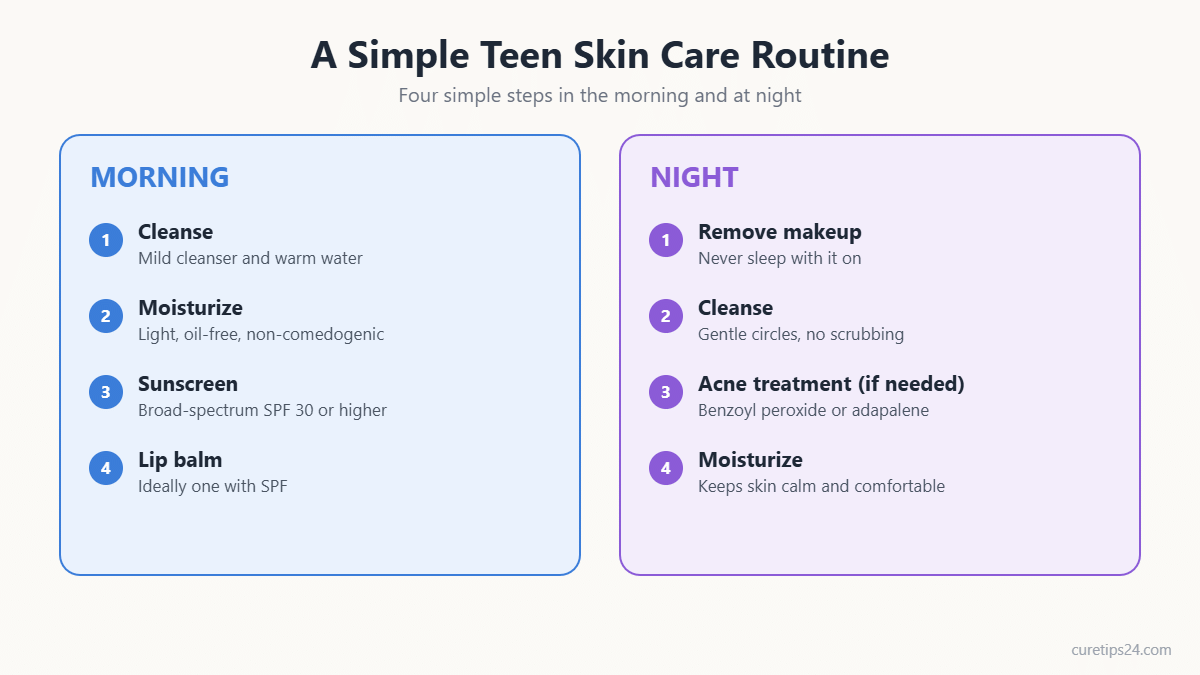
1. Wash your face twice a day. Cleanse in the morning, at night and after sweating, using warm water and a mild, fragrance-free cleanser. Massage gently with your fingertips in small circles, rinse well and pat dry with a clean towel. Teens’ health site KidsHealth’s skin care tips for teens also warns that over-washing irritates the skin.
2. Don’t scrub. Rough cloths, gritty scrubs and harsh soaps can strip your skin and make acne worse. Gentle cleansing is enough; you do not need to “scrub away” oil.
3. Moisturize every day. Even oily skin needs moisture. Choose a light, oil-free lotion labelled “non-comedogenic”, which means it is made not to clog pores.
4. Wear sunscreen daily. Use a broad-spectrum sunscreen with SPF 30 or higher every morning, even on cloudy days and in winter. Sun protection prevents sunburn, dark spots and uneven skin tone, and it lowers your risk of skin cancer later in life.
5. Keep toners and harsh products to a minimum. Alcohol-based toners and astringents can dry and irritate teen skin. The American Academy of Dermatology’s acne tips recommend gentle, alcohol-free products instead.
6. Treat mild acne the right way. Spots are very common in teens. Over-the-counter products with benzoyl peroxide, salicylic acid or adapalene can help mild acne; use them as the label directs and give them several weeks to work. Talk to a parent or guardian before starting any new treatment, and see a doctor if acne is painful, leaving scars or getting you down. Our article on common myths about acne explains what really causes breakouts.
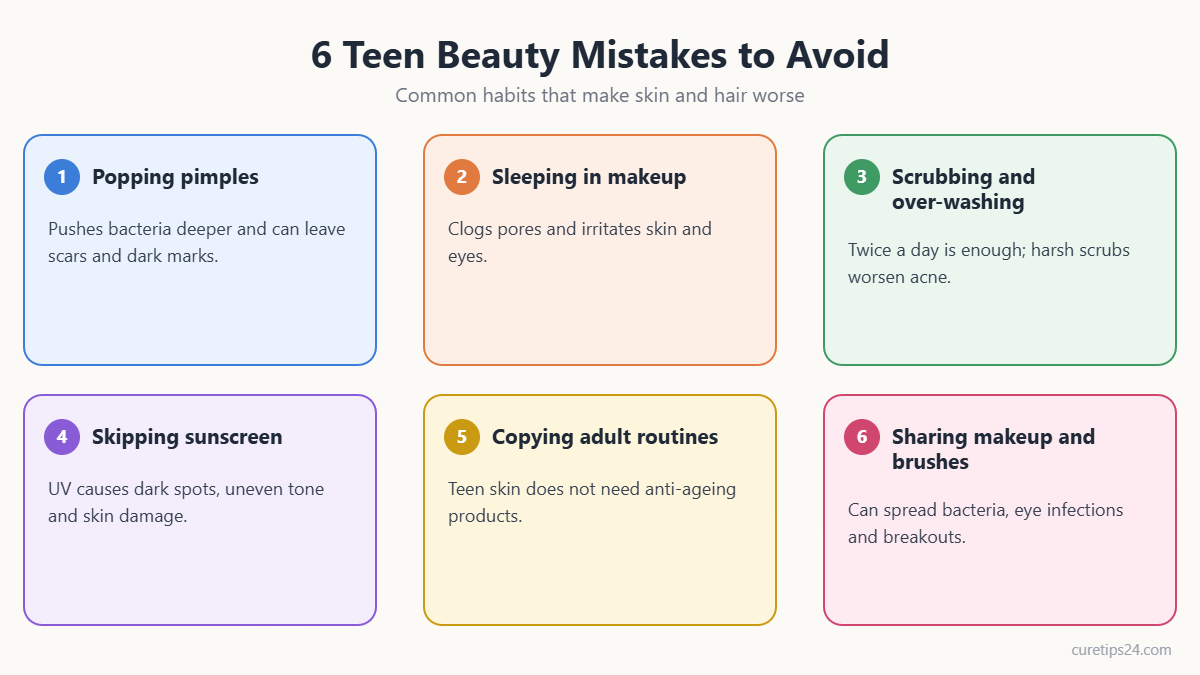
7. Never pop pimples. Squeezing pushes bacteria deeper, makes spots more swollen and can leave scars and dark marks that last much longer than the pimple.
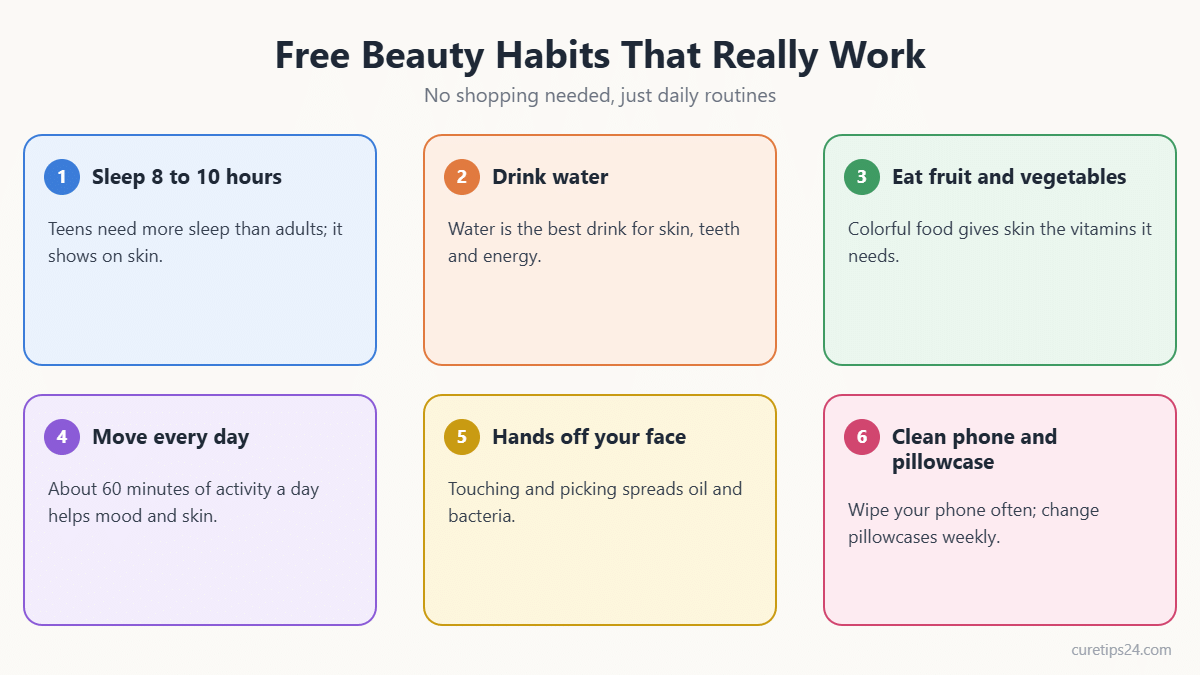
8. Keep your hands off your face. Touching, picking and resting your chin on your hand spreads oil and bacteria. Wipe your phone screen regularly and change your pillowcase every week.
9. Patch-test new products and DIY masks. Try a small amount on your inner arm or jawline for a day or two first. Avoid putting lemon juice, toothpaste, baking soda or undiluted essential oils on your face, as they can irritate or burn the skin.
10. Skip adult anti-ageing products. Retinol creams, strong acids and anti-ageing serums are designed for adult skin. Teen skin usually needs only a cleanser, moisturizer, sunscreen and, if needed, an acne product. For a step-by-step plan, read our teenage skin care routine guide.
Lips and Eye Care Tips
11. Moisturize your lips. Use a plain lip balm, ideally one with SPF, and reapply often, especially in dry or windy weather.
12. Don’t lick or peel your lips. Licking dries lips out further, and peeling flakes can cause cracks and bleeding.
13. Look after your eyes. Getting enough sleep is the best fix for tired eyes and dark circles. Remove eye makeup gently, never share mascara or eyeliner, and throw away eye makeup after about three months to avoid infections.
Hair Care Tips
14. Wash your hair as often as it needs. Oily hair may need washing every day or every other day, while dry or curly hair can go longer between washes. Focus shampoo on your scalp.
15. Use conditioner on the lengths and ends. Conditioner reduces dryness and tangles. Keep it away from your scalp if your hair gets greasy quickly, and keep oily hair off your face to help prevent forehead breakouts.
16. Go easy on heat. Let your hair air-dry when you can, use the lowest heat setting on straighteners and curlers, and apply a heat protectant before styling.
17. Brush gently and avoid tight hairstyles. Use a wide-tooth comb on wet hair, and avoid very tight ponytails, braids or buns every day, which can pull on hair and cause breakage.
18. Think carefully before colouring or bleaching. Chemical dyes and bleach can damage young hair and irritate the scalp. If you do want a change, choose a shade close to your natural colour, do a patch test and ask a parent or a professional to help.
Makeup Tips
19. Keep it light and natural. Makeup is optional. If you enjoy wearing it, a tinted moisturizer or light BB cream, mascara and a lip balm or tint are plenty for everyday wear. Choose shades that match your skin tone.
20. Choose non-comedogenic, oil-free makeup. Heavy, oily foundations can clog pores and trigger breakouts.
21. Always remove makeup before bed. Sleeping in makeup clogs pores and irritates your skin and eyes. Use a gentle cleanser or micellar water, then wash your face.
22. Clean your brushes and never share makeup. Wash brushes and sponges every week or two, and keep your makeup to yourself to avoid spreading bacteria and eye infections.
Healthy Habits and Confidence
23. Sleep 8 to 10 hours a night. Teens need more sleep than adults. Good sleep helps your skin repair itself, reduces dark circles and improves your mood and concentration.
24. Drink water and eat a balanced diet. Water is the best drink for your skin and teeth, so choose it over fizzy and energy drinks. Fill your plate with fruit, vegetables, whole grains, eggs, fish, dal and other proteins, and keep sugary snacks occasional. Our health tips for vibrant skin explain how food and lifestyle show in your skin.
25. Move every day and manage stress. Aim for about an hour of activity a day, whether that is sport, dancing, cycling or walking. Exercise improves blood flow, sleep and mood, and stress can make breakouts worse, so make time for things you enjoy and people who make you feel good. Shower after sweaty workouts.
26. Be kind to yourself. Good posture, a genuine smile, healthy teeth and confidence make a bigger difference than any product. Try not to compare yourself with filtered photos online, and talk to someone you trust if worries about your appearance start to affect how you feel. For more ideas, see our beauty tips for girls.
Free Beauty Habits That Really Work
| Habit | Why it helps | Easy way to start |
|---|---|---|
| Gentle cleansing twice a day | Removes oil and sweat without irritating skin | Mild cleanser morning and night |
| Daily sunscreen | Prevents sunburn and dark spots | Apply after moisturizer every morning |
| Hands off pimples | Prevents scars and infection | Use a spot treatment instead |
| Remove makeup at night | Stops clogged pores and eye irritation | Keep cleanser by your bed or sink |
| 8 to 10 hours of sleep | Supports skin repair and mood | Put your phone away 30 minutes before bed |
| Water and balanced meals | Gives skin the nutrients it needs | Swap one sugary drink a day for water |
When to Talk to a Parent or See a Doctor
Tell a parent, guardian or school nurse, and ask about seeing a doctor or dermatologist, if your acne is painful, red and swollen, leaving scars or dark marks, not improving after two to three months of gentle care, or making you feel anxious or low. The same applies to rashes, itchy or flaky patches, hair that is falling out in clumps, or any reaction to a product. A dermatologist can look at your own skin and suggest treatments that are safe for your age. The NHS guide to acne also explains which acne symptoms need a doctor.
Frequently Asked Questions
What is the best skin care routine for a teenage girl?
A simple routine is best: a gentle cleanser twice a day, a light non-comedogenic moisturizer, broad-spectrum SPF 30 sunscreen in the morning and, if needed, an acne treatment at night.
At what age should a girl start a skin care routine?
Basic habits such as washing your face and wearing sunscreen can start at any age. A simple routine usually becomes useful around puberty, when skin becomes oilier and breakouts begin.
How can I look pretty without makeup?
Get enough sleep, drink water, look after your skin with gentle cleansing and sunscreen, keep your hair healthy, stand tall and smile. Confidence and healthy habits show more than makeup.
Is it okay for teenagers to wear makeup?
Yes, if you want to and your family is comfortable with it. Keep it light, use non-comedogenic products, never share eye makeup and always remove it before bed.
This article is general information only and is not medical advice. Please talk to a parent, guardian, doctor or dermatologist about your own skin and hair.